 Vietnamnet.vn

 Podcast



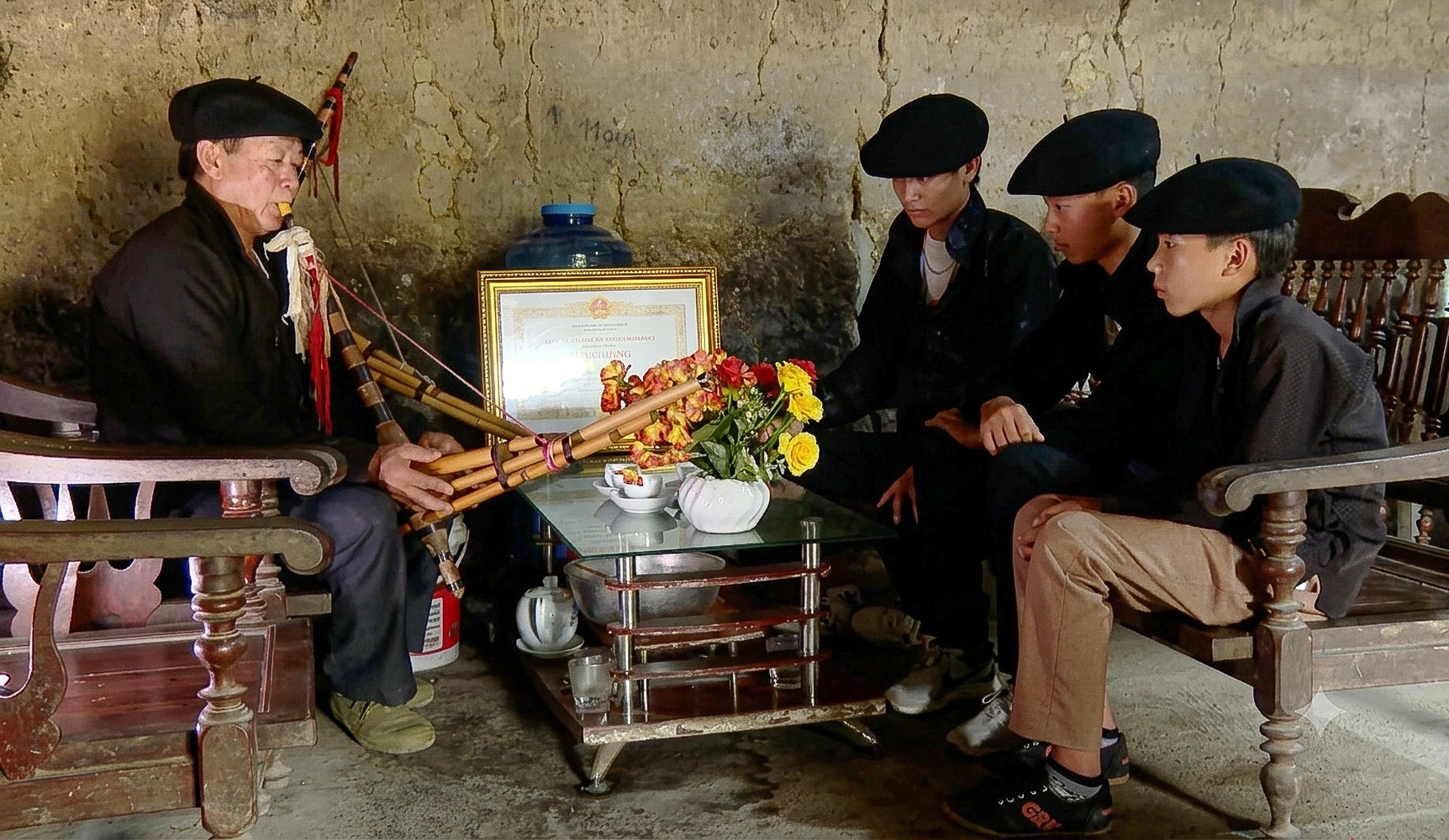
Meritorious Artist Vang Cha Thao (first left) instructs students on how to play the khen.
A lifelong journey that began with khen
Born in 1965 in Chung Pa A Village, Vang Cha Thao grew up surrounded by the rich cultural traditions of the Hmong people. From an early age, he was captivated by the haunting melodies of the khen, the clear notes of the flute, and the folk songs passed down through generations.
For him, these were more than everyday sounds - they embodied the spirit, memories, and identity of his community.
At the age of 13, while many of his peers spent their time playing, Thao sought out respected local artisans, including Vu Nhe Cu and Vang Nhe Chi, to learn how to play the khen, sing traditional folk songs, and understand the cultural values behind them.
After nearly seven years of dedicated practice, he mastered several traditional musical instruments, including the khen, traditional horn, drum, and two-string fiddle, while also acquiring an extensive repertoire of Hmong folk songs and dances.
From a passionate young learner, he became a respected artisan who regularly performed at local festivals and cultural events, bringing traditional Hmong music to wider audiences.
Preserving a living cultural legacy
Beyond performing, Thao has devoted many years to collecting, documenting, and preserving Hmong cultural heritage.
Inside his modest home in Chung Pa A, carefully preserved khen, drums, and traditional horns are treasured not simply as musical instruments but as priceless symbols of his family's and community's heritage.
He believes culture cannot survive solely in memory - it must be taught and practiced.
For that reason, he frequently teaches at schools and community classes, introducing young people to khen performance, traditional dances, and the meanings behind Hmong rituals.
He often reminds his students that without learning and practicing these traditions, cultural heritage will gradually disappear.
Driven by that belief, Thao helped establish the Pho Bang Commune Folk Artisans Association and serves as its head. Under his leadership, the association has brought together more than 50 members who are dedicated to preserving traditional culture.
Researching and documenting Hmong traditions
In recognition of his extensive knowledge, Thao was invited to join the provincial advisory and folk culture research team.
He has contributed valuable studies, including The Origins of the Hmong Khen, The Naming Ceremony, and The New House Ceremony.
These works have helped document traditional knowledge while providing an academic foundation for preserving and promoting Hmong cultural heritage in contemporary society.
In addition to being an accomplished artisan, Vang Cha Thao is widely respected as one of the most influential community leaders among the Hmong people in Pho Bang.
For many years, he has encouraged local residents to abandon long-standing practices that place unnecessary burdens on families, including keeping the deceased at home for extended periods before burial, slaughtering large numbers of livestock for funerals, offering buffaloes or cattle as ritual payments, child marriage, and marriage between close relatives.
He believes meaningful change must begin with respected figures within the community.
Accordingly, he persuaded ritual specialists, khen players, and other influential community members to adopt new practices first, helping build public trust.
Whenever he is invited to officiate at weddings or funerals, he not only performs traditional ceremonies but also patiently explains why overly elaborate and costly rituals should be simplified.
As a result, many families have voluntarily adopted more modest wedding and funeral ceremonies that preserve cultural traditions while reducing financial burdens.
By "going to every alley, knocking on every door," he directly dialogued with each clan, each family, and each prestigious person in the village. Many clan meetings in which he participated became turning points in unifying new conventions on weddings and funerals.
Those persistent efforts have brought clear results. Currently, in Pho Bang, 7 out of 12 clans have implemented burying the deceased in coffins; 16 out of 18 villages have shortened the duration of funerals; and most weddings are organized in accordance with a civilized and economical lifestyle suitable for the new life.
The journey of Meritorious Artisan Vang Cha Thao is clear evidence of the power of perseverance, understanding, and personal prestige in preserving culture and changing the community. In the khen sounds echoing amidst the mountains and forests of Pho Bang, there is not only the sound of art but also the entire dedication of a man who devoted his whole life to the Mong ethnic identity.
Vu Mung
.svg)
