 Vietnamnet.vn

 Podcast



In the final days of the lunar year, while winter’s chill still lingers on the streets, many Vietnamese homes fill with the familiar sounds and scents of renewal: cleaning the kitchen, tidying the ancestral altar, and preparing offerings to send the Kitchen Gods - Ong Cong and Ong Tao - on their celestial journey.
Though not a grand or extravagant ritual, the 23rd day of lunar December carries a uniquely serene feeling. It is a quiet pause where families look back on the past year, realign their living spaces, and, in doing so, recalibrate their inner selves.
Few customs in Vietnamese culture are as closely tied to daily life as this one. The Kitchen Gods don’t dwell in some distant temple - they live in the kitchen, the heart of every home, where fire is kept burning, warmth maintained, and togetherness nurtured.
The image of the three hearth deities recording each household’s good and bad deeds before reporting to Heaven is, in truth, a gentle reminder to live responsibly - not just toward one’s family, but toward society and one’s own conscience.
Every offering made is more than a gesture of reverence. It is a moment of personal accounting: how have I lived this year? What have I done well? What will I strive to do better?
In the rush of modern life, the form of the ritual may change. Some prepare elaborate trays; others simply light a quiet stick of incense. But the essence remains unchanged: the need to reflect, to reset, and to renew one’s faith before a new chapter begins.
At its core, the ritual reflects a profound Vietnamese philosophy: that progress must go hand in hand with preservation. We move forward, but not at the cost of our foundation. We innovate, but without extinguishing the fire that sustains us.
This logic doesn’t apply only to households - it holds true for a nation. After each phase of development, a country too must pause, take stock, and plan its future.
Following the success of the 14th National Party Congress, Vietnam is entering a new era of ambition - one that seeks not only rapid growth but sustainable progress; not just economic expansion, but improvements in quality of life and collective happiness.
In a sense, the Party Congress acts like a national “year-end report.” It acknowledges key achievements - economic stability, elevated global standing, and improved living standards. At the same time, it recognizes the challenges ahead: growth pressures, climate change, an aging population, global competition, and emerging social issues.
Based on these realities, major strategies have been outlined, anchored in a shared vision: fast but sustainable growth, people at the center, culture as the foundation, and science, technology, and innovation as drivers - all powered by a revived spirit of national self-reliance.
In this light, the image of the Kitchen Gods offers a poignant parallel. Progress isn’t just about doing more or going faster - it’s about doing better, with greater care. The deities’ “records” are not for punishment but for encouraging integrity in daily life.
So too in governance: transparency and efficiency matter not for their own sake, but because they lead to a better life for the people. And today, those values - trust, discipline, and responsibility - are more crucial than ever to long-term national development.
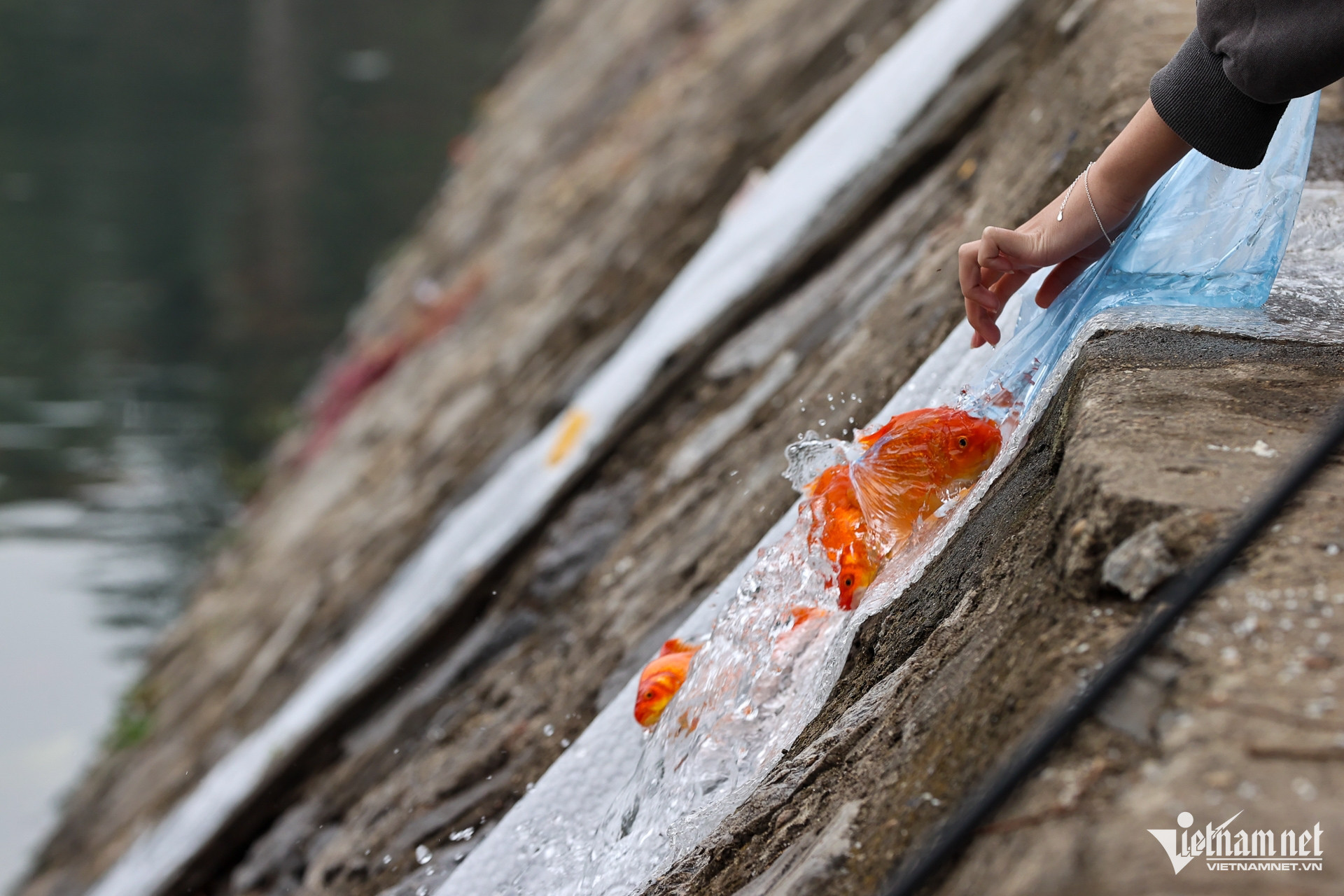
One of the most beautiful elements of this ritual is the act of releasing carp into rivers and lakes. In Vietnamese lore, the carp leaps over the Dragon Gate to become a dragon - symbolizing effort, resilience, and transformation. It is an image that perfectly mirrors Vietnam’s journey.
After 40 years of renewal, Vietnam has made remarkable strides. But many “dragon gates” still lie ahead: escaping the middle-income trap, building a knowledge-based economy, advancing green development, and ensuring equitable access to quality education and healthcare.
Yet these goals cannot be achieved by speed alone. If we chase growth while sacrificing the environment, chase numbers while ignoring quality of life, pursue economic gains while neglecting culture and humanity - the cost will be steep.
That’s why the nation’s development agenda now centers on sustainability, green growth, circular economies, and digital transformation with a social dimension. These are not just buzzwords - they are how we keep the fire burning through every change.
At its core, that fire is first and foremost the warmth and stability of each home. A nation can only grow when its people feel safe, employed, educated, cared for, and respected. That fire is also trust - trust in the system, in the future, in shared efforts. And above all, it is culture: values like compassion, accountability, discipline, creativity, and community - traits that have helped Vietnam endure and rise.
So the Kitchen Gods ceremony is not merely a folk ritual. It is a moment that invites deeper reflection: sustainable development begins with culture and people. When each person lives with more integrity, works with greater care, and contributes sincerely, these become our best “reports” to the future.
And when millions of families keep their hearths lit with love, order, and hope, the national flame will continue to glow - steady and strong.
In this era of deep global integration and fierce competition, the call to “keep the fire” is more urgent than ever. Technology may change overnight, and economic models may evolve constantly. But the core values of humanity - kindness, responsibility, social awareness - remain decisive.
A digital economy needs disciplined, creative minds. A modern society needs law-abiding, generous citizens. A strong nation is not only one with vast GDP, but one with resilient character and cultural depth.
Think of those quiet moments before Tet, when people, no matter how busy, take time to tidy the kitchen, to wipe down forgotten corners. It’s not just cleaning. It’s a renewal of spirit, of space, of belief.
At the national level, this same spirit is reflected in efforts to streamline institutions, improve public service, combat corruption and waste, and build a government that serves the people. This is our way of “cleaning the kitchen” - so the development flame can burn brighter and longer.
When releasing the carp, people often pause, gaze at the flowing water, and silently make a wish - health, prosperity, peace for their family. If we think beyond the individual, each small wish contributes to one shared hope: a stronger, more livable Vietnam.
Our nation stands on the cusp of immense opportunity. We have political and social stability, a dynamic economy, a youthful population, and a hunger to rise. But opportunity only becomes reality through sustained effort and shared responsibility.
Like the kitchen flame, it must be tended daily. Left untended, it fades. Nurtured with care and purpose, it radiates warmth and resilience.
Kitchen Gods Day, then, is more than a ritual marking year’s end. It is a new beginning. As the Kitchen Gods ascend, what stays behind is not just a spotless kitchen - but a refreshed heart and renewed hope that everything can begin again, better.
And perhaps, at this national turning point, what we need most is that very hope: in our chosen path, in the values we protect, and in the strength of every Vietnamese soul.
Keep the fire in every kitchen. Keep the faith in every heart. From these humble flames, the nation’s future will shine - enduring, warm, and unwavering on the road ahead.
Assoc. Prof. Dr. Bui Hoai Son
.svg)
