 Vietnamnet.vn

 Podcast



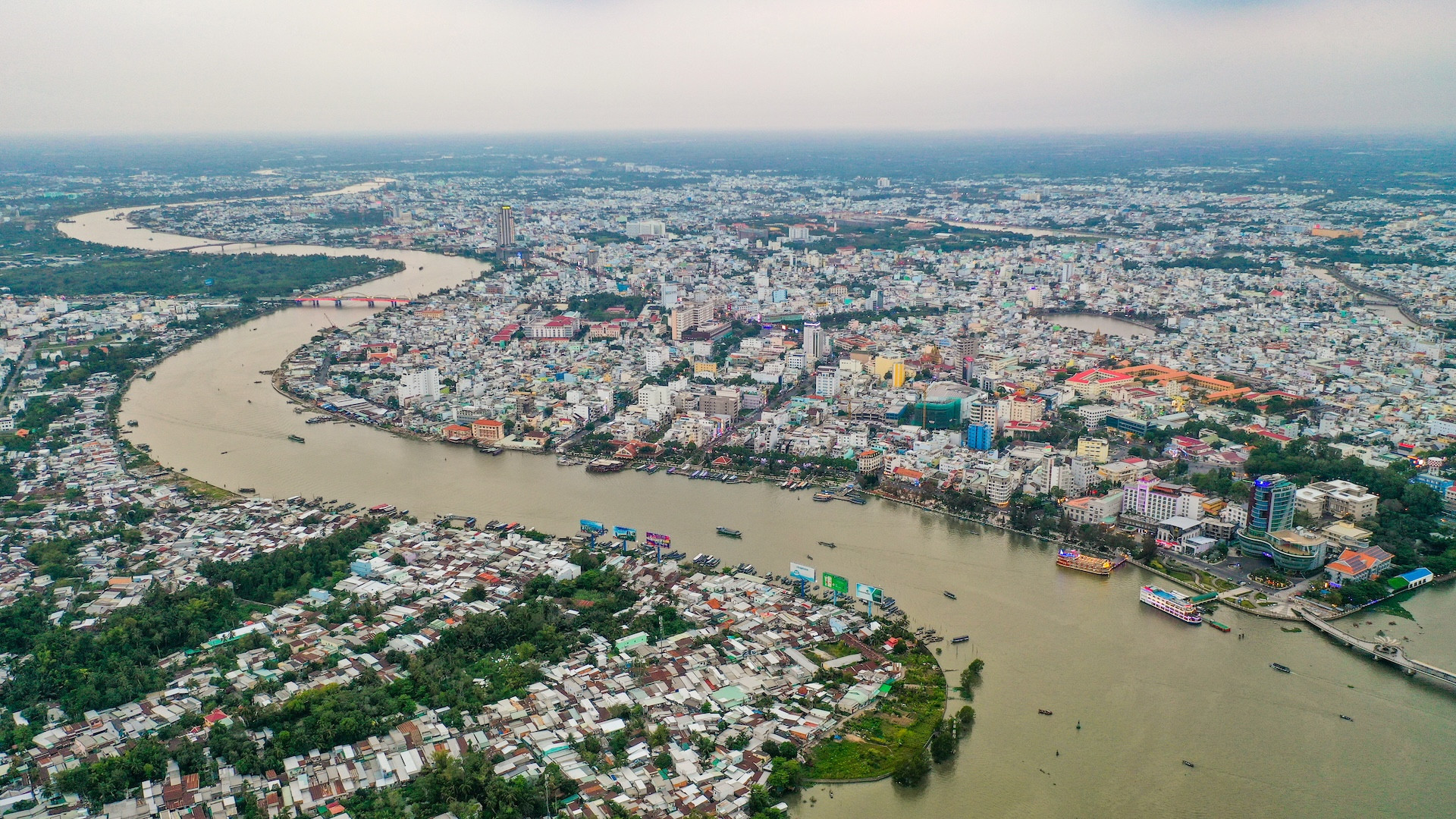
Every year, tens of thousands of young people leave the Mekong Delta to seek jobs in HCMC, Binh Duong or Dong Nai. They take with them their youth, labor and, in many cases, unfinished entrepreneurial ambitions.
Meanwhile, back home, rice fields continue to stretch across the landscape, shrimp farming areas keep expanding, and agricultural products continue to be exported regularly. At first glance, these may appear to be two unrelated stories. However, the Mekong Delta Annual Economic Report 2025 by VCCI and Fulbright University Vietnam shows that they are, in fact, two sides of the same issue.
The Mekong Delta is situated in the southernmost part of Vietnam, where the Mekong River, one of the world’s longest and most significant rivers, flows into the East Sea. The Mekong Delta encompasses about 39,000 square kilometers, making it one of the largest river deltas in the world.
The Mekong Delta is home to about 18 percent of Vietnam's population but contributes as much as 58 percent of the country's foreign exchange surplus to national reserves. It is Vietnam's largest producer of rice, seafood and fruit. Looking solely at its resources and natural advantages, many would naturally assume it should possess one of the country's most dynamic business communities.
Reality has moved in the opposite direction.
While the Mekong Delta accounted for about 22 percent of all businesses in Vietnam in 2000, that figure had fallen to just 7 percent by 2024. Excluding Long An, the region now has only around 65,000 active enterprises and, since 2023, has become the region with the lowest business density in the country.
A region contributing 58 percent of the nation's foreign exchange surplus while holding only about 7 percent of its businesses is a paradox significant enough to serve as the starting point of this year's report.
Notably, researchers do not believe the Mekong Delta lacks entrepreneurial spirit. The problem is that businesses in the region struggle to grow.
The report highlights a phenomenon economists call the "missing middle", i.e the absence of a strong mid-sized enterprise segment. By 2024, micro-enterprises accounted for 87.8 percent of all businesses in the region by employment size, while large enterprises represented only 0.9 percent.
These figures suggest that what the Mekong Delta lacks is not people willing to do business, but companies capable of accumulating capital, investing in technology, building brands and leading value chains. Therefore, the decline from 22 percent to 7 percent is not merely a reduction in business numbers; it reflects the region's diminishing business presence on Vietnam's economic map.
The consequences of this condition manifest vividly in the labor market. Following the exclusion of Long An, the number of newly created jobs annually in the Mekong Delta decreased by about 30 percent; by 2025, it was equivalent to only about one-fourth of the Southeast region and one-fifth of the Red River Delta.
These statistics partly explain why young people continue to migrate out of the Western region. An economy cannot retain labor solely through natural resources or raw advantages; it demands enterprises robust enough to generate better jobs, higher incomes, and clear professional development opportunities.
The report describes a clear downward spiral: weak businesses generate low value-added output; low value-added output leads to lower incomes; lower incomes encourage young workers to leave; and the shortage of skilled labor makes it even harder for businesses to grow.
During the 2010-2024 period, labor contributed a negative 2.4 percent to the region's economic growth. This is not merely an economic indicator; it is a sign that human capital is flowing away from what should be one of Vietnam's most important growth engines.
The Mekong Delta's greatest paradox lies within the very sector that built its reputation. Agriculture and related activities contribute more than 30 percent of regional GRDP, yet agricultural businesses account for less than 5 percent of all enterprises.
This gap shows that the Mekong Delta is strong in production but weak in organizing production; strong in raw materials but weak in branding; strong in output but weak in value-added creation. In other words, the region produces a great deal of goods but not nearly enough businesses.
Lan Anh
.svg)
