 Vietnamnet.vn

 Podcast



Once the first international trading port of Dai Viet, Van Don in Quang Ninh Province not only preserves traces of a bustling commercial center but also safeguards a remarkable system of ancient pagodas and towers.
Buddhist heritage at the heart of Van Don trading port
In 1149, King Ly Anh Tong established the Van Don administrative area, marking the beginning of what would become one of the most renowned international trading ports in the history of Dai Viet. Alongside the growth of commerce, cultural and religious life flourished, leaving behind numerous Buddhist architectural remains scattered across the islands.
Archaeological research has shown that Cong Tay Island was one of the key centers of the ancient port. The island still preserves traces of at least four pagodas and one Buddhist tower dating from the late 13th and early 14th centuries during the Tran Dynasty.
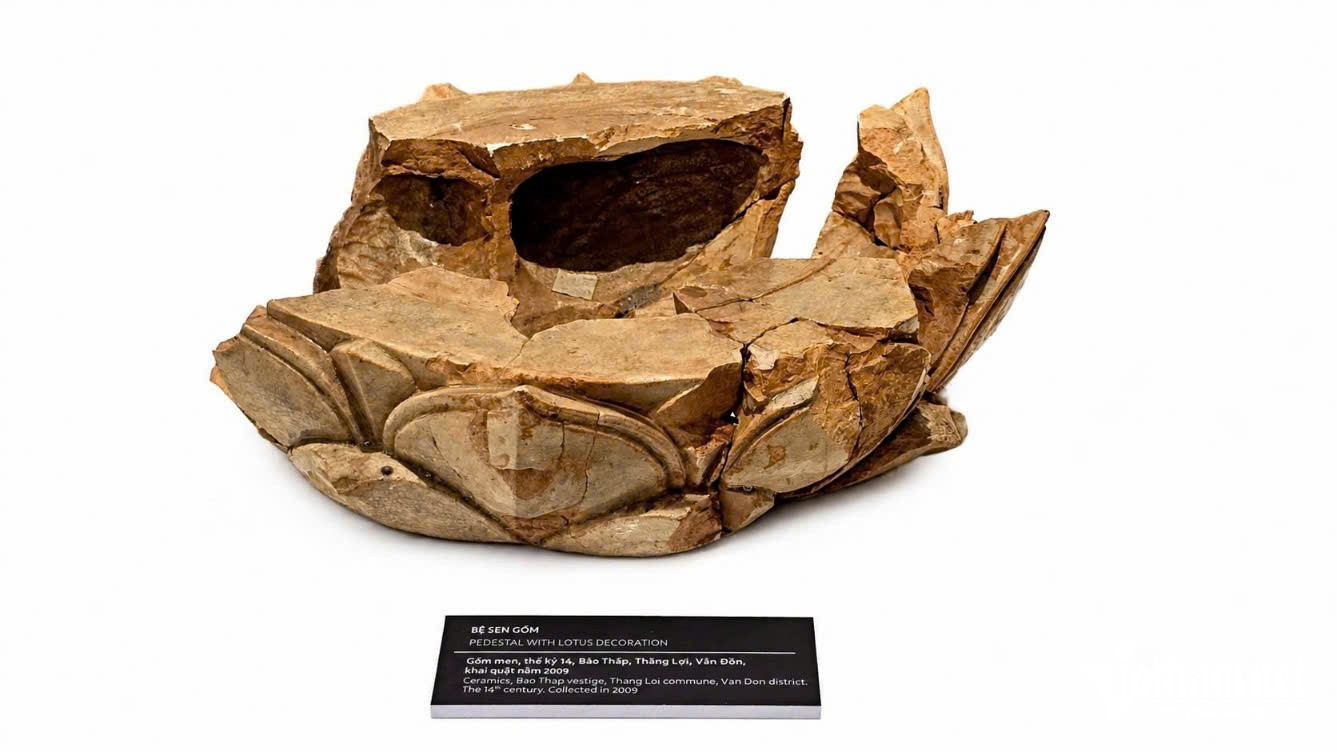
Among the most significant is Lam Pagoda, first discovered in 1967 and excavated in 1971. Situated on land embraced by mountains on three sides in the shape of a ceremonial throne, the pagoda once formed a relatively complete religious complex with multiple worship structures. Stone stairways carved with dragons, railings decorated with squirrel motifs and lotus pedestals for Buddha statues reflect the sophisticated architectural and sculptural achievements of the Tran period.
Alongside Lam Pagoda, the Bao Thap site holds exceptional value in the study of religious architecture. Excavations conducted in 2009 and 2010 determined that the complex was built on three terraced levels at the center of Cong Tay Island, backed by mountains and facing the sea.
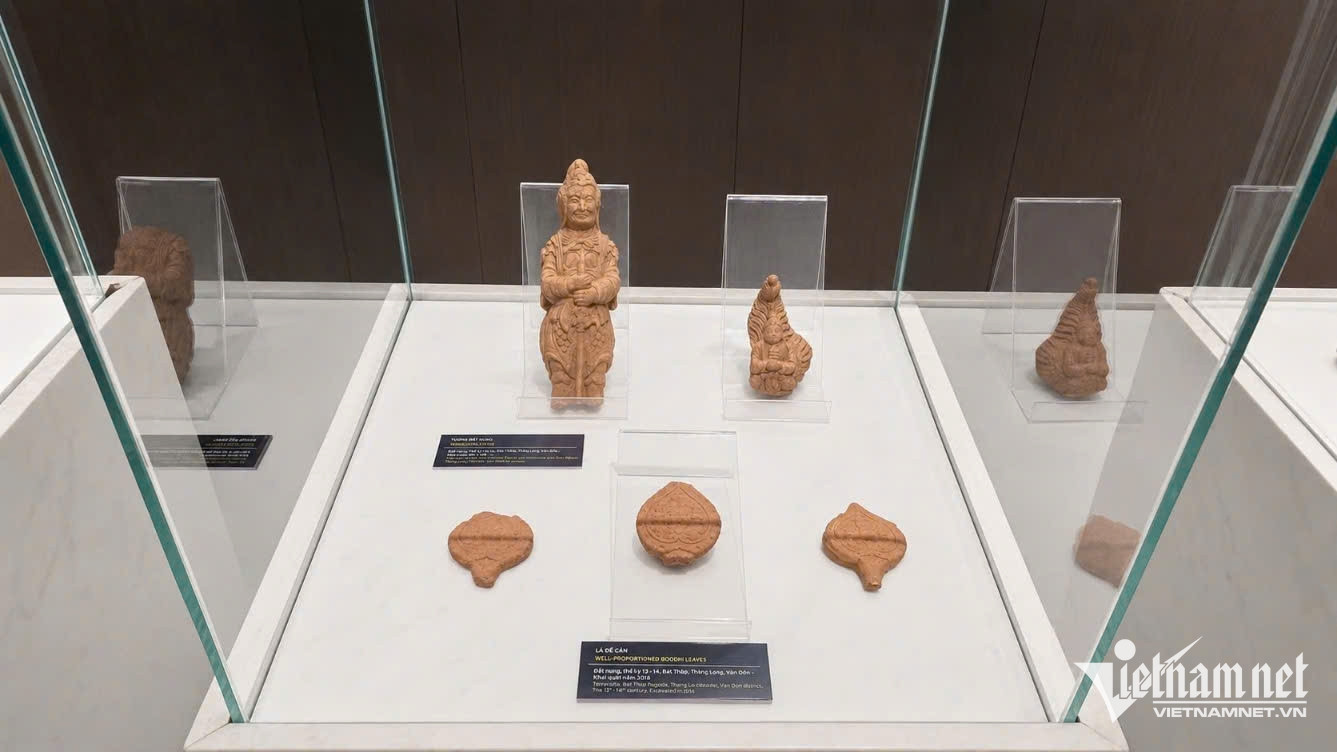
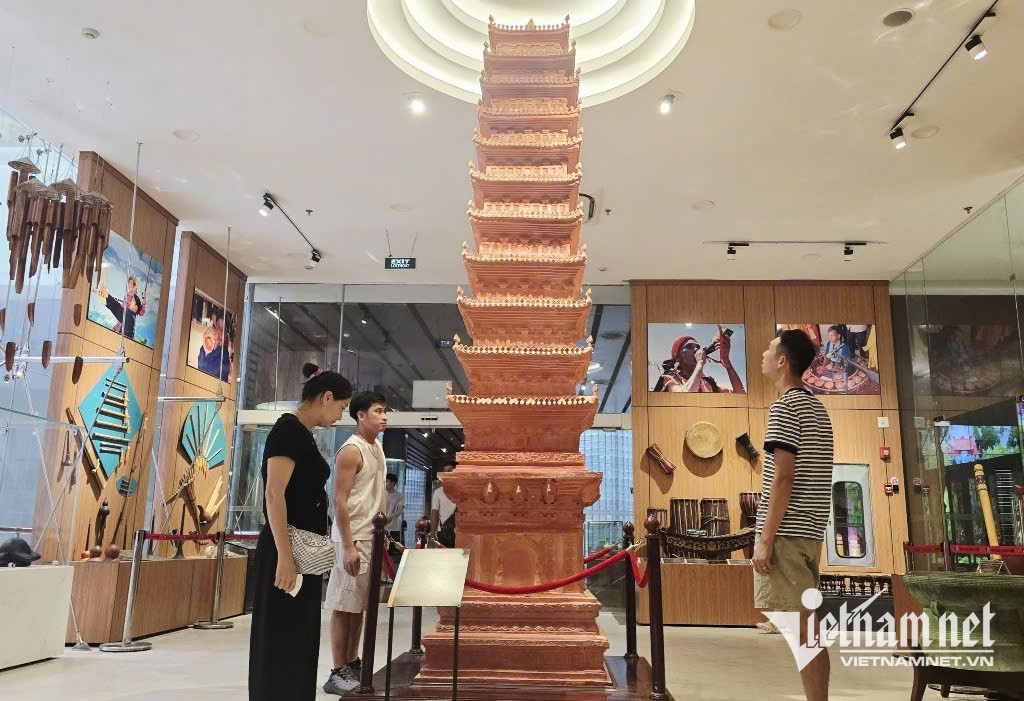
The Buddhist tower featured a square floor plan and is believed to have risen at least 11 stories high. Thousands of decorative terracotta artifacts depicting dragons, phoenixes, lotus flowers, bodhi leaves, Garuda figures, Vajra guardians and Kinnari celestial beings were discovered at the site, highlighting the richness of Tran Dynasty Buddhist art and architecture.
In addition to Lam Pagoda and Bao Thap, the remains of Cat Pagoda, Trong Pagoda and Cay Queo Pagoda demonstrate the dense presence of Buddhist structures across Cong Tay Island. A common characteristic of these sites is their elevated locations overlooking sheltered bays where trading vessels frequently anchored and conducted business.
Heritage beneath the ground
According to Dr. Le Thi Lien of the Institute of Archaeology, artifacts recovered through multiple excavations provide clear evidence of the existence and development of Van Don trading port. In particular, the large quantity of ceramics originating from famous Chinese kilns in Longquan, Fujian, Jiangxi and Hebei indicates that the port once served as an important hub within international trade networks.
Archaeological findings also show that areas such as Cong Cai, Son Hao and Quan Lan developed systems of wharves, warehouses and commercial activities at a very early stage. These discoveries further affirm Van Don’s unique role in the history of Vietnam’s maritime economy.
Today, the artifacts recovered from Van Don are no longer confined to research reports and excavation pits. They have become a bridge connecting the public with the region’s rich past.
Nguyen Duc Phuong, Head of Professional Affairs at the Quang Ninh Museum, said: “The exhibition space showcasing ceramic artifacts excavated from Van Don trading port is highly distinctive and attracts many visitors, especially cultural researchers.”
Artifacts that might once have been viewed solely as archaeological objects are now helping visitors visualize the scale of a once-thriving port and gain deeper insight into the cultural and spiritual life of coastal island communities centuries ago.
Tran Minh Duc, a visitor from Ho Chi Minh City, shared: “Seeing the artifacts displayed at the Quang Ninh Museum, I can clearly feel that Van Don is not only a coastal area with enormous economic potential but also a place with extraordinary historical depth. The remains of Tran Dynasty pagodas and towers are especially impressive because of their sophistication and the advanced cultural life they reflect.”
However, the passage of time continues to threaten many archaeological remains and cultural assets. According to Dr. Le Thi Minh Ly, Vice President of the Vietnam Heritage Association, conservation efforts should adopt a comprehensive approach that combines the protection of physical relics, the restoration of intangible cultural heritage and the preservation of the surrounding ecological landscape.
Beyond recommendations from researchers, local authorities are now translating conservation goals into planning and implementation strategies for the Van Don heritage complex.
According to Bui Thi Giang, Head of the Heritage Management Division under the Quang Ninh Department of Culture, Sports and Tourism, the Van Don trading port complex has been recognized by the Prime Minister as a Special National Relic Site. Detailed planning will be carried out for each individual heritage location. Although implementation has begun, adjustments to zoning plans remain challenging, meaning conservation work will proceed step by step. Based on approved planning, projects will be developed to preserve and reconstruct historical structures, including the ancient pagodas and towers.
With its network of pagodas and towers on Cong Tay Island, Van Don was more than a gateway for goods. It was also a meeting point of cultural and religious currents. The surviving foundations and artifacts are helping scholars decode part of the spiritual world of coastal communities that lived here more than seven centuries ago.
My Dung
.svg)
