 Vietnamnet.vn

 Podcast



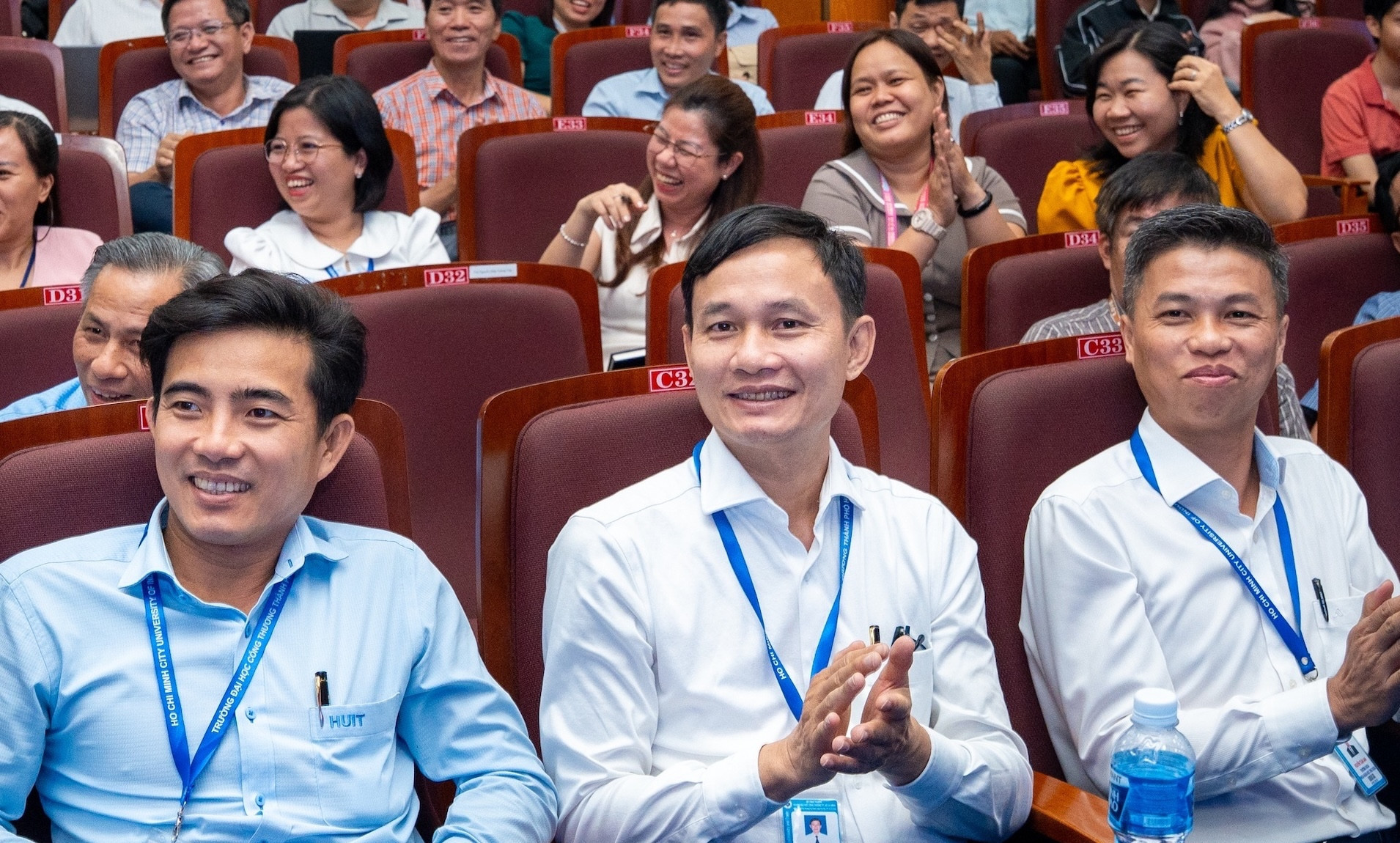
The University of Economics HCMC, HCMC University of Industry, University of Finance – Marketing, and the member schools under Vietnam National University HCMC (University of Technology, University of Social Sciences and Humanities, University of Economics and Law, University of Information Technology and An Giang University) are all laying "red carpet" to attract academic talents.
The schools are offering significant financial benefit packages. High-quality personnel upon joining can receive initial support ranging from several hundred million, even up to half a billion VND.
Alongside this are salary and income levels designed to be competitive, commonly from VND70 million to VND100 million/month, with some places even reaching VND120 million/month, to ensure working and long-term research conditions.
Associate Prof Nguyen Xuan Hoan, President of HCMC University of Industry and Trade, said that since 2017, when the school was named HCMC University of Food Industry, it has applied these policies, one of the pioneering steps in the country aimed at attracting high-quality scientific human resources.
The goal is not only to increase the number of academic titles and degrees but, more importantly, to find academics capable of leading by building strong research groups, implementing key projects, and expanding international cooperation.
Candidates must meet regional and international standards; hold a doctorate or higher, have international publications, be able to teach and research in foreign languages, and have presided over ministerial-level projects or led research groups with transferable products.
To realize this goal, from the beginning, the school has applied "aggressive" financial policies: support of VND75 million for doctors, VND100 million for associate professors, and VND150 million for professors, accompanied by a commitment to work for a minimum of five years. The support levels could increase into "packages" of VND250 – 150 – 100 million corresponding to professors, associate professors, and doctoral degree holders.
After nine years, the effectiveness of improving the quality of the school's team has clearly improved. From having only four associate professors and 12 doctors initially, the school now has three professors, 39 associate professors, and 310 doctoral degree holders. The ratio of lecturers with a doctoral degree exceeds 52 percent, ensuring the quality of teaching.
In 2025 alone, the school attracted an additional three associate professors and 23 doctors, most of whom were trained abroad. The total cost of attracting this team was about VND2.5–3 billion. At least 31 of the school's lecturers completed their doctoral programs and submitted their degrees after the training process, fostering an important resource for the school to improve teaching quality.
Attracting, nurturing, and retaining talent
According to Hoan, attracting talent is not the only solution. The school has also implemented a strategy to "upgrade" the local team: lecturers pursuing study still receive their full salary and are supported with 100 percent of tuition.
“If we only 'attract' without 'nurturing,' it cannot be sustainable. Investment must ensure long-term commitment,” he said. In 2025 alone, the school spent VND4.2 billion for lecturers to attend doctoral programs.
Hoan also emphasized that the key factor in retaining scientists is income. “A doctoral holder today must have a minimum income of about VND50 million/month to work with peace of mind.”
Beyond financial incentives, the university creates optimal conditions for professional development: full salary during further study, appropriate task assignments, access to research resources, priority investment through specific programs, a favorable working environment and timely recognition. Notably, each paper published in ISI or Scopus-indexed journals is rewarded with VND50 million.
The “attract – retain – develop internally” model is taking shape as a sustainable approach, helping to increase the number of PhDs and improve overall faculty quality.
Over the past two years, Vietnam National University HCMC has implemented the VNU350 program along with visiting professor policies to attract high-quality human resources.
When talking with VietNamNet in 2025, Associate Prof Dr Vu Hai Quan stated that attracting talent is only the first step. “Retaining and developing talent is the true measure of a research university’s capability.”
Do Van Dung, former President of HCMC University of Technology and Education, believes that money is not the decisive factor for intellectuals; rather, environment and working conditions matter more. He said intellectuals have high self-respect, and if they are recruited without an appropriate academic environment or policies, long-term commitment is unlikely.
Le Huyen
.svg)
