 Vietnamnet.vn

 Podcast


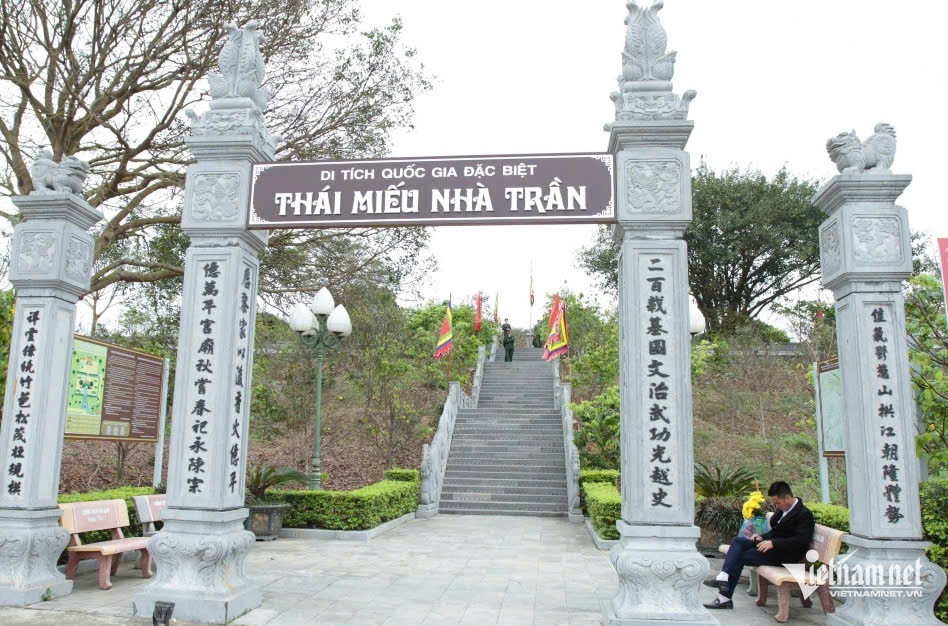
An ancestral sanctuary of the Tran Dynasty
In the former Dong Trieu region, the Tran Dynasty's ancestral temple, known as Thai Mieu, in An Sinh Ward, Quang Ninh Province, is one of the most important historical sites associated with the origins of the royal family that founded the Tran Dynasty and left a lasting mark on Vietnamese history.
According to historical records, in 1237, Emperor Tran Thai Tong granted the Ngu Yen area to his elder brother Tran Lieu as an estate.
Tran Lieu subsequently built an ancestral shrine, known as Tien Mieu, to honor the family's ancestors and Tran Thua, the dynasty's founding patriarch.
Over successive generations, the worship complex expanded and eventually became the Tran royal family's ancestral temple, or Thai Mieu.
In traditional Vietnamese spiritual life, Thai Mieu was far more than an architectural structure. It embodied the practice of ancestor worship, honoring those who established the family's legacy and maintaining continuity between generations.
These values are reflected throughout the network of Tran Dynasty heritage sites in Dong Trieu, including temples, royal tombs, pagodas, hermitages and towers associated with the development of Truc Lam Buddhism.
Associate Professor Dr. Dang Van Bai, former Director of the Cultural Heritage Department, said the Tran Dynasty and Truc Lam Buddhism left behind distinctive cultural values.
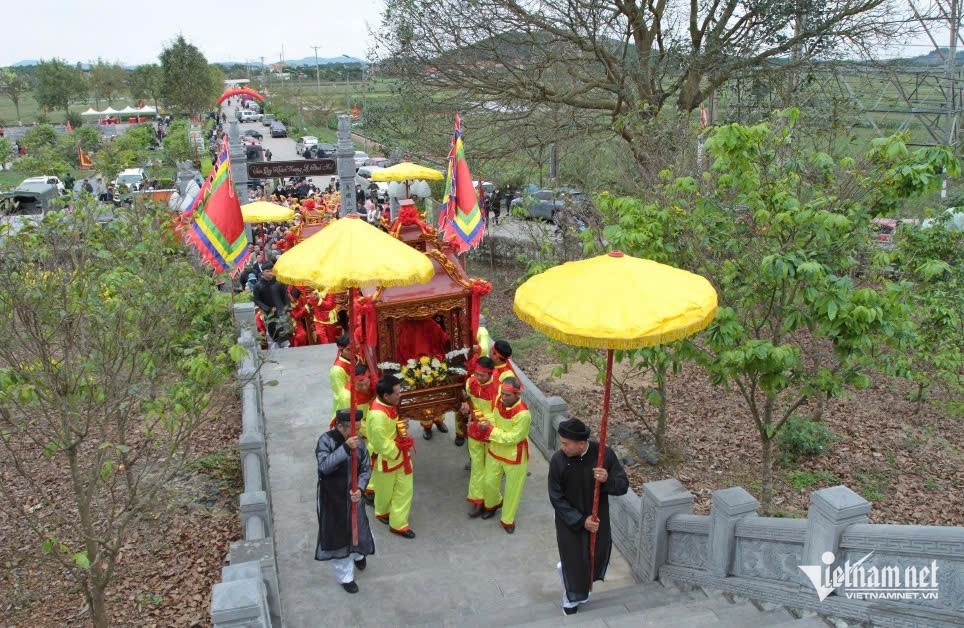
Among them is the Vietnamese tradition of remembering one's roots and expressing gratitude to previous generations, a principle reflected in the region's extensive network of historical and religious sites.
Over the centuries, political and historical upheavals left Thai Mieu abandoned, with many structures destroyed or buried underground.
The site's name and religious functions also changed over time.
Nevertheless, local residents preserved memories of the Tran royal family's ancestral sanctuary.
In 1993, the community rebuilt a place of worship on the foundations of the former temple to meet local spiritual needs.
This continuity demonstrates that the site's enduring significance lies not only in its surviving architectural remains but also in its place within the community's spiritual life.
A major milestone in rediscovering Thai Mieu came with archaeological excavations conducted between 2009 and 2010 across approximately 3,000 square meters.
Beneath layers of soil, archaeologists uncovered a system of column foundations, building floors, courtyards, pathways and numerous ancient construction materials.
These discoveries allowed researchers to tentatively reconstruct the temple's architectural layout, comprising a front hall, main hall and rear hall.
Notably, the main hall's foundation was built at a higher elevation than the areas in front of and behind it.
The use of pebbles to reinforce foundation edges was also identified in several parts of the complex.
The archaeological findings have helped clarify the scale and structure of the royal worship site while providing valuable evidence for research into Tran Dynasty architecture in the An Sinh area.
Thai Mieu was designated a national historical relic in 1962.
In 2013, the Tran Dynasty historical complex in Dong Trieu was recognized as a special national relic, with Thai Mieu identified as one of its important components.
Water procession preserves memories of royal origins
While archaeological remains offer insights into the temple's historical appearance, traditional festivals demonstrate how its heritage continues to shape community life today.
Revived in 2019, the Tran Dynasty Thai Mieu Festival takes place annually from the 18th to the 20th day of the first lunar month.
Its opening day is associated with the death anniversary of Tran Thua, the dynasty's founding patriarch.
One of the festival's most significant rituals is a water procession from Trai Loc Lake to Thai Mieu.
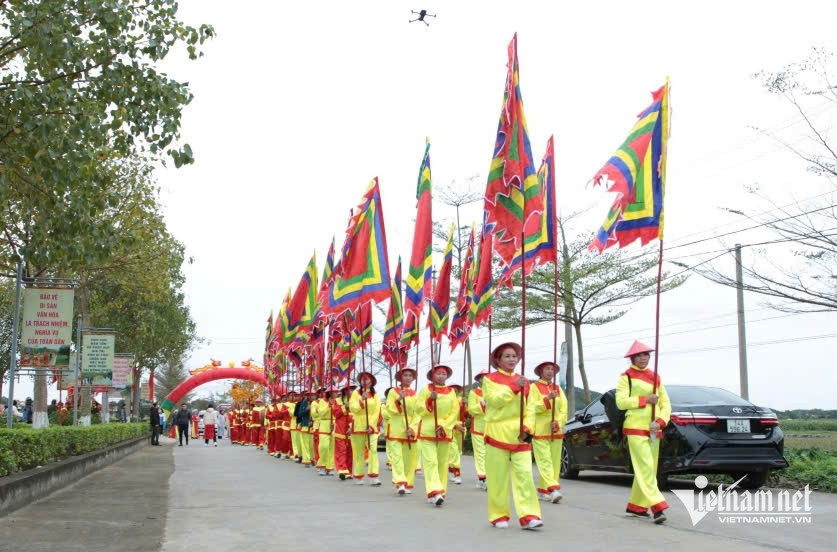
The ceremony carries particular historical meaning because the ancestors of the Tran royal family were associated with fishing and life on the waterways before establishing their dynasty.
The water procession is therefore more than a religious observance. It also recalls the family's humble origins and ancestral roots.
In Vietnamese folk beliefs, water symbolizes life, fertility and the vital energy that sustains all living things.
The ritual consequently expresses hopes for favorable weather, abundant harvests, national peace and prosperity for the people.
Through this ceremony, the story of the Tran Dynasty's origins is preserved not only in historical documents but also through cultural practices involving the local community.
It is a way of passing historical memory from one generation to the next, helping people today better understand the tradition of ancestor worship and the cultural values maintained over centuries.
According to Le Tien Dung, Head of the Yen Tu Heritage Conservation Division under the Ha Long Bay - Yen Tu World Heritage Management Board, connecting Thai Mieu with An Sinh Temple, Ngoa Van, Yen Tu and other Tran Dynasty-related sites, including the Bach Dang historical site, could help establish an integrated historical and cultural tourism route.
Such a route would support heritage education, promote understanding of national traditions and contribute to local tourism development.
Amid the changes of modern life, the Tran Dynasty's ancestral temple continues to preserve two interconnected layers of heritage: physical remains brought to light through archaeological research and spiritual traditions sustained by the community.
One helps reconstruct the appearance of an ancient royal sanctuary, while the other keeps alive the memory of ancestors and those who helped build and defend the nation.
My Dung

