 Vietnamnet.vn

 Podcast



Mo Temple in northern Vietnam is steeped in the legend of a Tran Dynasty princess who left royal life to help local villagers. It is also home to an unusual gate-less design, a centuries-old gilded palanquin and a 743-year-old heritage tree.
The legend of Princess Quynh Tran and a 743-year-old tree
A chance visit to Mo Temple in Nghi Duong Commune, Hai Phong, led us into a world of legends and spiritual stories that have surrounded the centuries-old sanctuary for generations.
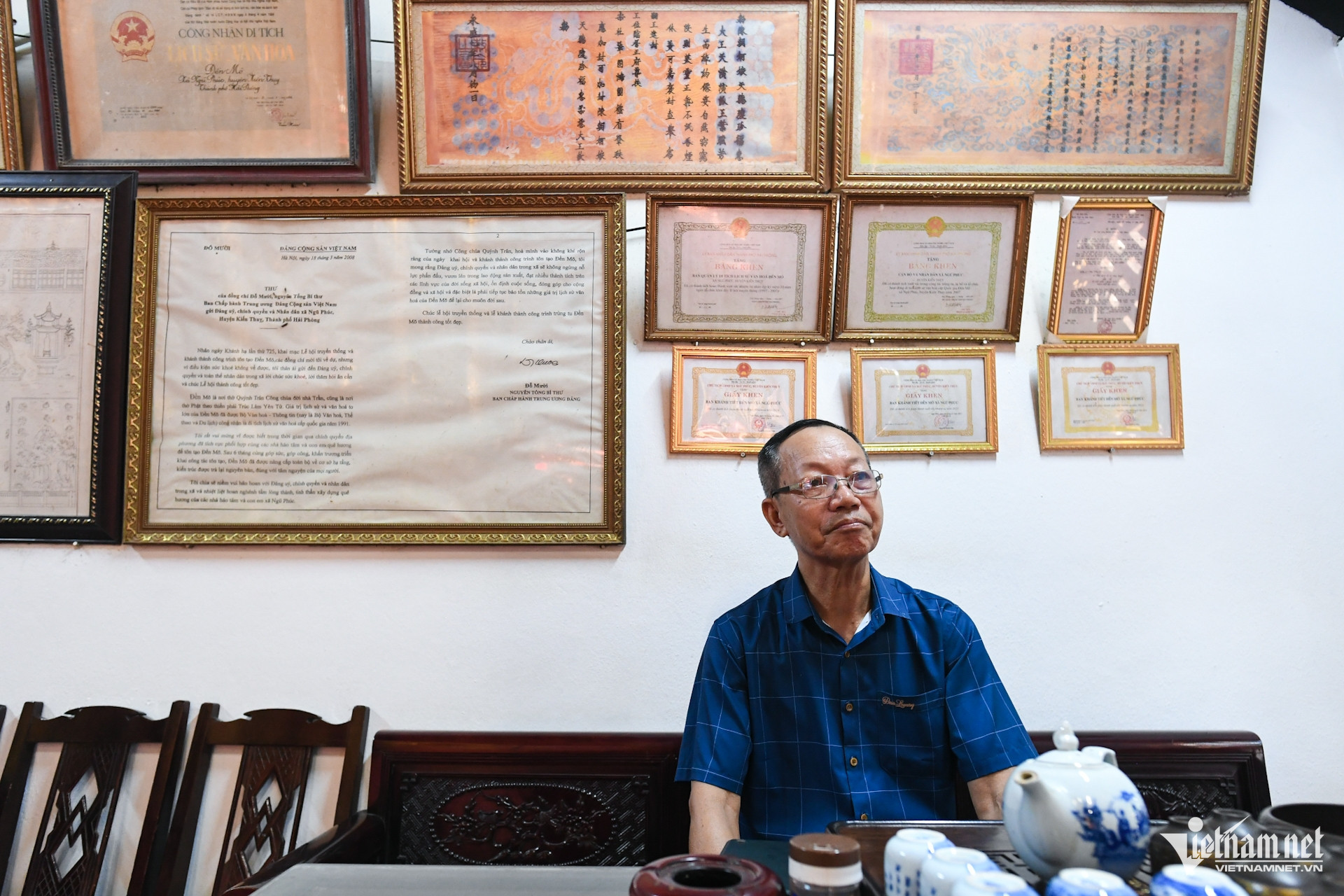
Nguyen Cong Trai, head of the temple’s ceremonial committee, shared some of the tales that local residents still recount with deep reverence.
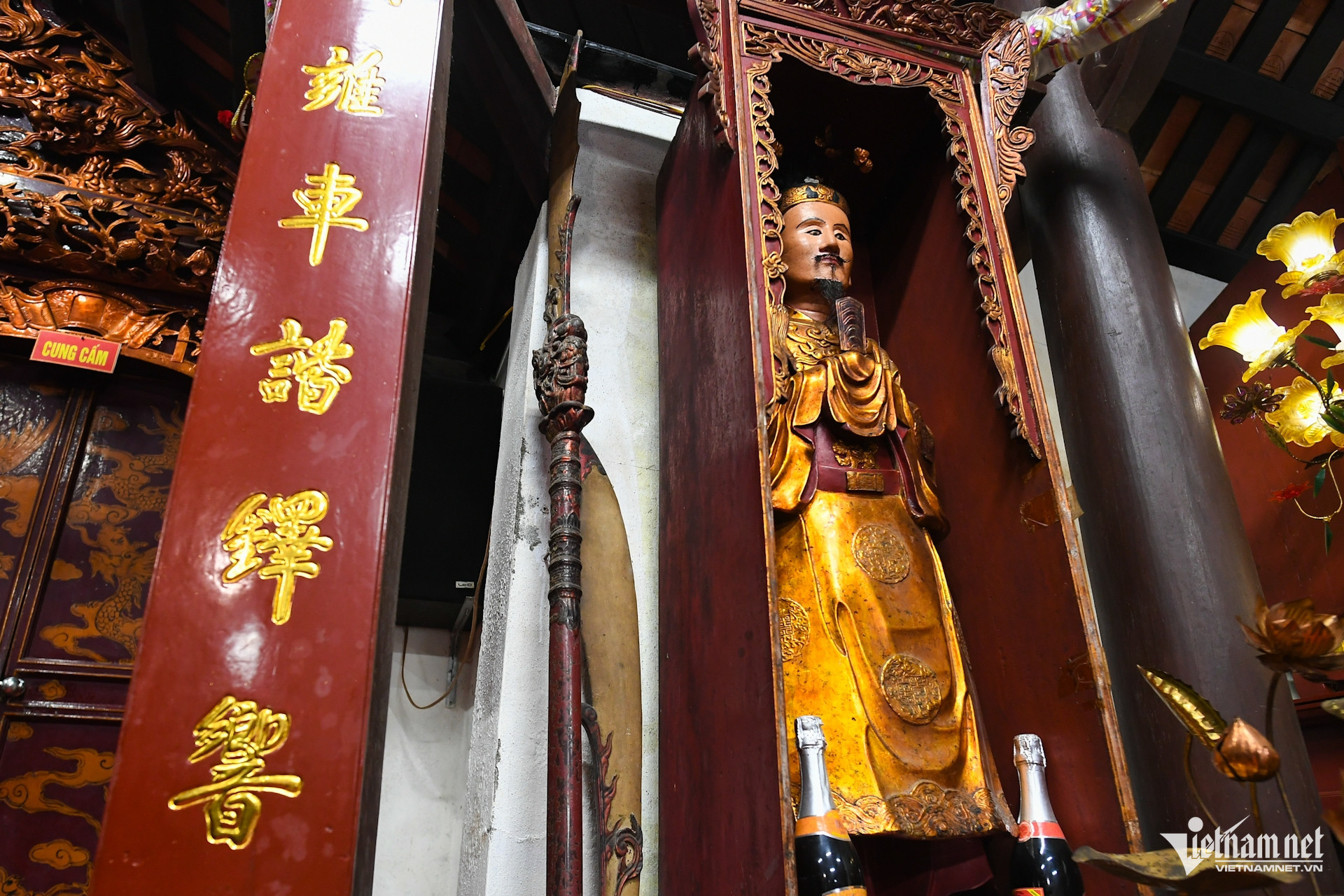
According to historical records and local legend, Mo Temple is dedicated to Princess Quynh Tran, a daughter of Tran Dynasty emperor Tran Thanh Tong and elder sister of emperor Tran Nhan Tong.
Leaving behind life at the royal court, she traveled to Nghi Duong, then part of the former Kinh Mon administrative region, where she established a small religious retreat.
The princess devoted herself not only to religious practice but also to helping local people reclaim land, cultivate crops and grow mulberry trees for silkworm farming.
She is said to have opened food stores to feed people in need, provided clothing for the poor and joined members of the Tran royal family in resisting invading forces on the Bach Dang River.
The historical record of Princess Quynh Tran recounts that although she lived a religious life, she spent years developing agricultural estates. As the amount of land and number of workers grew, managing them became increasingly difficult.
According to the account, the princess established a small station near the settlement and instructed workers to follow signals from a wooden percussion instrument known in Vietnamese as a mo. If they heard it sounded at the pagoda, they were to return for meals; if it came from the station, it meant there was work to be done.
Local names including Ap Mo, Mo Pagoda and Mo Temple are said to have originated from this practice.
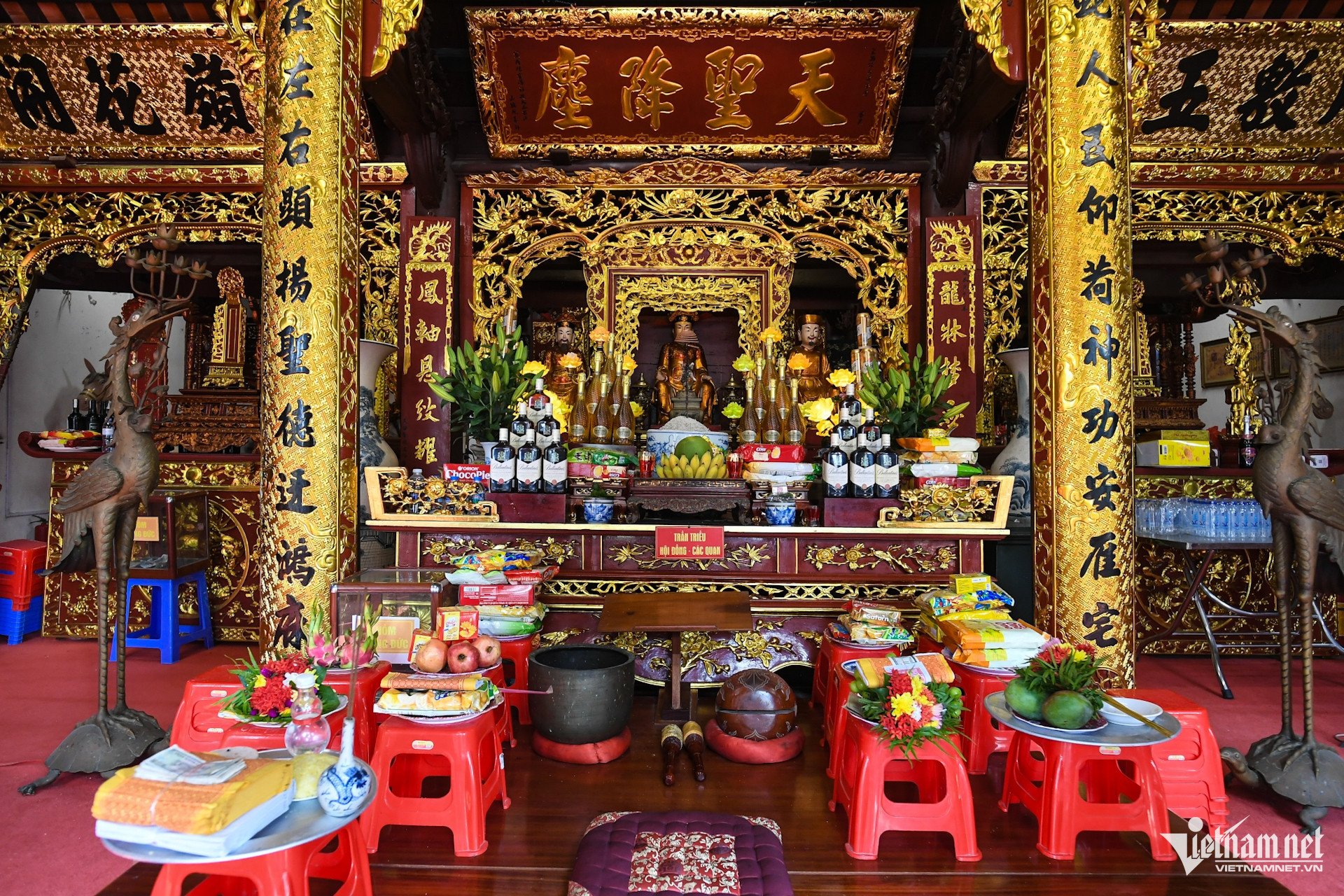
After Princess Quynh Tran died, local residents sought royal recognition and established a temple in remembrance of her contributions to the community.
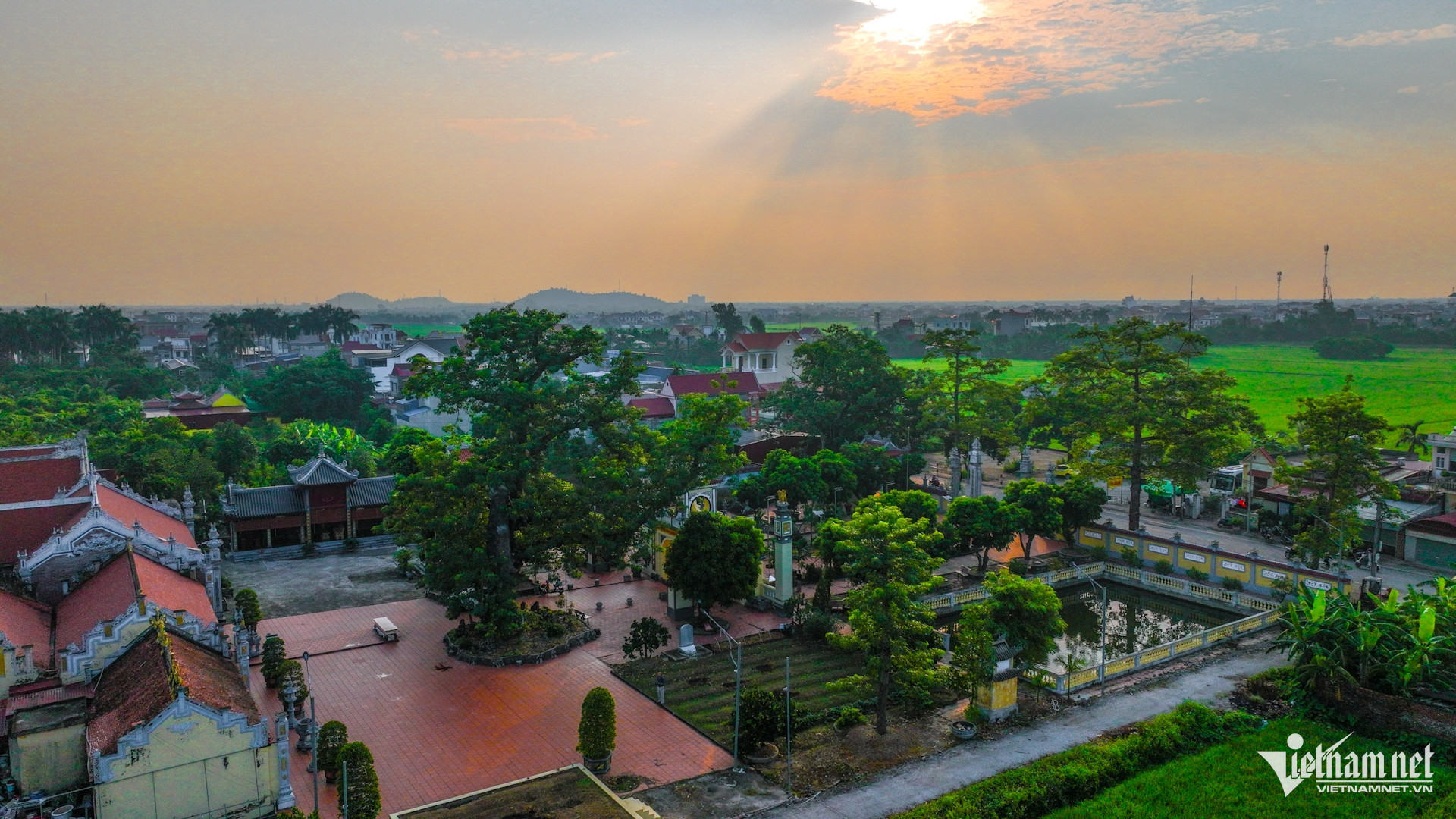
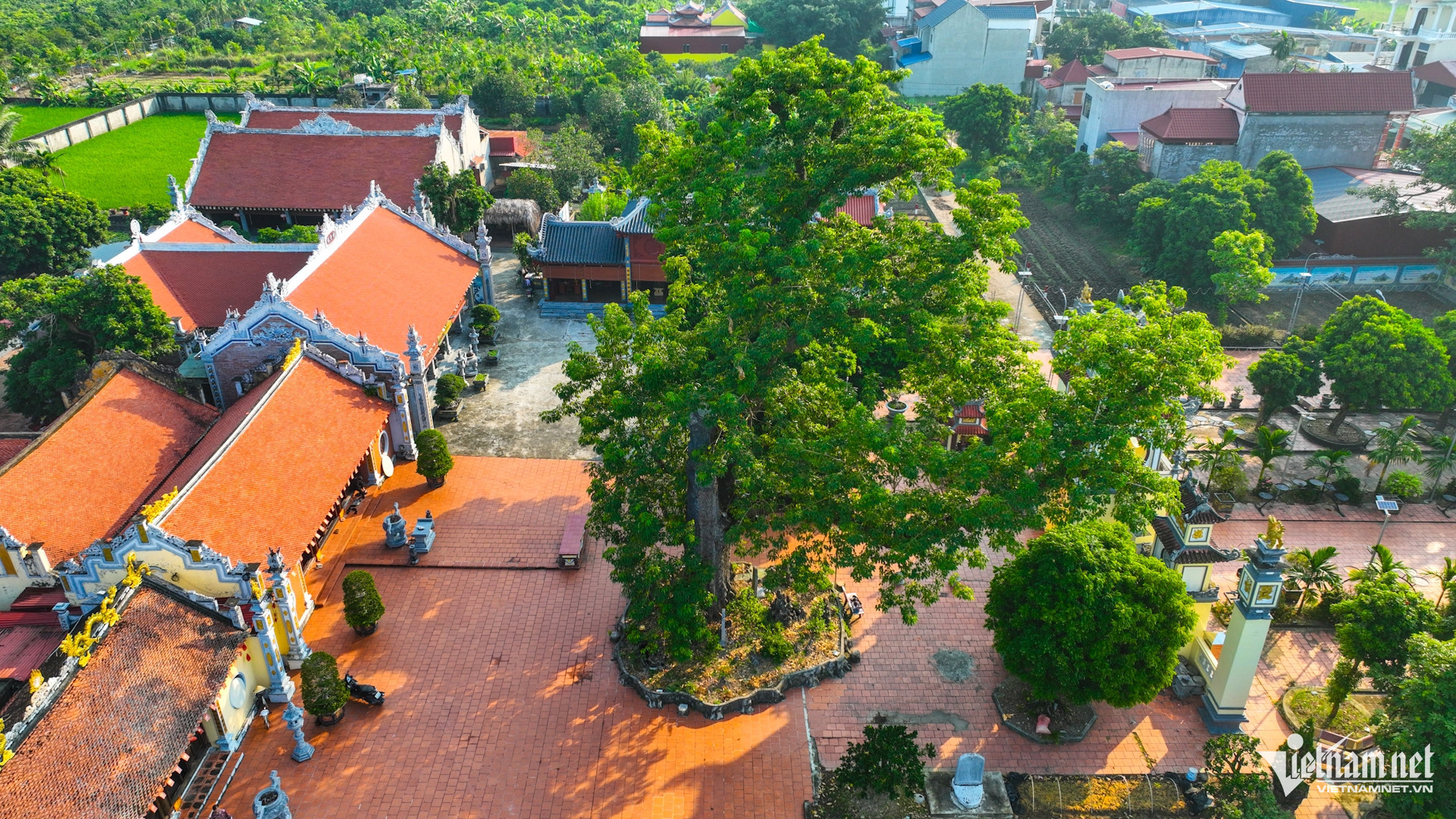
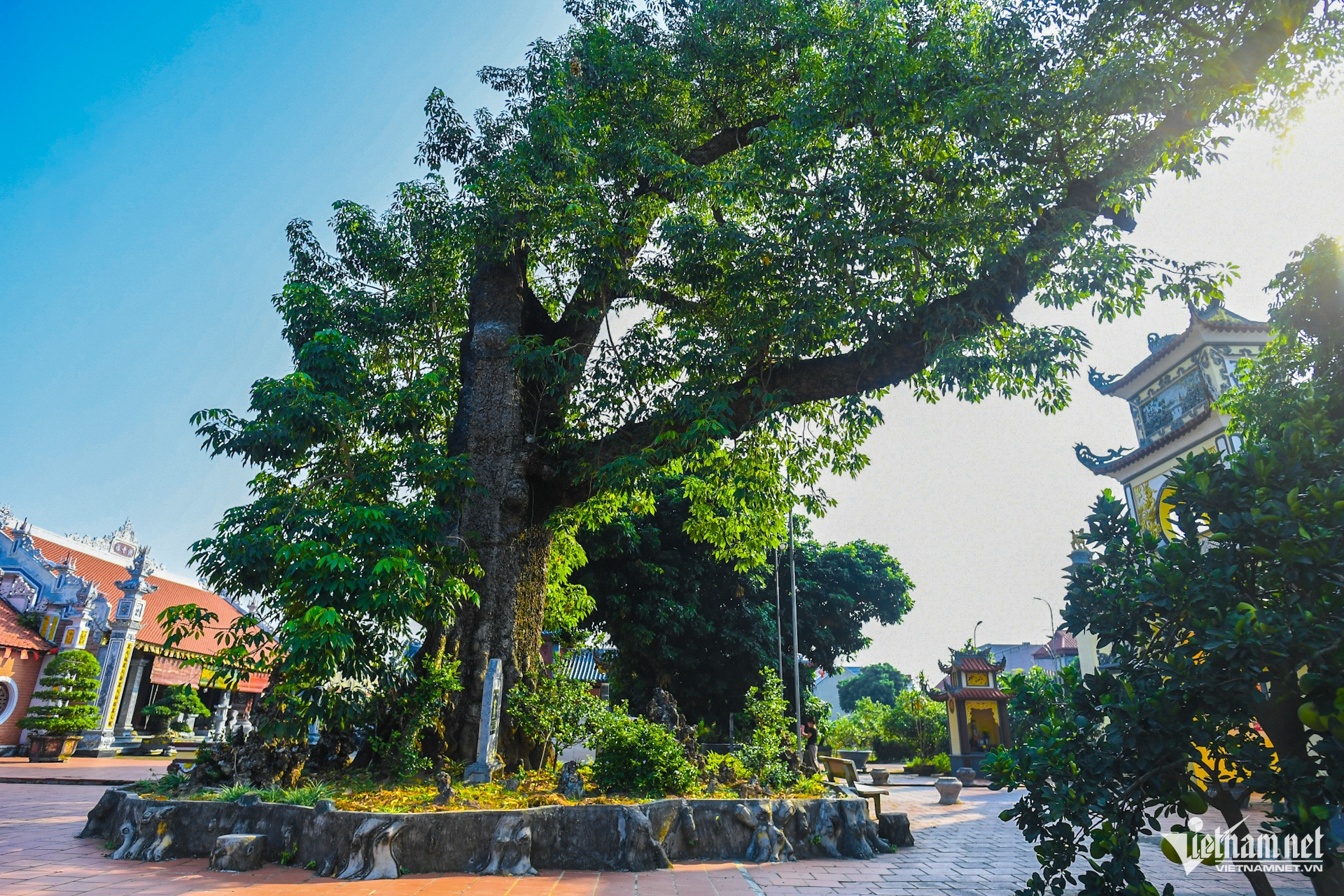
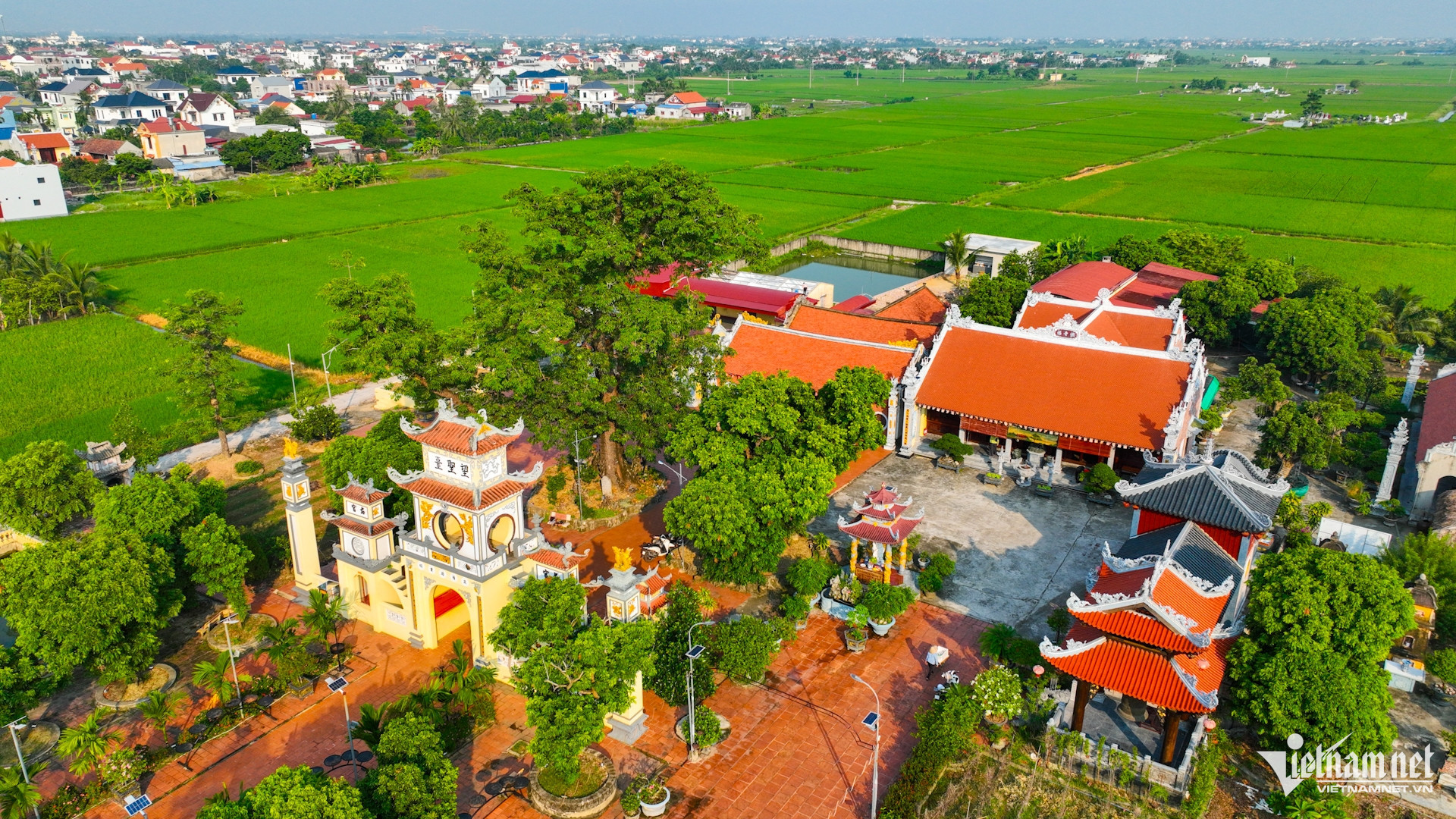
A towering kapok tree standing in the grounds of Mo Temple is regarded locally as a living link to the princess’s story.
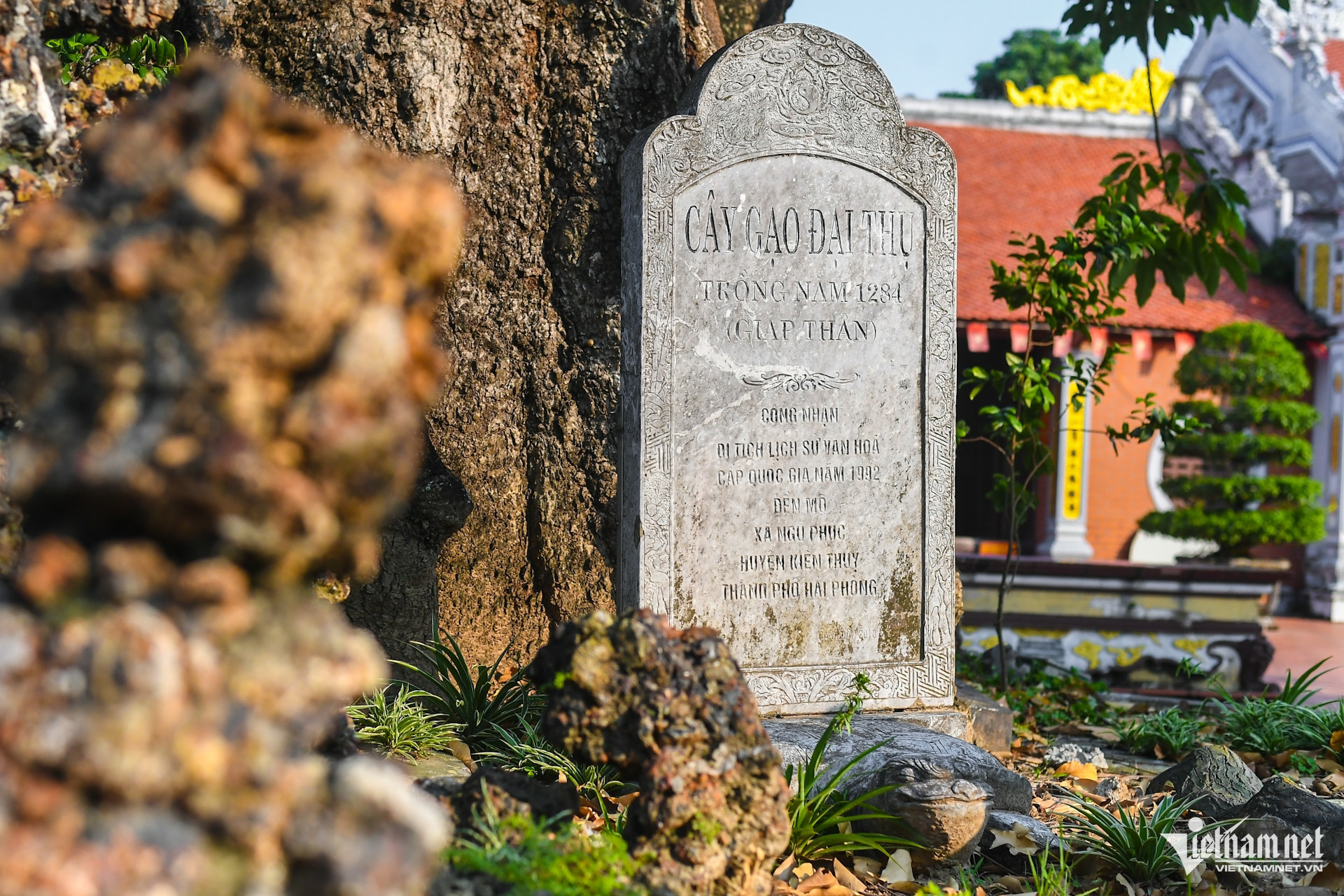
According to tradition, Quynh Tran planted the tree herself in 1284 with the wish that local people would enjoy lives of abundance. Now said to be 743 years old, the tree has been officially recognized as a Vietnamese Heritage Tree.
Nguyen Dinh Hoa, who runs a small drinks stall nearby and has lived around the temple since childhood, said he has witnessed major storms topple trees throughout the area while the ancient kapok remained standing.
Even when its branches have broken, he said, they have never fallen onto the temple roof.
Mo Temple is home to two officially recognized heritage trees: the 743-year-old kapok and an ancient longan tree more than 500 years old. Standing on opposite sides of the worship area, they are silent witnesses to centuries of change in the surrounding village.
The kapok has another unusual feature. A smaller branch grows naturally from its main trunk, creating a shape that local people liken to a mother holding a child.
The distinctive form has taken on spiritual significance. Families struggling to have children travel from different parts of Vietnam to the tree to pray for children and grandchildren.
A temple without a gate - and a 400-year-old gilded treasure
Amid the pace of modern life, Mo Temple remains a quiet place where history, faith and community memory have become intertwined over centuries.
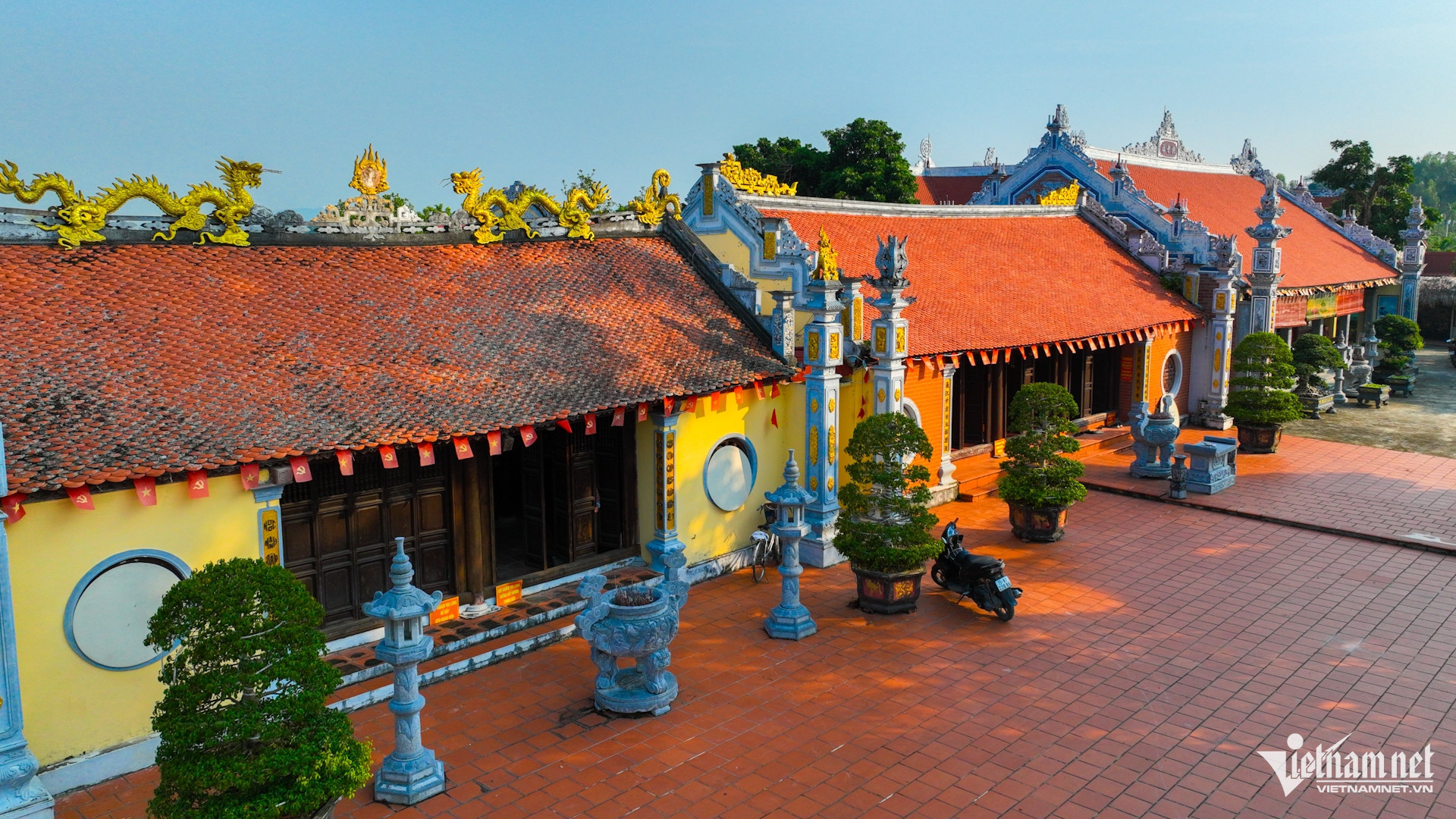
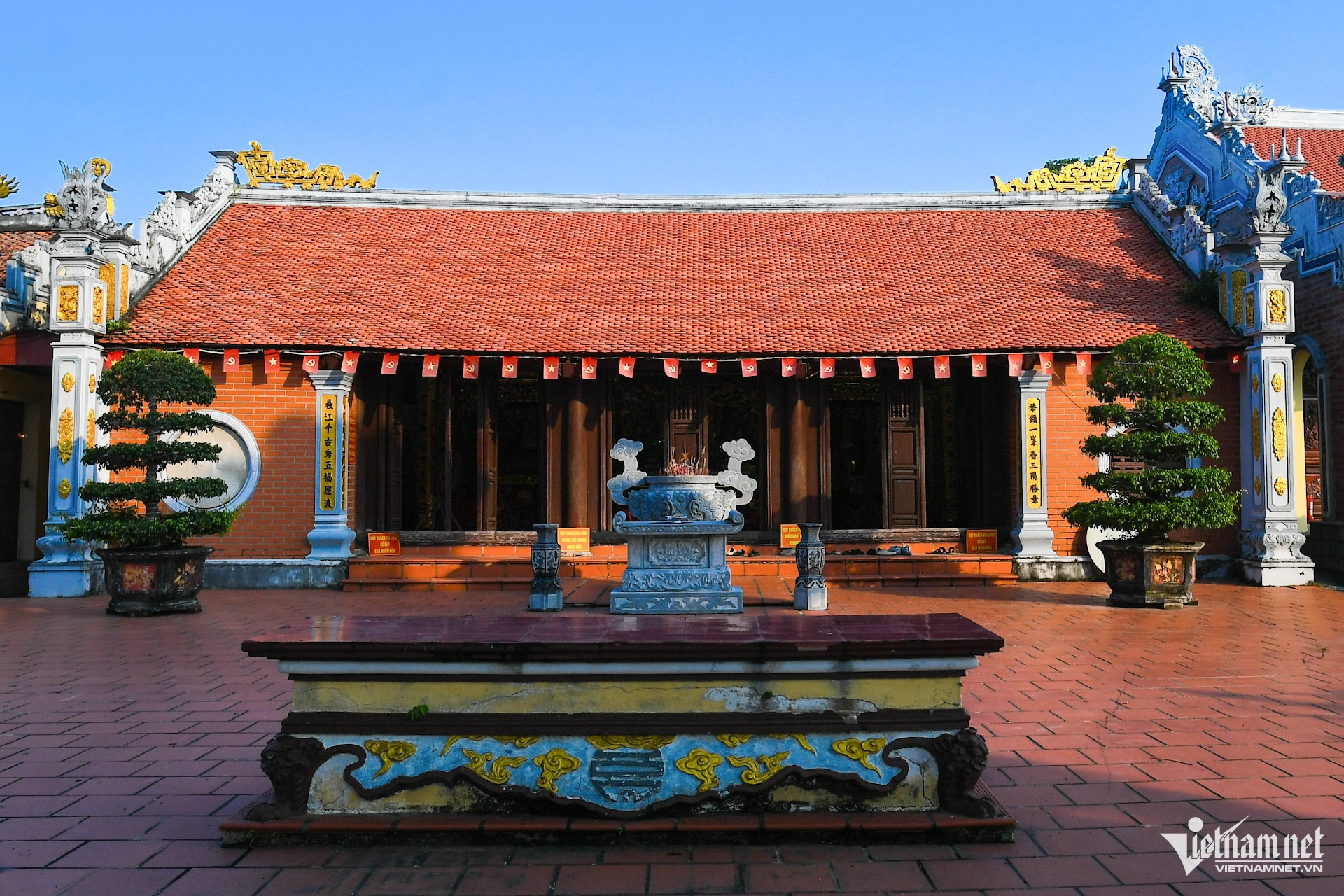
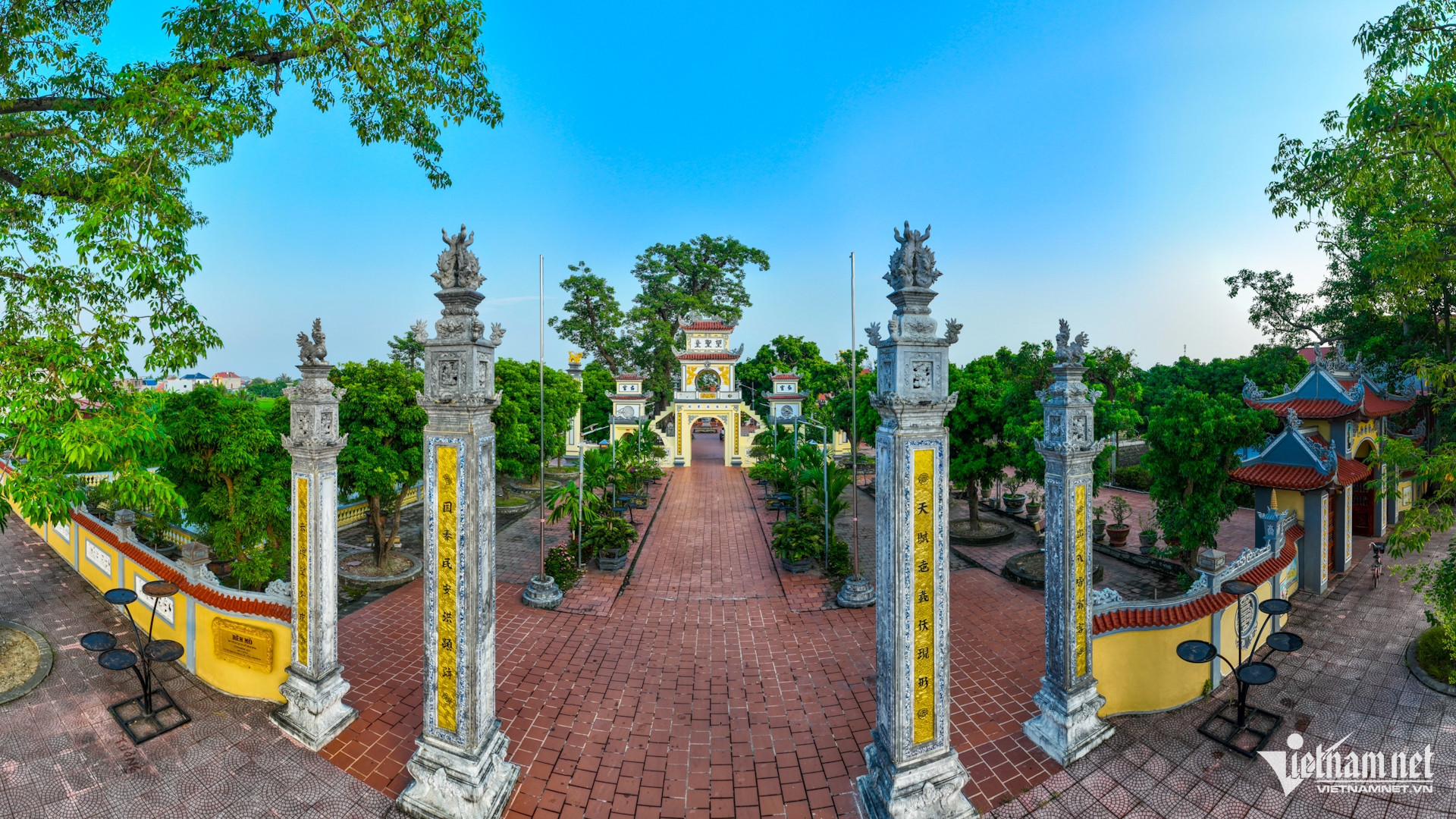
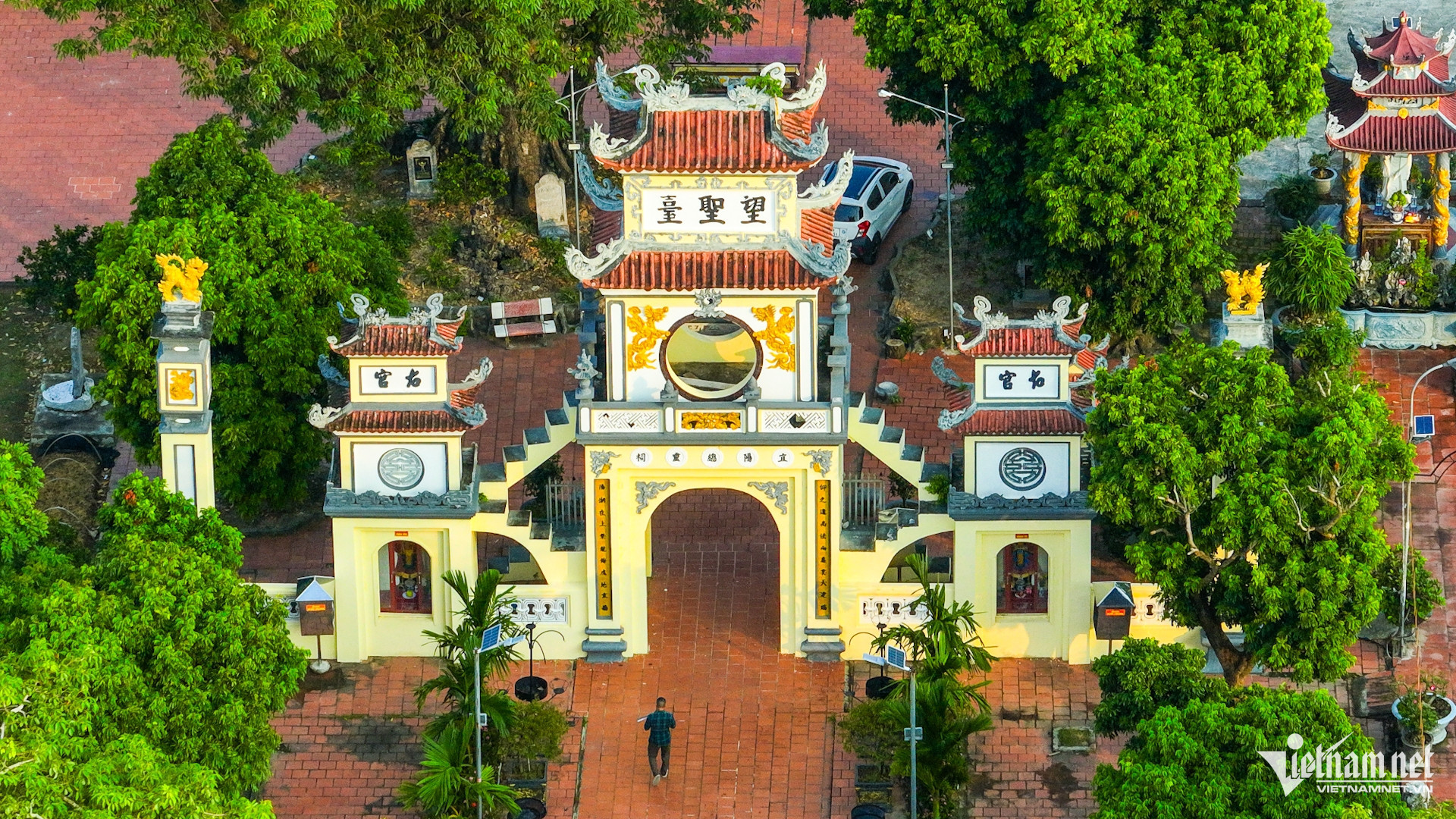
One architectural detail immediately surprises visitors: the temple has no gate.
Its grounds are therefore less physically separated from the surrounding community than those of many traditional religious sites, yet the temple retains a solemn, ancient atmosphere.
Hoa said the unusual design follows an old convention: temples dedicated to officials believed to make ceremonial rounds and stand guard were not supposed to have gates.
At one point, local residents planned to contribute hundreds of millions of Vietnamese dong to build one. Cultural authorities did not approve the proposal, however, in order to preserve the temple’s traditional architectural form.
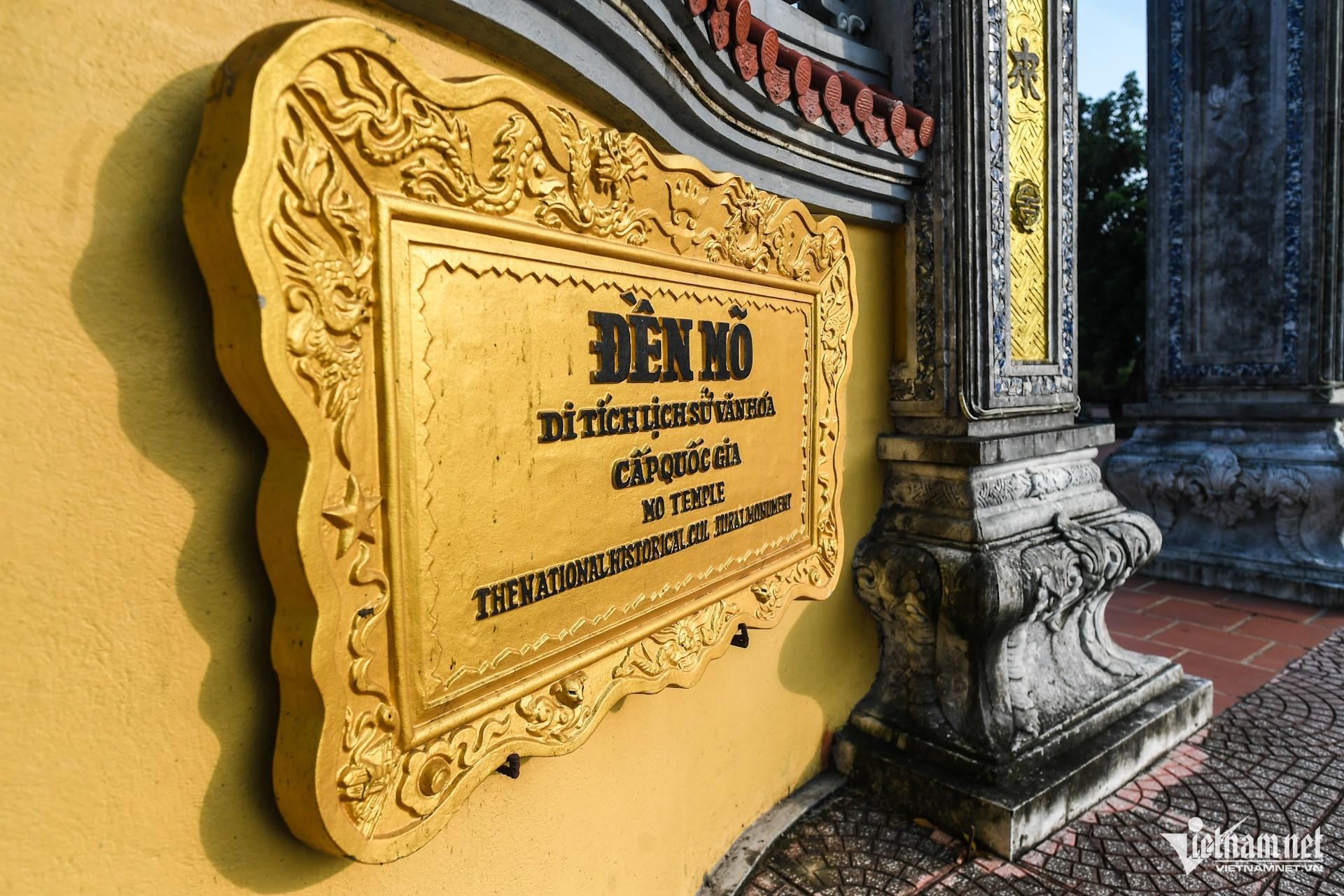
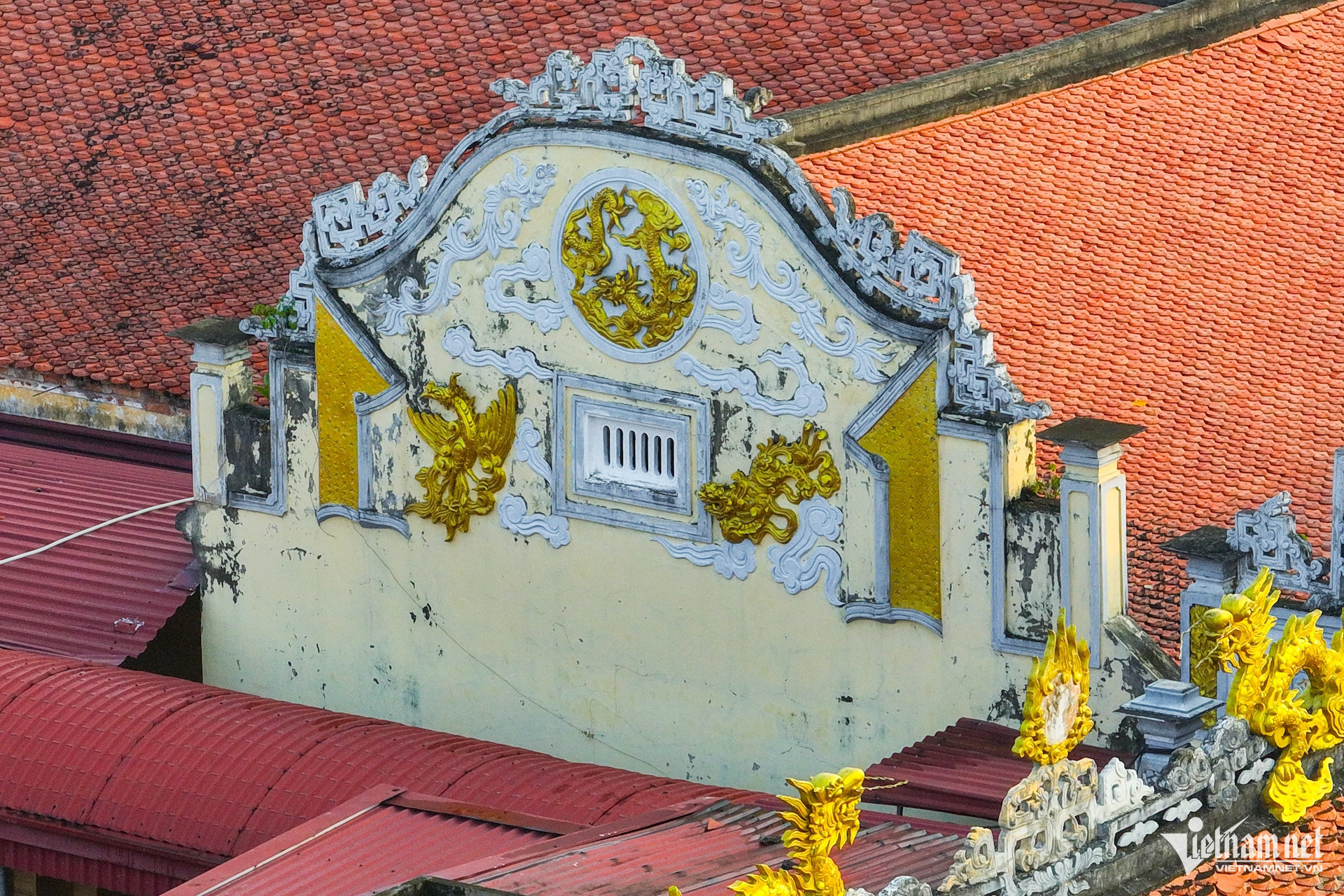
Mo Temple was rebuilt in 1935 with the support of a man known as Bang Thieu. In 1992, it was officially recognized as a national historical site.
The temple once possessed numerous antiques, including incense burners, large decorative vases and ritual objects. Many were lost during wartime or through inadequate preservation.
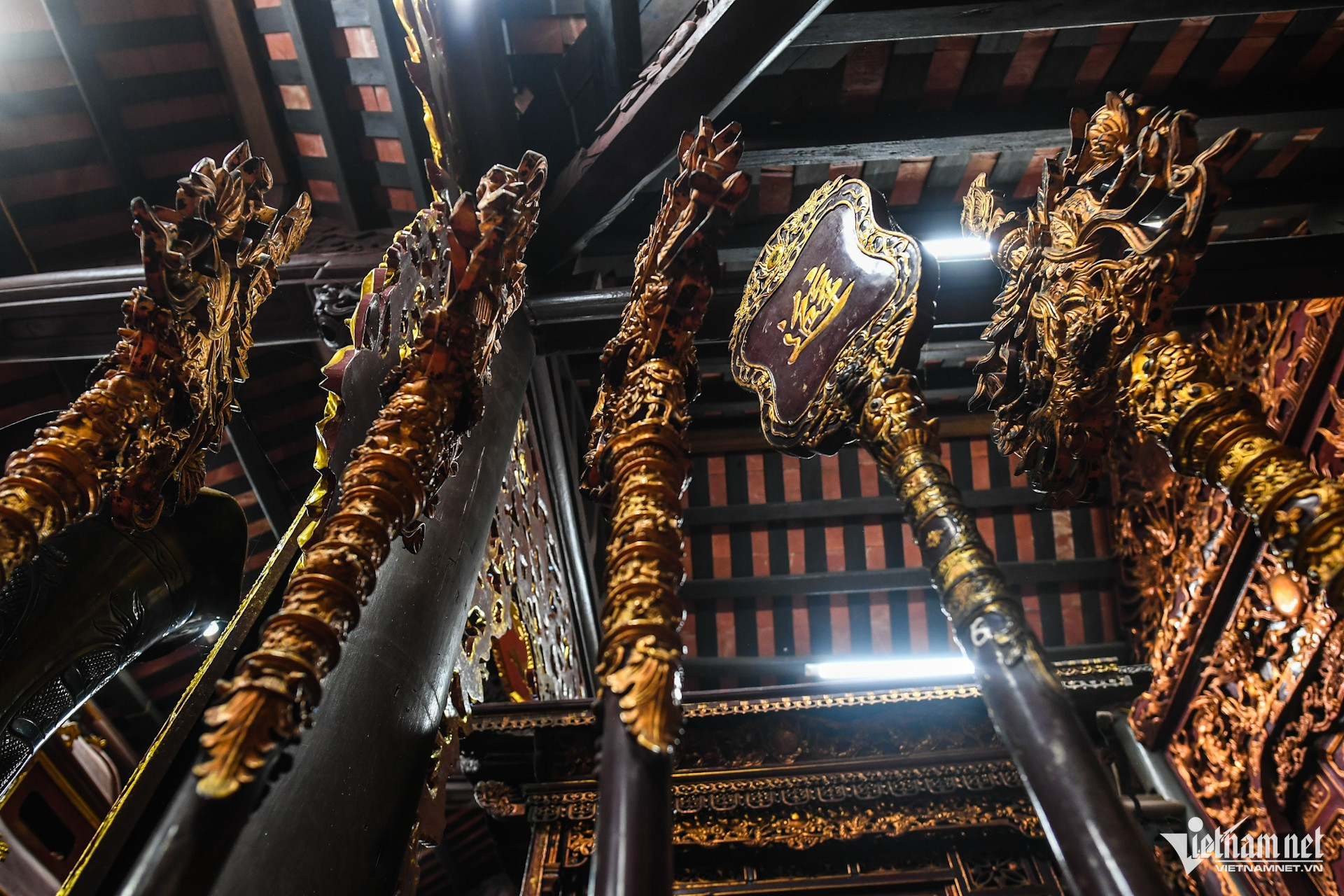
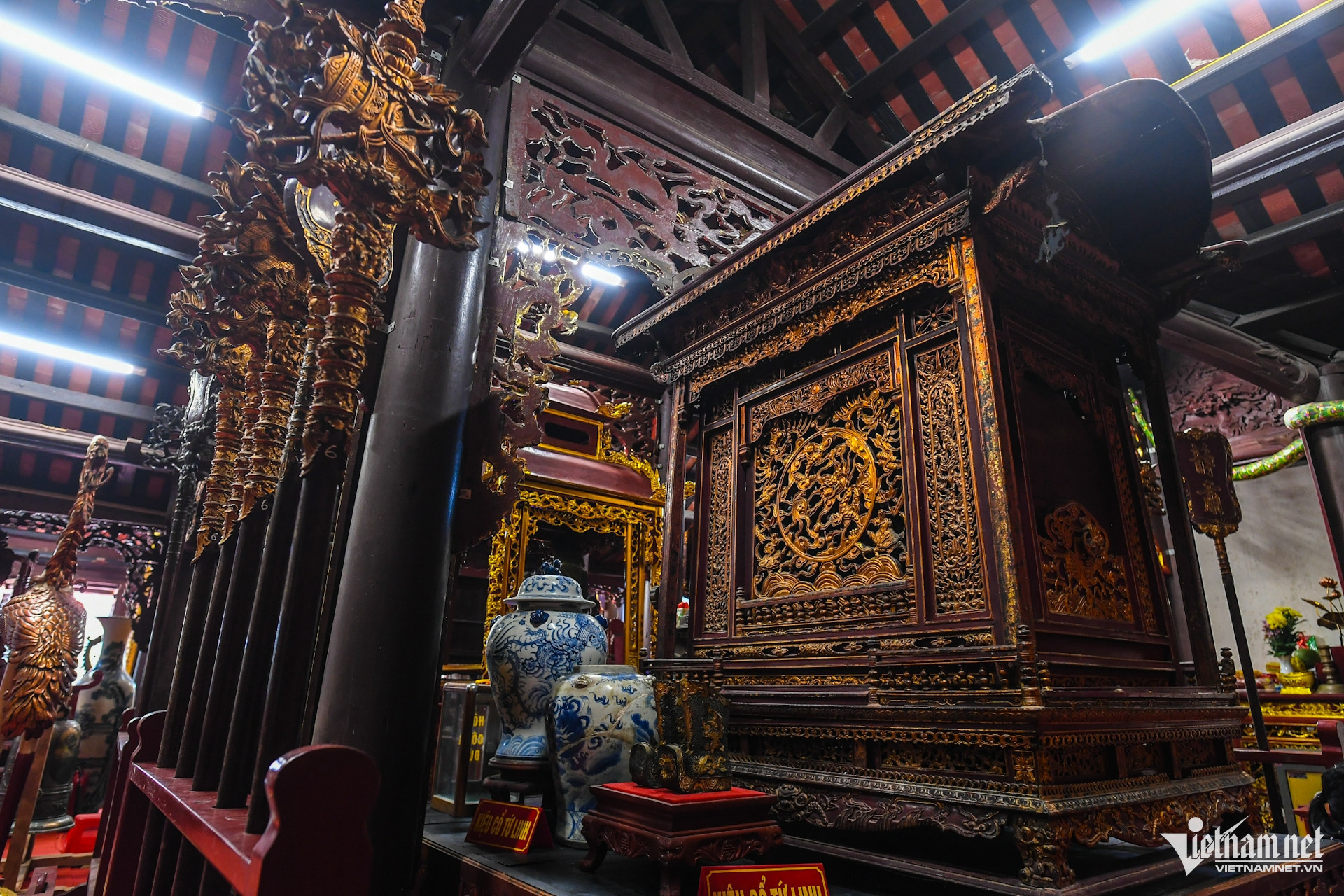
A number of valuable artifacts remain, among them ancient ceremonial blades and a rare Four Sacred Creatures palanquin more than 400 years old.
The palanquin takes its name from four creatures deeply embedded in traditional East Asian culture: the dragon, qilin, turtle and phoenix.
“The Four Sacred Creatures palanquin is particularly special,” Trai said. “During recent restoration work, objects identified as antiques were not repainted. As the outer layers of paint gradually peeled away with age, the original gold underneath was revealed, astonishing local residents.”
To protect artifacts preserved through generations, the temple management has installed 16 security cameras and maintains guards around the clock.
Preserving a national cultural and historical site
Every year, from the 12th to the 14th day of the 12th lunar month, Mo Temple holds its major annual festival.
Traditionally, the event brought together the “Five Blessings,” referring to five communal houses from villages in the surrounding area. Following a recent administrative reorganization, two more village communal houses have joined, bringing the total to seven.
During the festival, groups of young men and women carry ceremonial pavilions, ritual objects and palanquins honoring village guardian deities in long processions toward Mo Temple, where they pay tribute to Princess Quynh Tran.
Over the three days, the temple grounds come alive with traditional activities including tug-of-war and cockfighting, as well as performances of cheo, a form of Vietnamese traditional theater, and quan ho folk singing performed from dragon boats.
Trai, who has spent many years helping look after the historic site, said belief in the princess remains strong.
“Princess Quynh Tran is considered very sacred,” he said. “Local people and visitors come here to pray for blessings, prosperity, good fortune and health. Some people come from as far away as Nghe An, Ha Tinh or southern Vietnam. They may not even know exactly where Mo Temple is, but they still find their way here because of the spiritual stories they believe in.”
Such stories are difficult to verify scientifically, but within the spiritual life of the community they have created a distinctive layer of collective memory that contributes to the temple’s sacred character.
Some practices that were once regarded as superstition have also gradually returned to cultural life at Mo Temple, including rituals involving spirit mediums.
For Trai, the most pressing question is how to restore and improve the temple without losing what has survived from the past.
Funding for restoration currently comes mainly from people originally from the area who now live elsewhere, as well as visitors and worshippers. Facilities for visitors, including restrooms and a hall, are also being completed with contributions from these sources.
Centuries after its story began, Mo Temple is more than a place of folk worship.
For many people, it remains somewhere to entrust their most ordinary hopes: a peaceful home, healthy children and a life of sufficiency.
In a world changing by the day, the temple continues to preserve something simple yet precious - a community’s memory of a woman who came to this land, helped its people and, generations later, remains part of both its landscape and its collective memory.

Thach Thao - Binh Minh
.svg)
