 Vietnamnet.vn

 Podcast



Separated by nearly 30 kilometers, Van Phuc Village in Hanoi and Nga My Village in Thanh Mai Commune have preserved a unique brotherhood for the past 1,000 years, making their bond an enduring symbol of solidarity, flood control and Vietnam's traditional village culture.
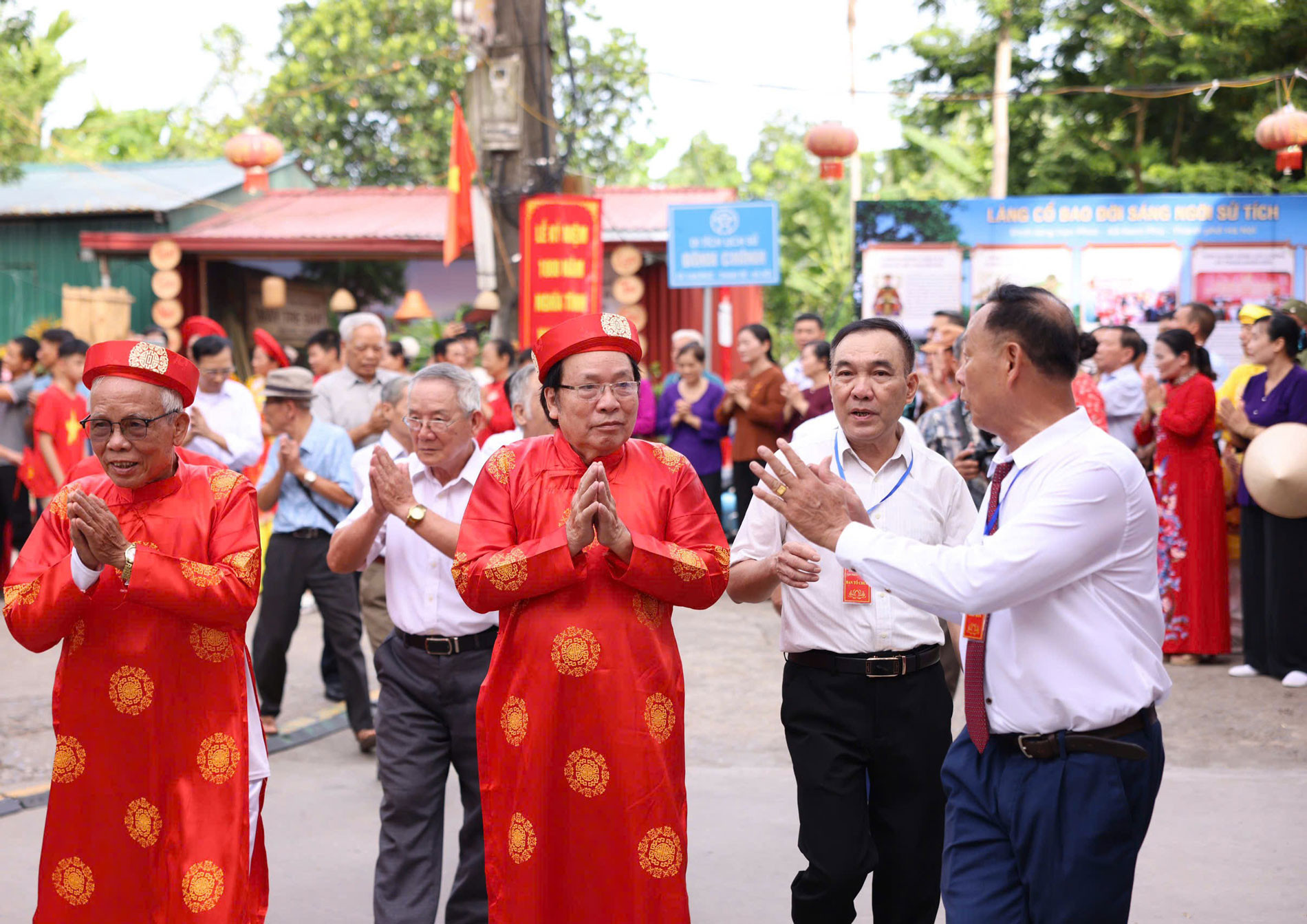
On July 19, the main communal house of Van Phuc hosted a ceremony marking 1,000 years of friendship between Van Phuc and Nga My, accompanied by a large-scale historical performance titled "Van Phuc – Nga My: Ancient Villages, Timeless Legacy."
The tradition, known as ket cha - a form of ceremonial brotherhood between villages involving mutual support, participation in each other's funerals and festivals - is regarded as a sacred element of northern Vietnam's intangible cultural heritage.
Dating back to the reign of Emperor Ly Thai To, this rare relationship has endured not only as a historical memory but also as a living tradition. More than a ceremonial alliance, it has connected generations of villagers in reclaiming land, controlling floods, overcoming natural disasters and protecting their communities.
Historian Le Van Lan described the Van Phuc–Nga My relationship as one of the most remarkable examples of ket cha in Vietnam's traditional village culture.
He said the enduring spirit of mutual support and cooperation between the two villages, maintained across a millennium despite the geographical distance between them, is what gives the tradition its lasting vitality.
An epic performance celebrating a thousand years of friendship
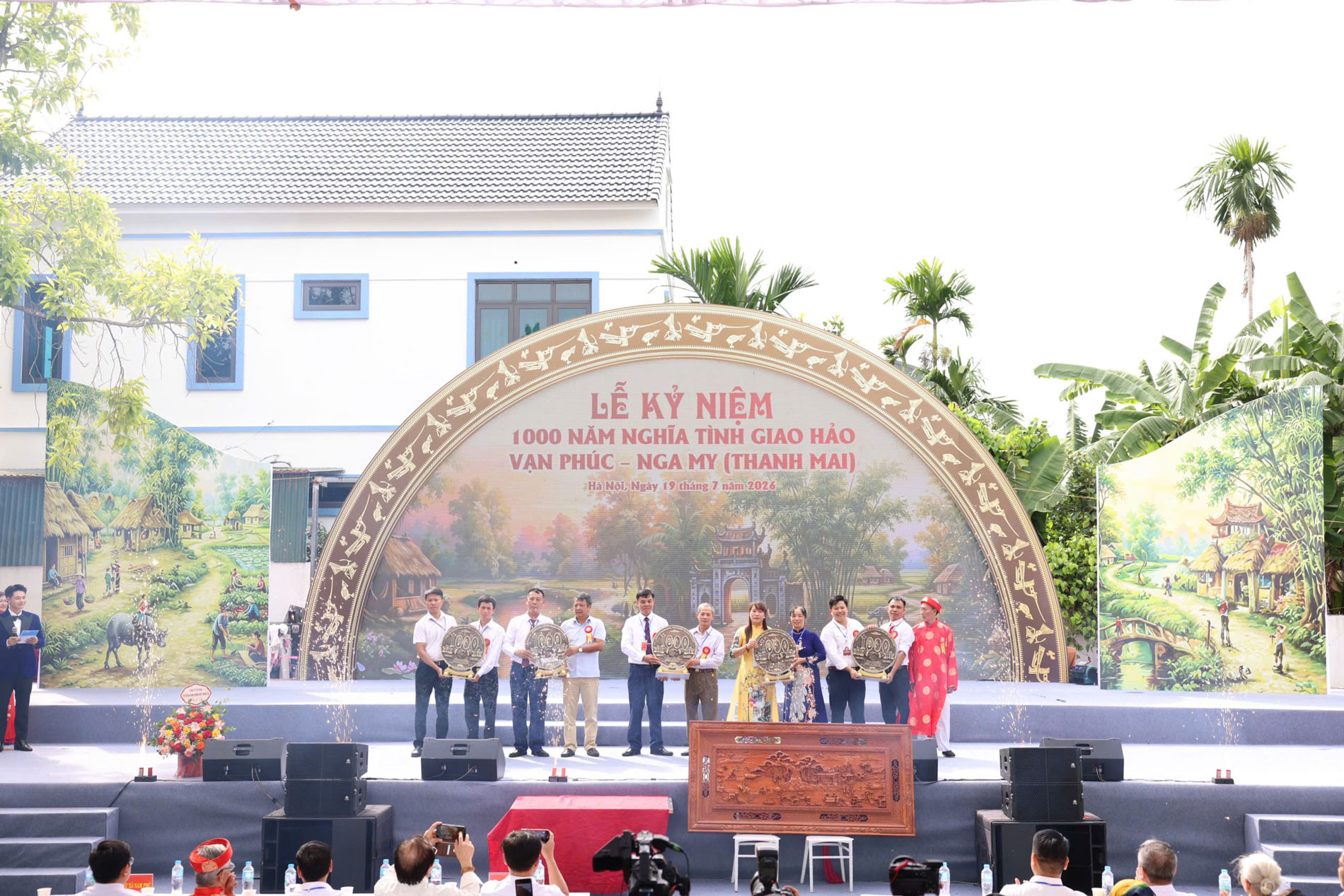
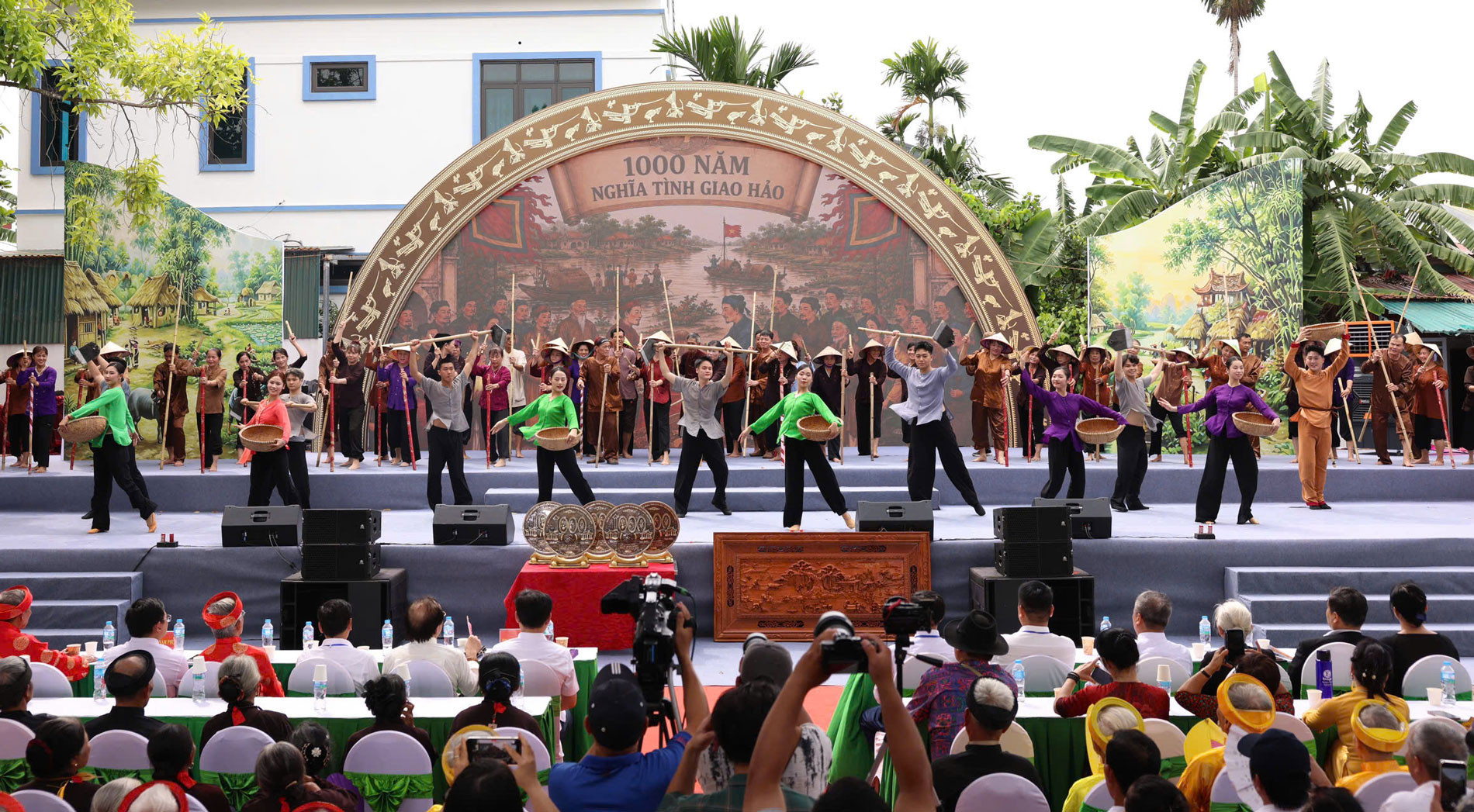
The highlight of the celebration was the epic stage production "Van Phuc - Nga My: Ancient Villages, Timeless Legacy."
Rather than simply recounting historical events, the performance combined historical Han-Nom documents, music, dance and narration into a theatrical tribute to the shared history of the two communities.
Using symbolic imagery such as rivers, dikes and bamboo, the production traced the villages' thousand-year journey.
The historical atmosphere was further enhanced by narration from People's Artist Le Chuc.
Music inspired by the folk traditions of northern Vietnam featured performances by Tuan Anh, Minh Thuy, Duong Duc, Ha Lan and Tram Anh, accompanied by large-scale choreography created by Meritorious Artist Pham Quynh Duong.
The performance recreated the lively atmosphere of traditional village festivals, the collective effort of building flood-control dikes and the emotional bond expressed through the affectionate terms "Quan anh" (elder brothers) and "chung em" (younger siblings) used between residents of the two villages.
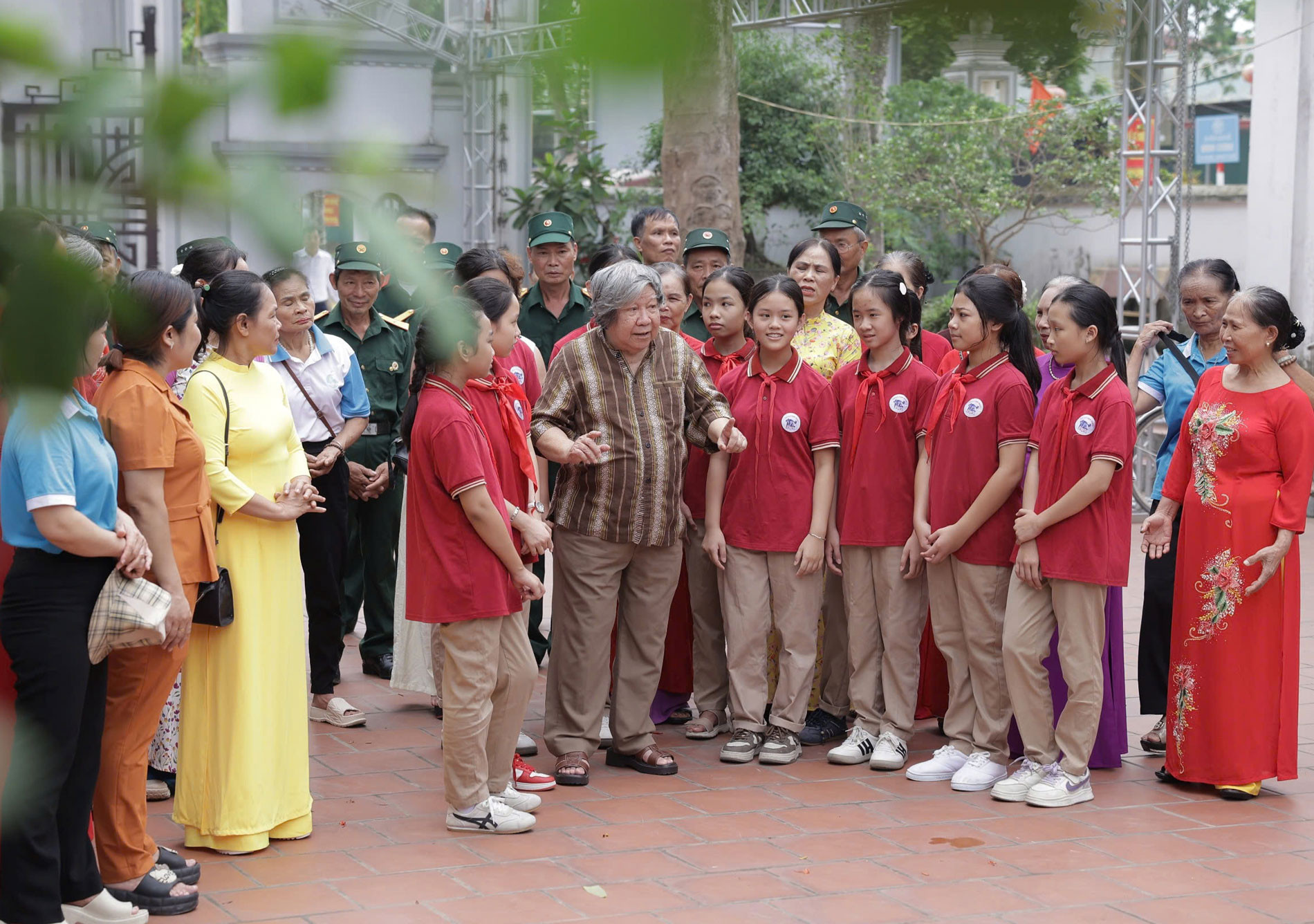
The event also created a meaningful dialogue between generations.
One of the ceremony's most moving moments saw village elders passing the symbol of brotherhood to children, while the "Bamboo of Brotherhood" ritual featured traditional call-and-response folk songs performed by residents from both villages.
The tradition of ket cha
Unlike many villages linked through ket cha, which are typically separated only by a river or ferry crossing, Van Phuc and Nga My lie nearly 30 kilometers apart.
According to village records and local legends, the tradition dates back to the early years after Emperor Ly Thai To moved the capital to Thang Long, now Hanoi.
At the time, repeated breaches along the Dinh Nhi dike south of the royal capital caused severe flooding that devastated crops and disrupted local communities.
The emperor ordered people from surrounding areas to help reinforce the dike.
Villagers from Van Phuc traveled to Nga My to repair embankments and strengthen flood defenses despite the difficult journey.
Thanks to their efforts and determination, the damaged dike was restored and the villages of Nga My were protected once again.
In gratitude for this act of solidarity, the people of Nga My asked to establish a formal brotherhood with Van Phuc.
They pledged to address the people of Van Phuc as "Quan anh" while referring to themselves as "chung em," symbolizing the relationship between elder and younger siblings.
The oath of brotherhood was approved by the emperor, who also decreed that people from the two villages should not marry because they were to regard one another as members of the same family.
Since then, during village festivals and religious ceremonies, delegations from each village have continued to visit one another, worship together and cooperate in maintaining the local dike system.
Tinh Le
.svg)
