 Vietnamnet.vn

 Podcast



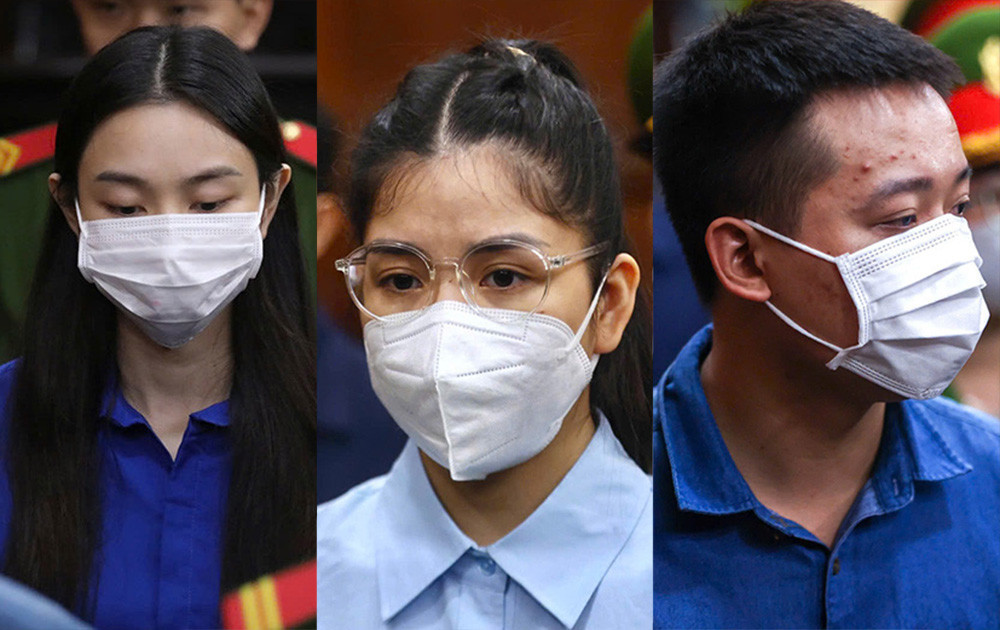
A number of people once considered "sales monuments" faced legal trouble, with regulatory authorities tightening the legal framework for KOLs (key opinion leaders) and KOCs (key opinion consumers).
While 2024 marked the rise of Shoppertainment (shopping combined with entertainment), with livestream "warriors" setting sales records of hundreds of billions of VND and attracting hundreds of thousands of viewers per session, the market quickly turned in 2025.
The vibrant atmosphere gradually gave way to silence as numerous individuals once seen as "livestream idols" were caught in legal loops or fell into a crisis of trust.
The Kera vegetable candy case (under Chi Em Rot Group JSC) involving 2021 Miss Grand International Thuy Tien, Hang Du Muc, and Quang Linh Vlogs became the first major shock for e-commerce in 2025.
Once heavily promoted as a breakthrough health solution with the slogan “one candy equals one plate of vegetables,” the product quickly dominated the market thanks to the influence of the three individuals in their roles as founding shareholders. More than 135,000 boxes were sold, generating illicit profits amounting to tens of billions of VND.
According to conclusions from competent authorities, Kera candy contained none of the vegetable powders as announced. Its main ingredient was actually the sweetener Sorbitol, a substance with laxative effects, used to deceive consumers.
When public suspicion began to arise, the individuals staged fake advertising contracts to remove their shareholder status and evade legal responsibility.
In April 2025, Hang Du Muc (Nguyen Thi Thai Hang) and Quang Linh Vlogs (Pham Quang Linh), followed by beauty queen Thuy Tien (Nguyen Thuc Thuy Tien), were prosecuted and placed in temporary detention. By November 2025, the People’s Court of HCMC sentenced each defendant to two years in prison for the crime of deceiving customers.
Next came the case involving Vo Thi Ngoc Ngan (Ngan 98) and Luong Bang Quang. Both were prosecuted and detained for investigation into the production and trading of counterfeit goods, specifically functional foods and cosmetics, through entities such as ZuBu Trading and Services Co., Ltd.
According to investigators, the couple exploited their social media influence to distribute large quantities of products with unclear origins, particularly “collagen vegetable pills” containing banned substances, seriously affecting consumer health.
During searches of their residence, authorities seized dozens of land-use rights certificates along with many other valuable assets.
Another serious case involved Nguyen Quoc Vu, husband of Doan Di Bang. In November 2025, Vu, in his capacity as CEO of VB Group, was prosecuted and detained by Dong Nai provincial police for producing and trading counterfeit goods.
The focal point of the violation was the Hanayuki Sunscreen Body product line. Inspection results showed that the actual SPF level was just over 25, while the packaging advertised SPF 50. This exaggeration was alleged to have deceived more than 1,600 consumers, directly affecting users.
Authorities conducted searches of Vu’s private residence and suspended the circulation of many other Hanayuki products for failing to match their declared ingredient formulas.
The name Hoang Huong (Hoang Thi Huong) continued to draw attention. In October 2025, the Investigation Police Agency under the Ministry of Public Security officially prosecuted and detained Hoang Huong and her accomplices for violating accounting regulations causing serious consequences.
Initial investigation results showed that from 2021 to mid-2025, Hoang Huong’s ecosystem kept nearly VND1,800 billion in revenue off the accounting books and falsely declared value-added tax related to more than VND2,100 billion in revenue.
On social media, Hoang Huong was previously notorious for multiple controversies, including advertising functional foods (joint supplements and mouthwash) as medical treatments, as well as making inflammatory statements with regional discrimination.
New regulations
Faced with the distortions and serious consequences of livestream sales, state management agencies had to intervene decisively. New regulations require clear identification of sellers, tighten the legal responsibility of KOLs and KOCs when advertising products, and mandate e-commerce platforms to store livestream data for long periods to serve inspection and investigation.
The amended E-commerce Law also clarifies joint liability among platforms, sellers, and promoters, while strictly handling acts such as exaggerating product functions, forging documents, or trading goods of unclear origin.
The 2025 Advertising Law is considered an important legal milestone, marking a fundamental change in how promotional activities on digital platforms are managed. Responsibilities of KOLs and KOCs have been raised to the highest level ever. Influencers are no longer merely “product introducers” but are required to directly verify product origins, legal status, and declared information before advertising.
Duy Anh
.svg)
