 Vietnamnet.vn

 Podcast



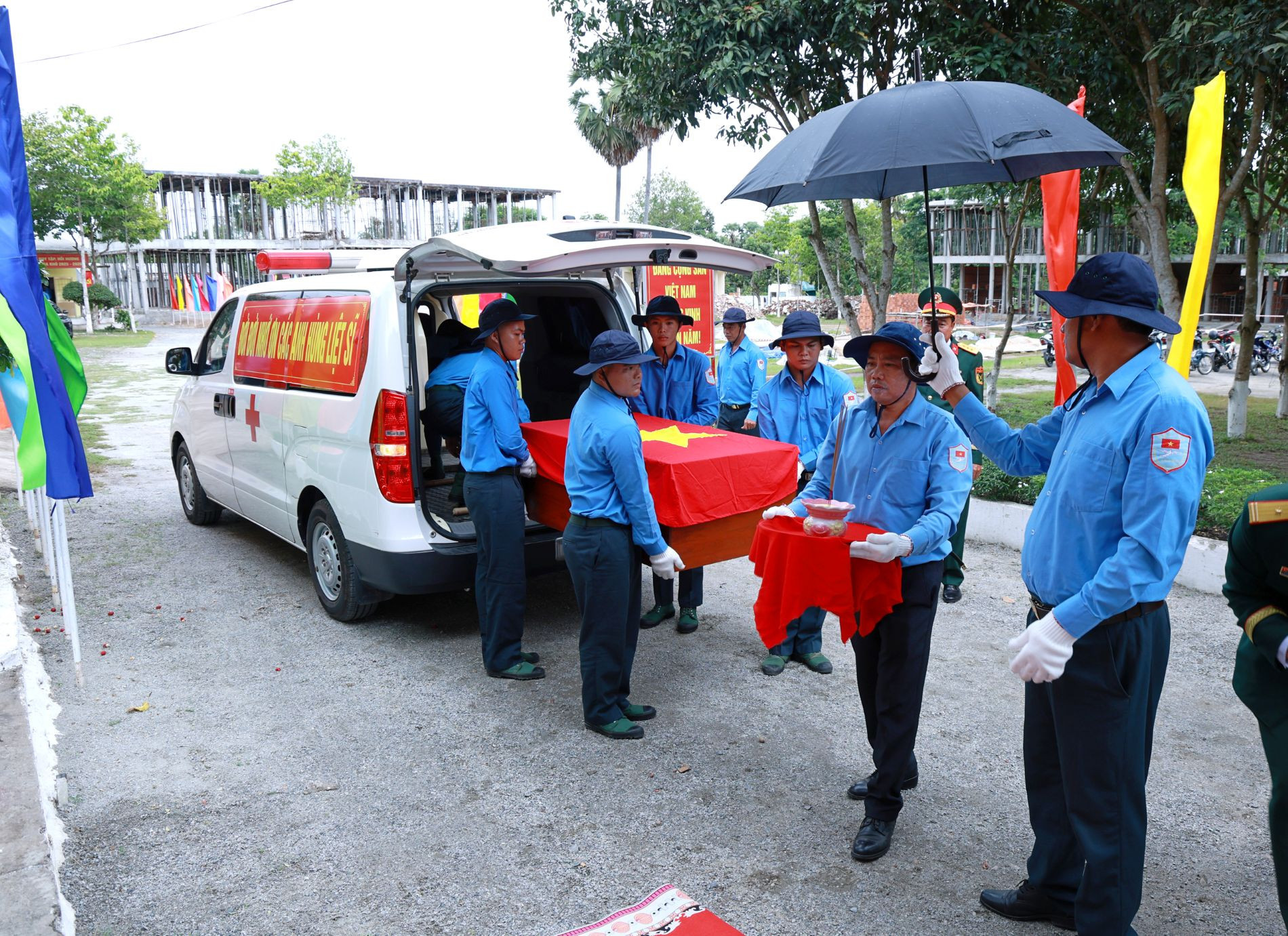
After a briefing at the headquarters of the K90 Martyrs' Remains Recovery Team under Military Region 9, a convoy quietly departed, crossing the border into Kandal Province, Cambodia.
On board were relatives of martyr Nguyen Thanh Binh, veteran Vo Van Toan (born in 1952, Dien Chau Commune, Nghe An Province), and officers and soldiers of Team K90.
They carried shovels, picks, GPS devices, faded military maps, and files preserving the name of the soldier who had fallen more than half a century ago.
No one knew whether this journey would finally bring their comrade home. But everyone understood that as long as there was even a glimmer of hope, the search had to continue.
Around noon, the team arrived at Boeng Kandal Village, Khpop Ateav Commune, Leuk District, Kandal Province, an area long identified as the possible burial site of martyr Nguyen Thanh Binh.
The landscape was vastly different from what veteran Vo Van Toan remembered.
He stood silently for a long moment, slowly scanning the open fields as if searching for traces of a battlefield that time had erased.
"I remember that when we buried Binh, there was a canal and a large bamboo grove nearby," he said quietly.
More than 50 years earlier, Toan had personally helped bury Nguyen Thanh Binh after a battle in early 1974.
When the war ended, the former soldiers scattered across the country. Yet Toan carried with him one enduring regret. He could no longer identify the exact place where his comrade had been laid to rest.
The military map was gone. The coordinates had disappeared.
The only thing he had managed to preserve for more than half a century was his memory.
For Binh's family, that memory became precious after years in which hope had nearly faded away.
For the soldiers of Team K90, however, it was only the starting point.
Using the veteran's recollections, recovery officers cross-checked wartime operational maps, battle diaries, archival records, and information gathered during previous dry-season search missions.
Only after multiple sources converged on the same location would a field survey begin.
Since 2001, Team K90 has recovered the remains of 2,027 Vietnamese martyrs across Cambodia. During the 2025-2026 dry season alone, the unit recovered 65 sets of remains.
During a mission in early May 2026, Team K90 organized a workshop in Boeng Kandal Village with Cambodian military and police officials, along with elderly residents who had lived in the wartime area.
An old map was spread across the table.
Each participant contributed another fragment of memory.
An elderly Vietnamese-Cambodian man, Sau Tho, recalled only the sound of the river that once flowed behind the battlefield. Small details like these were pieced together, gradually narrowing the search area.
Toan fell silent for a long while before quietly saying, "If I can no longer remember, how will we ever find Binh?"
His words left the room in silence.
Everyone understood that time not only ages people but also erases the traces of war.
Lieutenant Colonel La Phu Huy, commander of Team K90, reassured the family that the search area had been identified and that his team would continue surveying it step by step.
"As long as there is hope, we will keep searching," he said.
Before every recovery mission, officers and soldiers conduct field surveys, locate witnesses, organize workshops, and coordinate with local authorities in Cambodia.
When entering the forests, they carry not only digging tools but also GPS equipment, satellite imagery, military maps, and weathered archival files.
Yet the further the war recedes into history, the more difficult the search becomes.
Time has blurred not only human memory but also the physical traces of former battlefields.
According to Lieutenant Colonel Huy, some sites have been excavated 10 times without success. Some dry-season missions end empty-handed. Yet other remains have been found only after more than a decade of patiently following every available clue.
Late the following afternoon, the convoy left Boeng Kandal and returned to Vietnam.
The picks and shovels remained untouched in the back of the truck. The file bearing Nguyen Thanh Binh's name was closed once again.
This journey did not bring the fallen soldier home.
But no one spoke of failure.
Because across the border, there are still forests left to search.
And on this side of the border, there are still families waiting for their loved ones to return.
Thanh Hai
.svg)
