 Vietnamnet.vn

 Podcast



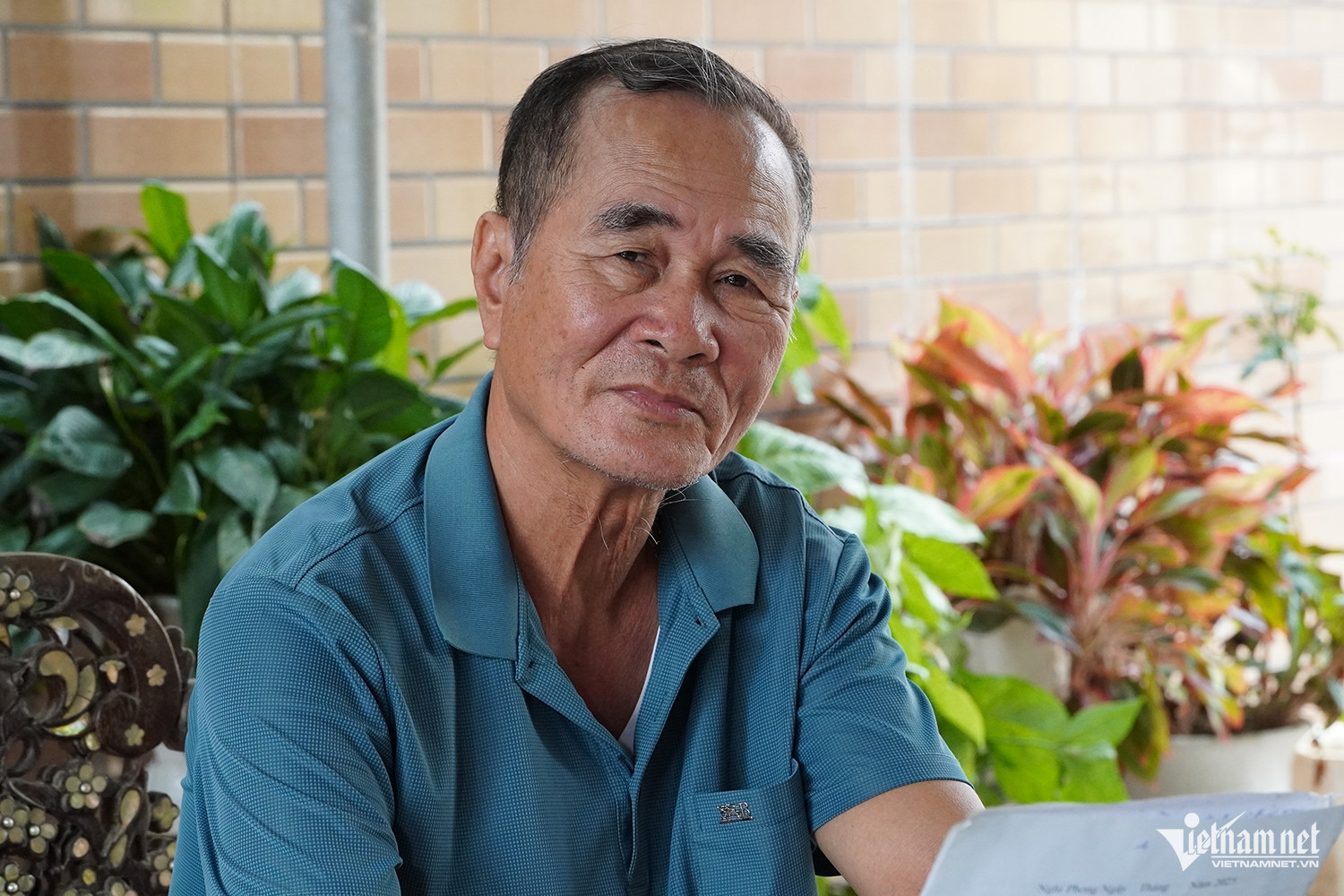
Using a hand-drawn map based on his recollections, he helped locate and recover the remains of 14 fallen comrades.
Every July, as Vietnam honors its war martyrs, Phuc, 70, from Vinh Loc Ward, Nghe An Province, quietly flips through aging documents and photographs. Each page brings back memories of fellow soldiers who lost their lives more than five decades ago.
Although the war ended long ago, his mission has not. For nearly 20 years, he has tirelessly followed every lead in search of missing comrades.
"Only when my comrades are found can a soldier like me truly feel at peace," he said.
Unforgettable memories
In 1974, while in the ninth grade, Phuc and many other youths from Nghe An enlisted in the army. After nearly two months of training, he was assigned to Regiment 141, Division 3 Sao Vang, Military Region 5, stationed in Hoai An district (former Binh Dinh province).
Following that, he was transferred to Engineering Company 15, tasked with defending Hill 174 in An My commune, Hoai An district (now An Hao commune, Gia Lai province).
According to Phuc, Hill 174 held an exceptionally important strategic position, “so both our forces and the enemy were determined to seize it at all costs. Every day, the enemy shelled and bombed us. Both sides fought fiercely back and forth.”
According to his account, in the face of that situation, the forces built a system of solid fortifications and trenches, including Tunnel 174, which was more than 30 meters long.
During the night of January 1 and the early morning of January 2, 1975, the enemy launched a large-scale assault to capture Hill 174. Continuous artillery and airstrikes flattened many fortifications, causing heavy casualties.
Tracing every clue to find the martyrs' relatives
After the country’s reunification, Phuc continued his mission of clearing landmines in Hoai An. In 1979, Regiment 141 marched to the Lang Son front, where Phuc and his comrades continued to fight to protect the northern border. In 1988, he transferred to civilian work as a worker for the Nghe An Fuel Materials Company and retired in 2006.
“At that time I was fighting at the border, my younger brother was badly wounded after a battle. Only my elderly parents were left at home, so I requested discharge to help the family,” he said.
Right after retiring, the first thing he did was to start the journey to find his comrades.
In 2009, he returned to the old battlefield in Hoai An with a map sketched from his own memory. What pleased him most was that the Ve Binh Hill area, where he suspected two of his comrades still lay, remained a pristine forest area, largely untouched.
In May 2009, together with the families of the two martyrs Do Cong Phan and Do Van Ban, and support from the local government, he returned to the battlefield. After more than two days of searching, two sets of remains were discovered at the exact location of the bunker collapsed by artillery, just as preserved in his memory.
On the day she brought her older brother back to their hometown for burial, Do Thi Gai (71 years old, residing in Hanoi) could not hide her tears. After decades of searching in vain, the family could finally bring martyr Do Cong Phan home.
In 2010, he coordinated with local authorities and relatives to find the remains of martyr Khuong Dinh Dai (from former Hai Duong province). In 2012, on the occasion of attending the ceremony commemorating the liberation of Hoai An, he continued to assist in finding two more sets of martyrs' remains from Nghe An.
In 2024, after accurately determining the location of Tunnel 174, he submitted a request to military agencies and local authorities of former Binh Dinh province for support in organizing a search.
Right at the entrance of the bunker, two sets of remains were discovered. After nearly 20 days of continuous excavation inside Tunnel 174, the recovery team successively found seven more sets of martyrs' remains.
"I am still alive today partly thanks to the sacrifice of my comrades. I always feel that I owe them a debt of gratitude. I only wish to contribute a small effort to bring them back to their families," Phuc said.
Tran Tuyen
.svg)
