 Vietnamnet.vn

 Podcast



According to the Ministry of Science and Technology (MOST), Vietnam aims to master 20 strategic technology products by 2027, beginning with enterprises as the engine of innovation.
The roadmap sets milestones to control three products by the end of 2025, expand to at least 20 by 2027, and reach 25 more by 2035. These technologies are projected to contribute 15-20% of the country’s GDP.
On August 29, the Ministry hosted the forum “The Future of Science, Technology, Innovation and National Digital Transformation” at the National Exhibition and Convention Center in Dong Anh District, Hanoi. The event was part of the national celebrations for the 80th anniversary of Vietnam’s National Day (September 2, 1945 - September 2, 2025).
In his opening remarks, Minister of Science and Technology Nguyen Manh Hung emphasized the critical role that science and technology have played throughout Vietnam’s 80-year development journey. He declared that the country is now entering a new era defined by artificial intelligence, big data, green energy, and the digital economy, where knowledge, creativity, and technology are the most essential productive forces.
“Our first wave of reforms began in 1986, launching the era of market economy and global integration,” said Minister Hung. “Now, the second reform is about innovation and digital transformation - building a new ecosystem where businesses, scientists, citizens, and the state co-create value.”
If the first reform was driven by agriculture, industry, and assembly, the second will be anchored in science, innovation, and digitalization.
Tech sovereignty tied to national sovereignty
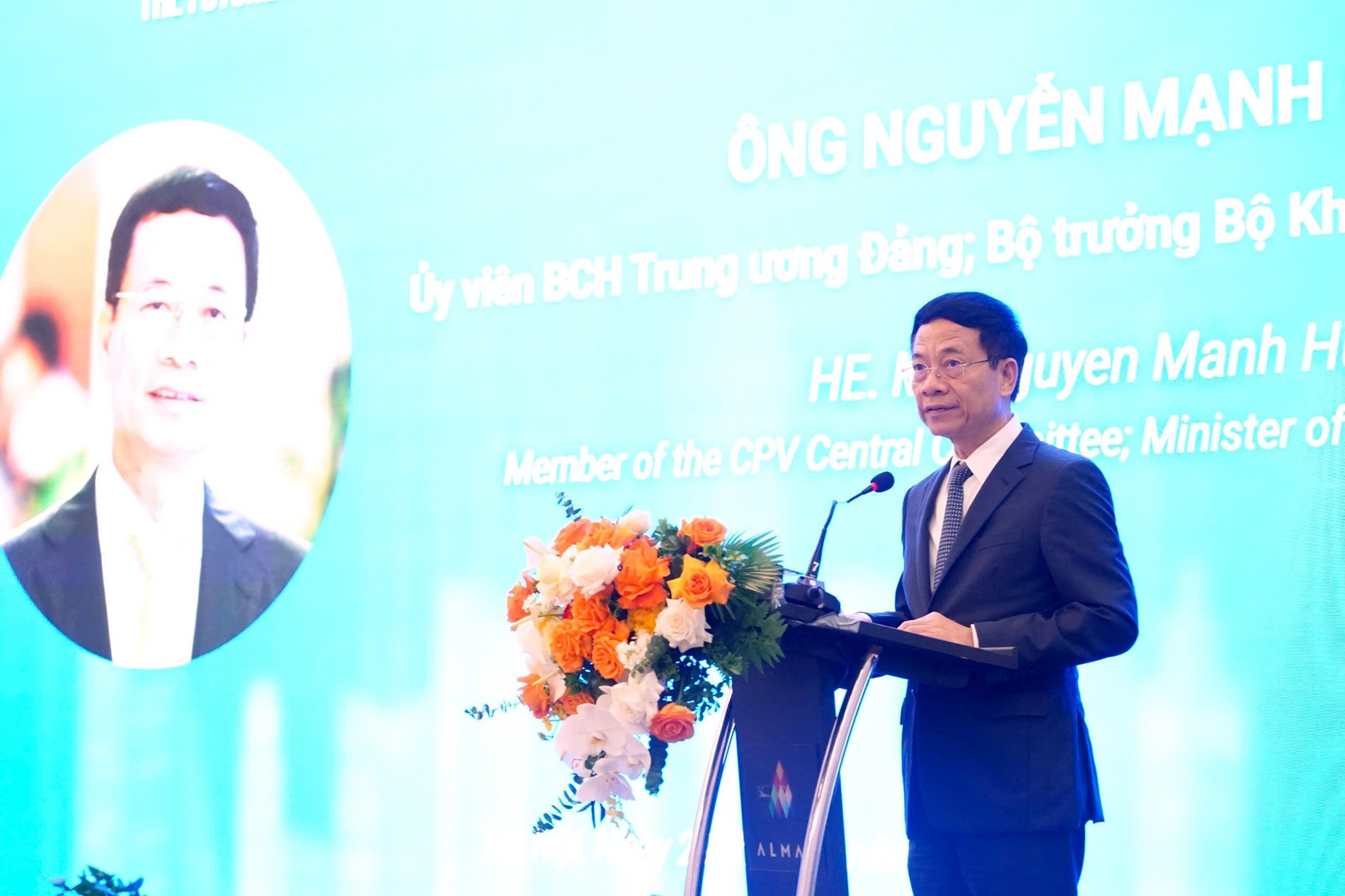
Many speakers at the forum stressed the importance of mastering strategic technologies. Minister Hung made it clear: “In today’s world, lacking technological sovereignty means lacking national sovereignty.”
Deputy Minister Hoang Minh reinforced the point, stating that no developed country has risen without mastering strategic technologies and industries. The process involves mastering products, then designs, and finally core technologies. He emphasized that applying core tech creatively to solve Vietnamese challenges is both feasible and a national priority.
“To achieve this,” he noted, “the government will assign leading enterprises - regardless of whether they are state-owned or private - the task of developing strategic products, industries, and technologies.”
Under the MOST’s roadmap, Vietnam plans to fully master three strategic tech products by 2025, expand to 20 by 2027, and develop an additional 25 by 2035. This will help form strategic tech industries capable of contributing 15-20% of the GDP.
“Developing strategic technologies must start with products, and products are tied to enterprises,” added Nguyen Phu Hung, Director of the Department of Science and Technology for Economic-Technical Sectors. “Enterprises know what the market needs, while the government should create mechanisms, infrastructure, and testing environments.”
Hung shared plans to build an ecosystem of research institutes and universities around enterprises to support mastery of core technologies. The state will institutionalize support, offering shared-use labs, research facilities, and platforms - alongside market development.
From the business perspective, Nguyen Dat, Deputy General Director of Viettel, stated that in the digital economy era, nations that master technology will rise in global influence.
Viettel has spent more than a decade overcoming barriers in research, patents, and human resources. With a philosophy of setting ambitious goals, pioneering bold methods, mastering design, and system integration, the company is now advancing into core technologies.
Viettel’s R&D journey passed through three stages: technology reception, mastery, and innovation.
Today, the corporation has taken ownership of key products in defense, telecom infrastructure, and national digital platforms. It has also begun exporting high-tech solutions to countries like India and the Philippines.
Du Lam
.svg)
