 Vietnamnet.vn

 Podcast



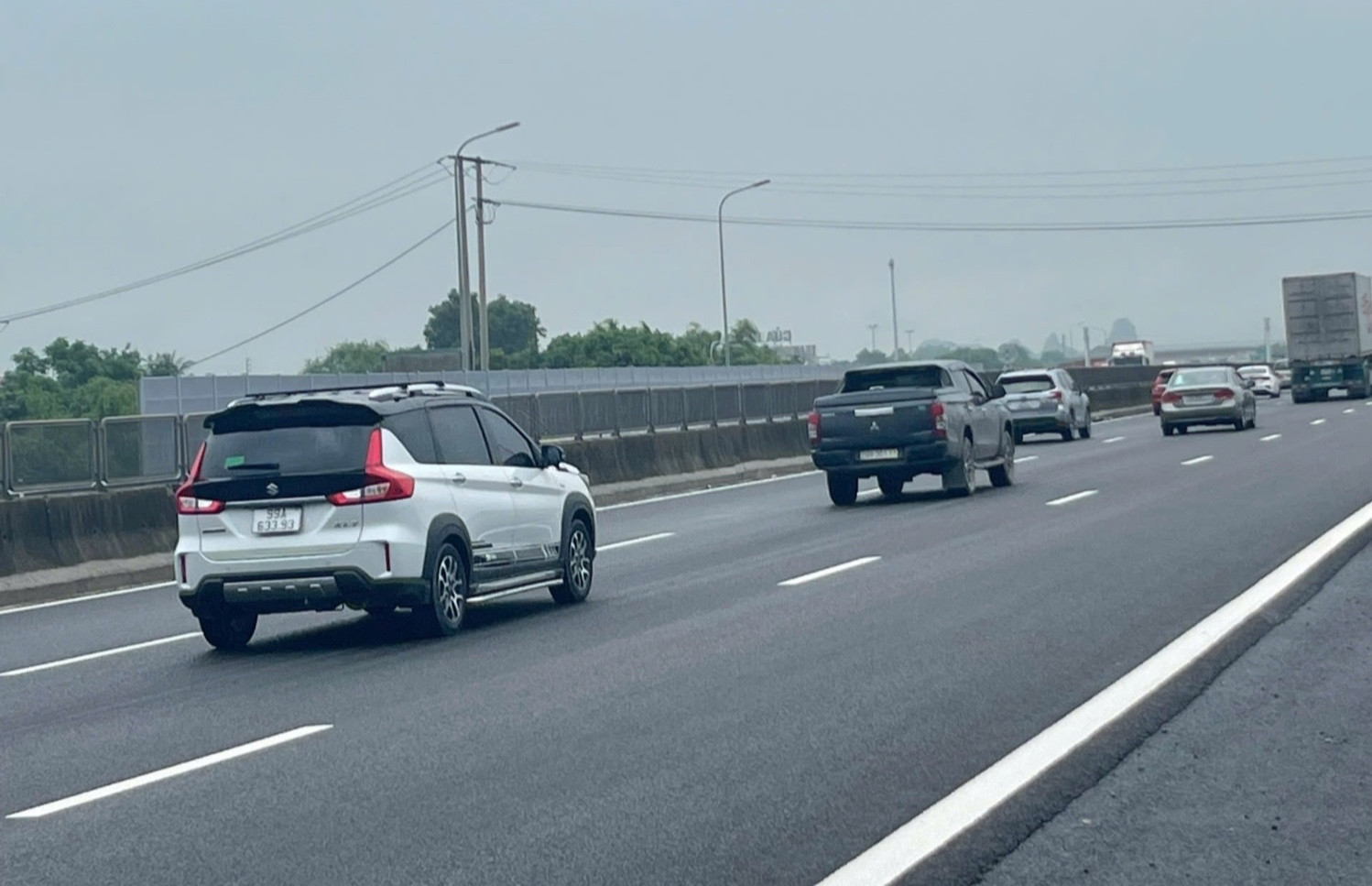
Vietnam’s traffic police have stepped up enforcement against drivers who fail to maintain a safe following distance on expressways, with transport experts saying the move is necessary to change deeply ingrained driving habits and prevent high-speed pile-ups.
From August 27, traffic police began intensifying penalties for vehicles that fail to maintain the legally required distance from the vehicle ahead on expressways.
Under current regulations, in dry road and normal weather conditions, vehicles traveling at 60 km/h must maintain a minimum distance of 35 meters. The minimum rises to 55 meters at speeds above 60 km/h and up to 80 km/h, 70 meters above 80 km/h and up to 100 km/h, and 100 meters above 100 km/h and up to 120 km/h.
The distances are intended to give motorists enough time and road space to react if the vehicle ahead brakes suddenly or encounters an unexpected problem.
Nguyen Van Quyen, chairman of the Vietnam Automobile Transportation Association, told VietNamNet that motorists need to change their driving habits when entering an expressway, particularly when it comes to following distance.
Maintaining a safe distance is especially important on expressways because vehicles travel at much higher speeds, he said. Yet some motorists continue to follow the vehicle ahead as closely as they would in urban traffic or on slower roads.
“On expressways, vehicles travel at high speeds, so following distances must be very different from those on lower-speed roads,” Quyen said. “If the vehicle ahead brakes suddenly or encounters an unexpected problem, the driver behind needs sufficient distance to respond. Following too closely can turn a single unexpected situation into a collision or even a multi-vehicle crash.”
The faster a vehicle is traveling, he stressed, the greater the distance drivers need to maintain to give themselves sufficient reaction time.
The issue has become increasingly important as police begin enforcing the rule more closely. Drivers who violate following-distance requirements without causing a collision face fines of VND4-6 million (about $152-228) and the loss of two points from their driving license. If the violation results in a traffic accident, the fine rises to VND20-22 million ($760-836), with 10 license points deducted.
The rules also recognize that traffic conditions can change. When congestion or an incident ahead forces vehicles below 60 km/h, motorists are required to maintain a distance appropriate to traffic density and actual road conditions rather than a fixed minimum.
In rain, fog, slippery conditions, winding or steep terrain, or when visibility is restricted, drivers are expected to leave an even greater distance than under normal conditions.
A traffic expert said vehicles traveling too closely together remain a common sight on many roads, including expressways. When something unexpected happens, motorists may have too little time to brake or change direction safely.
The risks are greater for trucks, buses and other heavy vehicles, which generally require longer braking distances and can cause more severe consequences in a collision.
Quyen rejected suggestions that maintaining larger gaps between vehicles could reduce road capacity, particularly during peak periods.
“Traffic safety cannot be sacrificed because people are worried about congestion,” he said, adding that motorists should adjust their travel schedules where possible to avoid the busiest periods.
Passenger and freight transport operators that have to travel during peak hours should factor congestion into journey planning rather than attempting to make up time by speeding or following other vehicles too closely, he added.
For drivers unsure how to judge the distance from the vehicle ahead, road markings and distance signs installed on many Vietnamese expressways can provide a practical reference.
Signs marked 0m, 50m, 70m, 100m or other distances effectively act as roadside measuring tools. If a driver’s vehicle is alongside the 0m marker while the vehicle ahead is alongside the 70m marker, for example, the gap between them is approximately 70 meters.
Experienced drivers can also use the “three-second rule” as a simple way of estimating following distance. The method involves selecting a fixed roadside reference point and counting the time between the vehicle ahead passing it and the driver’s own vehicle reaching the same point.
At 60 km/h, a vehicle travels about 50 meters in three seconds, comfortably above the statutory 35-meter minimum. At 80 km/h, three seconds corresponds to roughly 66.7 meters, also exceeding the required 55 meters.
At 90 km/h, the vehicle covers about 75 meters in three seconds, slightly above the 70-meter minimum required for speeds above 80 km/h and up to 100 km/h.
But the three-second rule does not work as a universal legal benchmark.
At 110 km/h, for example, a vehicle travels approximately 91.7 meters in three seconds, short of the legally required 100-meter minimum for speeds above 100 km/h. Drivers therefore need to increase the gap accordingly.
Technology could also play a growing role in enforcement. Camera systems, monitoring equipment and positioning data can help authorities detect vehicles traveling too closely, according to traffic experts. Any enforcement system, however, needs to be accurate, transparent and capable of clearly showing motorists how a violation was determined.
Quyen said penalties should ultimately serve a broader purpose than simply punishing motorists.
Transport companies, he said, should incorporate speed compliance and safe following distances into their normal operating procedures rather than observing the rules only when traffic police are present.
Building that habit could reduce collisions and multi-vehicle crashes while making Vietnam’s expanding expressway network safer for everyone.
Vu Diep - Dinh Hieu - Hoang Hiep
.svg)
