 Vietnamnet.vn

 Podcast



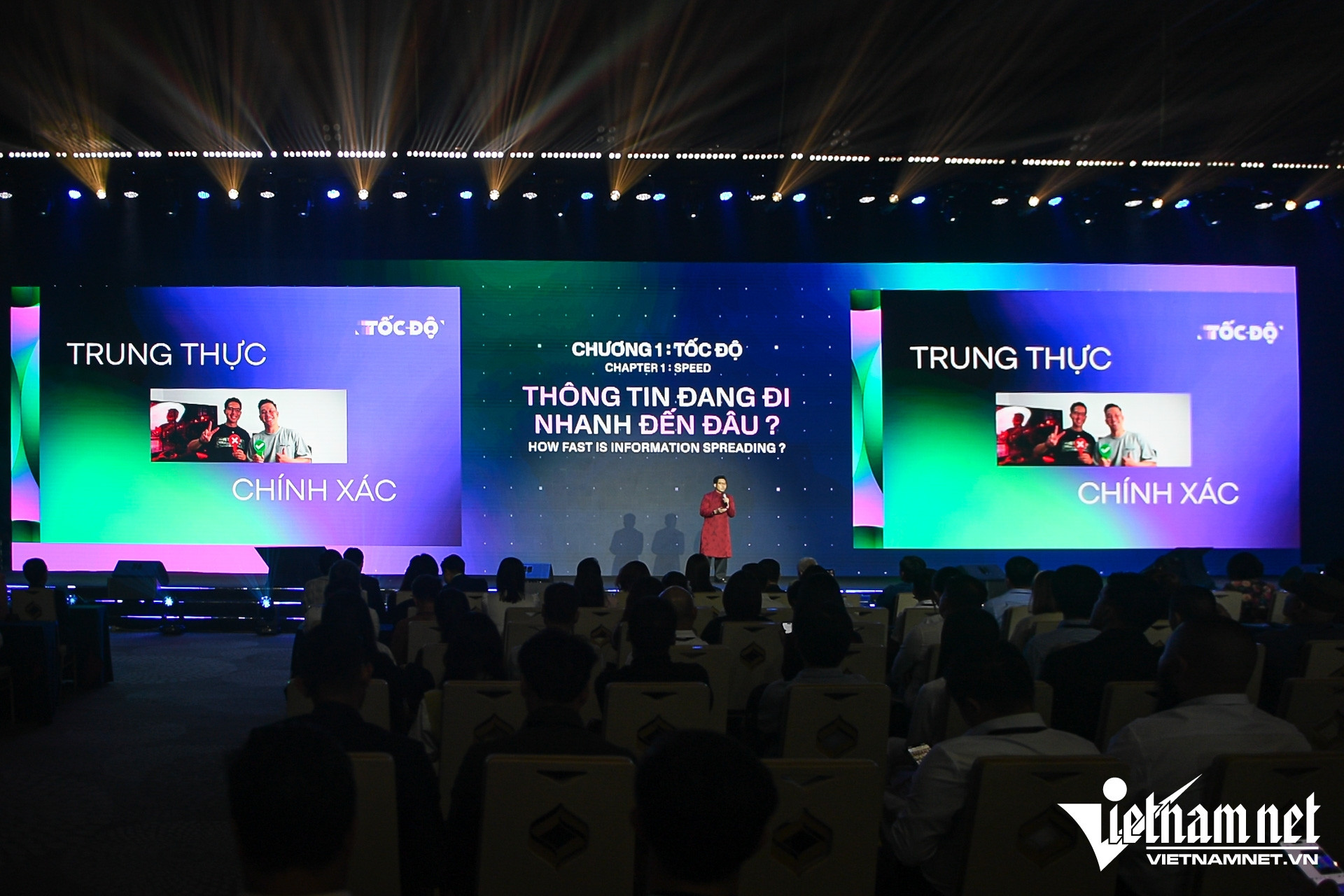
First, trust, a fundamental value in social life, is under threat. Citing a 2026 study by the Reuters Institute for the Study of Journalism at the University of Oxford, Duong said only “37.3% of users trust what they read, hear and see online,” the lowest level recorded in 15 years of tracking the indicator.
Second, traditional mechanisms for establishing trust are becoming increasingly ineffective in the face of AI and sophisticated misinformation. According to Duong, the concern is not simply that technology can generate false information, but that it is also eroding the very evidence people rely on to determine what is true, leading them to question even genuine information.
“Faces can be faked, voices can be faked, and images and videos can be manipulated with ever greater sophistication, creating the risk that people will begin to doubt even what is actually true,” the National Cybersecurity Association official said.
Third, misinformation can affect not only individuals or organizations but also spread more widely, disrupting markets and social stability. Duong cited the World Economic Forum’s Global Risks Report 2026, which ranked misinformation and disinformation as the second-largest risk threatening social stability.
From there, Duong identified three major challenges in the AI era: whether truth can spread as quickly as falsehoods; what evidence can establish the truth when images, voices and videos can all be fabricated; and, at a deeper level, where and in whom society will place its trust.
He said influencers possess a distinctive ability in this environment: they can bring the truth to their communities through their credibility and reach. That responsibility begins with practical steps such as being transparent about the use of AI, verifying information before sharing it, and clearly distinguishing facts from personal opinions. By doing so, they can become “anchors of trust” amid the wave of AI-generated misinformation.
Also speaking at the conference, content creator Hai Trieu said the boundary between real and fake is becoming increasingly difficult to distinguish, as AI can generate a script in under 10 seconds and a complete video in less than 30 seconds. Such speed can pull creators into a race to be the first to speak or jump on a trend, while algorithms favor fast-moving content and the psychology of FOMO, or fear of missing out, can lead people to skip verification.
Against that backdrop, he offered a simple message: “Verify first, trust later,” urging creators and audiences to slow down and check the origin of information before sharing it. According to Hai Trieu, technology cannot replace the genuine connection between creators and their audiences, or between authorities and the public.
Phuoc Sang
.svg)
