 Vietnamnet.vn

 Podcast



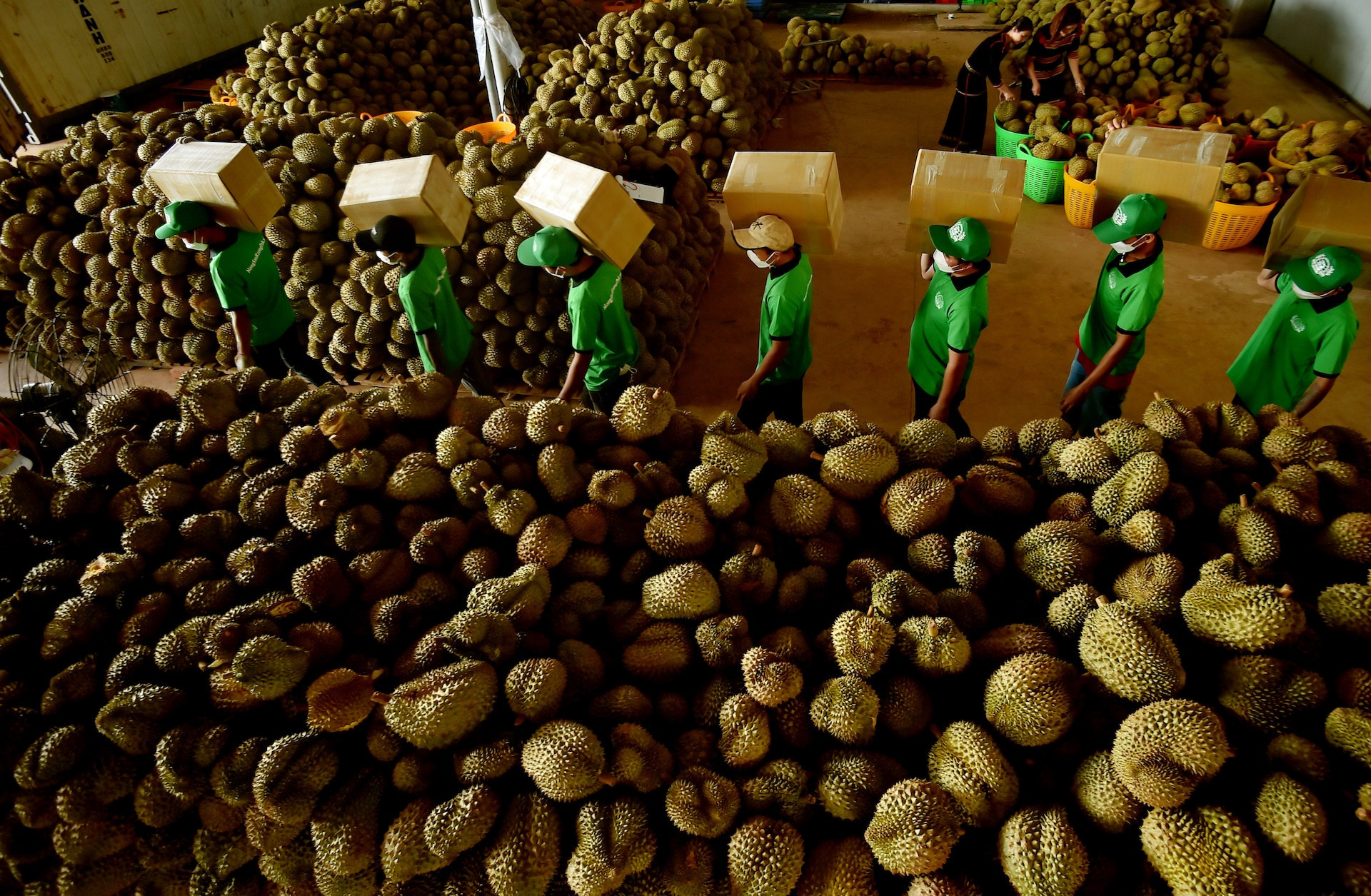
After spending days close to production-cost levels, durian prices offered by traders in the Central Highlands and southeastern Vietnam have improved significantly, rising by around 15-20% from a month earlier in some segments. Buying activity at packing facilities and farms is also picking up again.
Prices diverge by quality as Grade A fruit remains scarce
Surveys at durian purchasing facilities show that premium Thai-variety durians with attractive appearance and Grade A quality are currently fetching around $3.40-$3.60 per kilogram, while Grade B fruit is selling for approximately $2.70-$3.20 per kilogram.
The market has also developed more detailed price categories based on flesh quality.
Durian with minor flesh defects, such as pale flesh or weaker sweetness, is selling for around $3.00-$3.10 per kilogram for Grade A fruit and $2.30-$2.50 for Grade B. Fruit with more serious defects is being purchased for roughly $1.90-$2.10 per kilogram, while lower-quality fruit remains at around $0.95 per kilogram.
Hoang Trung, a trader purchasing durian in Phuoc An in Dong Nai province and Buon Ho in Dak Lak province, confirmed that prices have recovered noticeably after a prolonged period when warehouse prices hovered around $2.30-$2.50 per kilogram and farm-gate prices were only about $1.50-$1.70 per kilogram.
Warehouses and traders are now actively buying durian from farms to meet export demand. Bulk purchases of fruit meeting required standards are averaging around $2.30-$2.50 per kilogram at the farm gate. According to traders, those prices can generate profits for growers.
However, Trung said neither farmers nor traders are celebrating just yet because the proportion of fruit meeting Grade A standards and qualifying for prices above $3.40 per kilogram remains limited — and in some cases very small.
"Current supplies are concentrated mainly in Dak Lak, but both quality and output vary considerably from one farm to another. Prolonged rainfall has affected the quality of the durian flesh and reduced the amount of fruit meeting required standards," Trung said.
"As a result, warehouses have had to raise prices for selected premium fruit to encourage supply while dividing the rest into more price categories, including fruit with minor and major defects."
Tighter supply meets surging demand from China
Buyers attribute much of the price increase to shifting supply and demand.
Many durian-growing regions in Vietnam have already finished their harvest season, while Dak Lak, a major production center in the Central Highlands, is still harvesting. At the same time, demand from China has surged, prompting exporters to step up purchases.
Le Anh Trung, chairman of the Dak Lak Durian Association, said the sharp price increase in recent days was partly because major producing countries such as Thailand had reached the end of their harvest seasons, giving durian from Vietnam's Central Highlands a supply advantage.
Chinese demand has also risen sharply ahead of China's National Day and the Mid-Autumn Festival, encouraging exporters to intensify their buying.
Looking at the season as a whole, Trung said Dak Lak has harvested only around 40% of its durian crop, with harvesting expected to continue until mid- or late November.
The province's output is also estimated to be 20% higher than last year, at around 500,000 metric tons.
Despite the improving market, the Dak Lak Durian Association remains concerned that persistent rainfall in the Central Highlands could continue to hurt flesh quality and reduce the commercial value of the fruit during the remainder of the season.
Given the risk of prices fluctuating at different stages of the harvest, Trung advised growers to focus on cultivation techniques that can reduce flesh-quality problems.
Farmers should also prioritize partnerships with reputable exporters that have strong financial capacity and stable purchasing operations to help secure reliable outlets for their produce, he said.
Vietnam's durian exports reached nearly $1.77 billion in the first seven months of 2026, up 47.1% from the same period in 2025, according to the country's Customs authority.
Durian accounted for about 37% of Vietnam's total fruit and vegetable export value during the period. China remained overwhelmingly the largest market, accounting for around 93.5% of export turnover.
Thu Ha
.svg)
