 Vietnamnet.vn

 Podcast



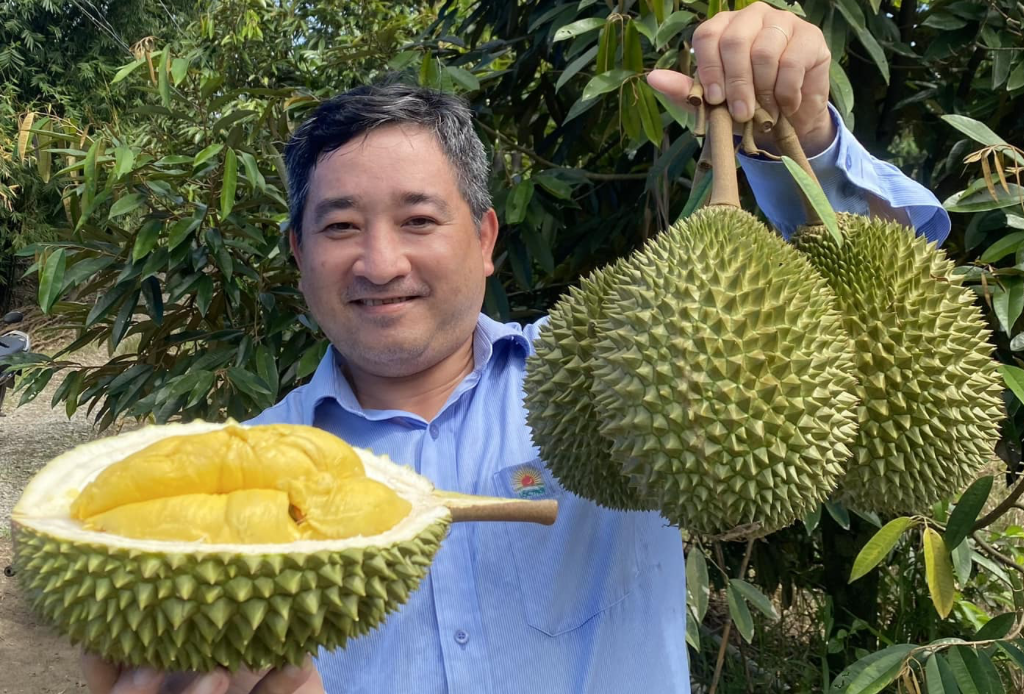
Durian has become one of Vietnam’s most valuable agricultural products, with major growing areas concentrated in the Central Highlands, southeastern region, south-central coast and Mekong Delta.
The country’s durian-growing area is estimated at around 200,000 hectares in 2026, with production forecast to reach 2.08 million tonnes.
According to Vietnam Customs, durian exports reached about $1.77 billion in the first seven months of 2026, up 47.1% from the same period last year and accounting for 36.98% of the country’s total fruit and vegetable export revenue.
Exports generated $681.2 million in July alone, up 30.2% from June and 81% year on year.
Vietnam’s durian trade remains heavily dependent on China, which accounts for around 95% of the fruit’s export value.
Vietnamese durians are also shipped to more than 20 other countries and territories. In July 2026, India officially opened its market to fresh Vietnamese durians, providing another avenue for growth and export diversification.
The end of Thailand’s summer durian season is expected to give Vietnamese exporters an advantage in September and October, when the harvest peaks in the Central Highlands provinces of Dak Lak, Lam Dong and Gia Lai.
Dang Phuc Nguyen, General Secretary of the Vietnam Fruit and Vegetable Association, expects the country’s durian exports to exceed $4 billion in 2026, the highest level on record.
At the height of the harvest season, monthly durian export revenue could reach around $1 billion, he said.
Despite the strong outlook, the Ministry of Agriculture and Environment has identified a series of challenges facing the fast-growing industry.
Durian cultivation has expanded rapidly, but production has yet to be fully integrated into organised value chains.
In some areas, plantations have expanded spontaneously without sufficient consideration of soil and water conditions, infrastructure or the ability to organise large-scale growing zones.
Links between growers, buyers, processors, packers and distributors also remain weak, with insufficient coordination and unclear mechanisms for sharing responsibilities and benefits.
At the same time, importing markets are imposing increasingly stringent technical requirements.
Meeting standards for plant quarantine, food safety, chemical residues and traceability requires growers, packing facilities, exporters and other participants to improve their capabilities and strictly control every stage from cultivation and harvesting to preliminary processing, storage, packaging and export.
Production management, growing-area oversight and export support also remain inconsistent in some localities.
The industry has limited capacity in some areas to adapt to changing technical requirements, market volatility and international competition. Data on growing areas, packing facilities and traceability also need further standardisation, while production links remain insufficient in some locations.
Preservation and processing technologies are another weakness, with the industry still largely dependent on cold storage, freezing and exports of fresh fruit.
Some facilities have adopted rapid-freezing technology to maintain product quality, but the technology remains costly and is not yet widely used.
Regional rivals step up competition
Vietnam’s durian industry faces intensifying international competition, particularly from other Southeast Asian producers including Thailand, Malaysia, the Philippines and Cambodia.
Thailand and Malaysia are expanding their frozen durian industries, while Malaysia also has an advantage in durian varieties.
Cambodia, meanwhile, is expanding its growing areas and stepping up efforts to standardise production processes.
Vietnam’s continued dependence on China, which accounts for about 95% of its durian exports, adds to the pressure to diversify markets and strengthen competitiveness.
Testing procedures also pose challenges.
Sampling of some export consignments has not always been sufficiently representative, particularly for batches containing products of varying characteristics.
This could affect the accuracy and reliability of testing results and potentially jeopardise the continued recognition of laboratories serving the export industry.
Authorities have therefore called for tighter and more standardised sampling procedures to ensure reliable test results.
Against this backdrop, the Ministry of Agriculture and Environment said the durian industry needs to move away from addressing problems only after they emerge and instead prepare proactively for potential challenges.
Quality, food safety and traceability should form the foundation of the industry, while market demand and businesses should guide the organisation of production.
The ministry also called for stronger links among participants across the supply chain, greater diversification of export markets and higher value-added production to build a more stable, transparent and sustainable durian industry.
Tam An
.svg)
