 Vietnamnet.vn

 Podcast



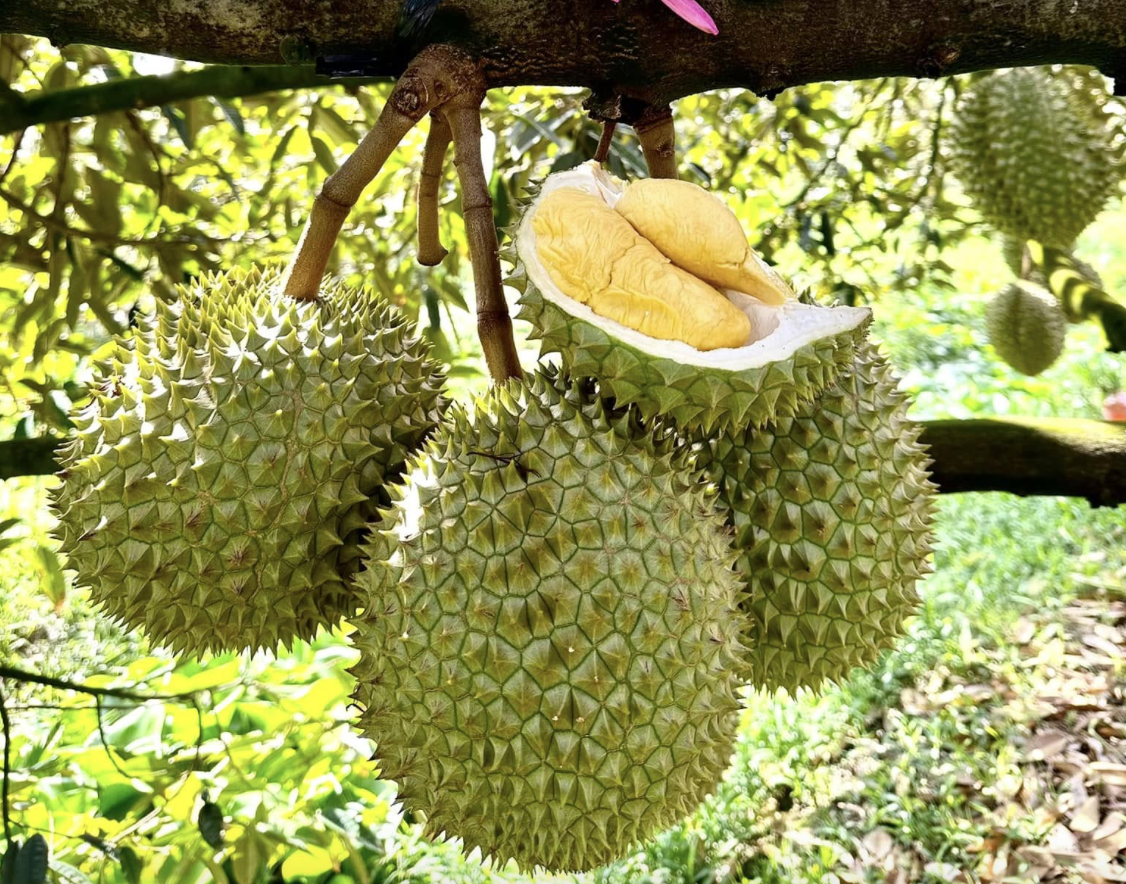
Vietnam earned nearly $2 billion from durian exports in the first eight months of 2026, with China accounting for the vast majority of sales. Meanwhile, Thailand is considering establishing a fund and imposing a levy of up to $0.06 per kilogram on exported durians.
Speaking to VietNamNet, Nguyen Van Tao, a durian farmer in Lam Dong province in Vietnam’s Central Highlands, said prices are trending upward, helping farmers maintain steady profits. At orchards where a high proportion of fruit meets export standards, weighing between 2.5 and 3 kilograms each, traders are offering bulk purchase prices of up to $2.28 per kilogram.
Tao’s family agreed more than a month ago to sell the fruit from their orchard in bulk to traders for about $1.90 per kilogram. The orchard is now entering the final days of its harvest season.
“Although this price is not as high as it was before, my family still made a profit of around $57,000 after expenses,” Tao said.
Traders are currently stepping up durian purchases to meet demand around the Mid-Autumn Festival and China’s National Day on Oct. 1.
As supplies reaching the market become less plentiful, bulk purchase prices at orchards meeting export standards have risen.
Vietnam Customs statistics show that the country’s fruit and vegetable exports to China reached $1.06 billion in August 2026, up 36.9% from July and 56.7% from August 2025. Durian was among the major contributors as the Central Highlands entered its peak harvest season.
The Ministry of Agriculture and Environment estimates that Vietnam exported $1.97 billion worth of durians in the first eight months of 2026, up 28.3% year on year. Shipments to China alone reached $1.85 billion, an increase of 29.9%.
The Import-Export Department under the Ministry of Industry and Trade expects Vietnam’s fruit and vegetable exports to China to continue recording strong growth during the remaining months of 2026. Vietnam currently has an advantage in fresh durian supplies, which could help keep monthly export turnover above $1 billion.
As Vietnam’s durian exports to China continue to grow strongly, Thailand is considering establishing a durian fund and charging up to $0.06 per kilogram on its own exports.
Thailand held its latest public hearing on a draft Durian Act on Sept. 7. The proposed legislation has been under discussion for more than two years, with farmers, traders and exporters participating in the process.
The hearing drew a range of proposals and objections, mainly centered on plans to establish the fund and impose a charge on exported durians. Participants also raised concerns about harvesting and selling unripe durians, a practice that could damage the quality and reputation of Thai fruit in overseas markets.
The proposal to establish a durian fund and impose the export charge has faced opposition from the Thai Durian Association and the Thai Fruit Traders and Exporters Association. The draft proposes a charge of 0.50-1 baht per kilogram, which could be raised to a maximum of 2 baht per kilogram, or about $0.06.
A standard export container carries around 18 metric tons of durians. At a rate of 1 baht per kilogram, the additional cost would be about 18,000 baht, or roughly $540, per container.
The associations argue that the additional cost could ultimately be passed on to farmers through lower purchase prices. Instead of imposing a levy, they say the legislation should focus on improving quality, addressing structural issues and strengthening competitiveness rather than increasing costs for farmers and businesses.
Competition for China’s durian market is intensifying as Thailand, Vietnam, Malaysia, the Philippines and Cambodia are all permitted to export the fruit through official channels to the world’s second-most populous country.
These countries are continuing to standardize production processes to improve durian quality. Thailand and Malaysia, in particular, are expanding their frozen durian industries. Malaysia has an advantage in several durian varieties, while Cambodia continues to expand its cultivation areas.
Tam An
.svg)
