 Vietnamnet.vn

 Podcast



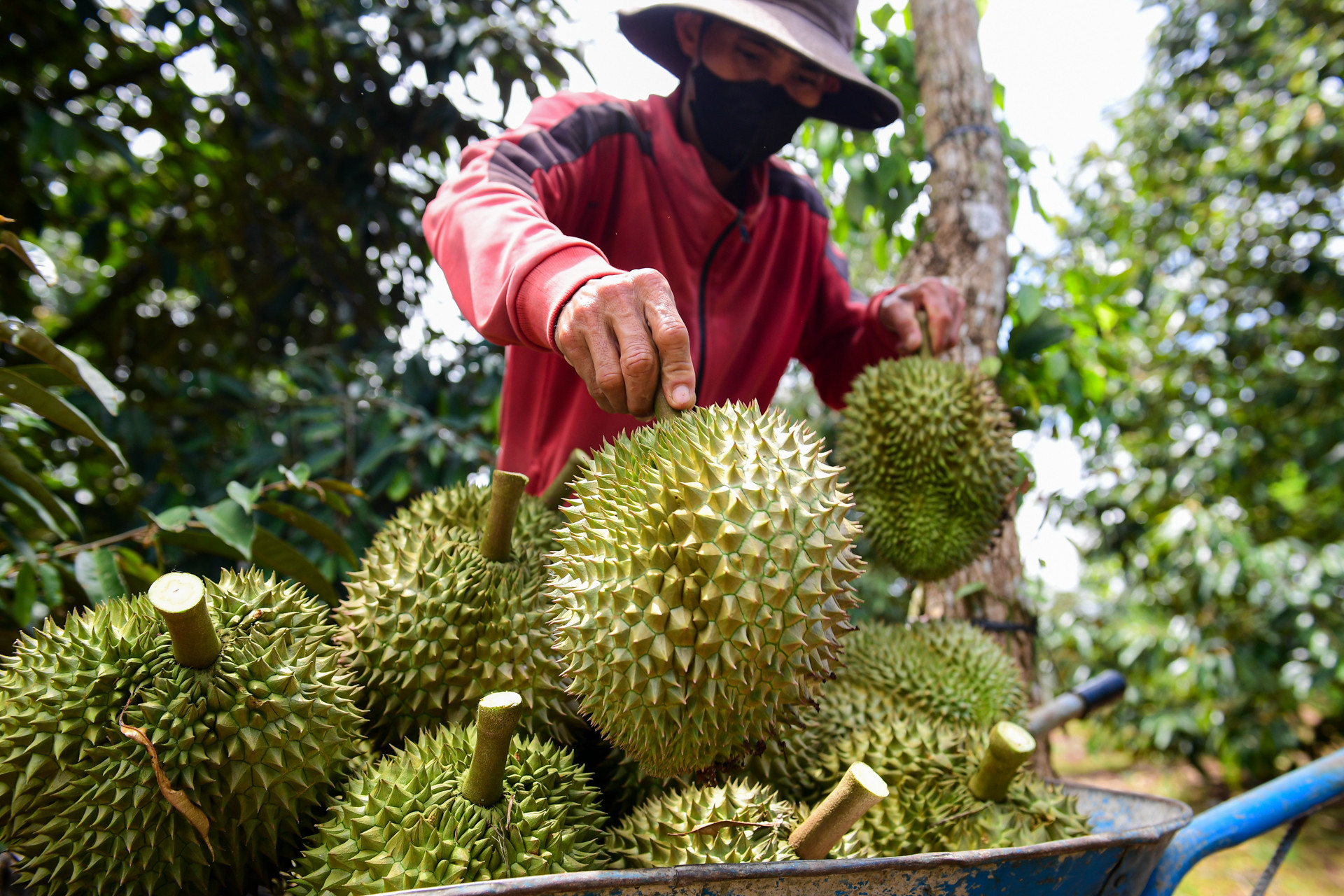
In recent years, durian has become one of the most profitable crops for Vietnamese farmers, with returns at times exceeding VND1 billion per hectare. According to the Ministry of Agriculture and Environment (MAE), durian accounted for 45 percent of Vietnam's total fruit and vegetable export value in 2025.
Since Vietnam was granted permission to officially export fresh durian to China in July 2022, exports have maintained strong growth.
Durian exports totaled just $180 million in 2021 and $421 million in 2022. By 2023, the fruit had become Vietnam's first "billion-dollar fruit," generating $2.24 billion in export revenue.
Exports continued to accelerate in 2024 and 2025, reaching $3.3 billion and $3.86 billion, respectively. The 2025 figure was about 21.4 times higher than in 2021, representing an increase of more than 2,000 percent.
In the first six months of this year, durian exports reached nearly $951 million, up 31 percent year-on-year. Exports to China alone totaled $871.8 million, an increase of 36.9 percent.
As exports have surged, both the cultivated area and production have expanded dramatically. Vietnam had just 85,000 hectares of durian in 2021, producing around 674,000 tonnes. By 2026, the planted area had jumped to 200,000 hectares, with output estimated at 2.08 million tonnes.
In less than five years since official exports to China began, the country's durian-growing area has expanded 2.4-fold, while production has nearly tripled.
Notably, only 129,500 hectares are currently in production. With an average yield of 16 tonnes per hectare, total output could exceed 3.2 million tonnes once all 200,000 hectares reach full bearing.
As of the end of July, Vietnam had harvested 768,000 tonnes of durian, with another 1.31 million tonnes expected during the remaining five months of the year. The Central Highlands alone is projected to produce 850,000 tonnes, with the peak harvest season running from August to October.
MAE said that with 1,201 growing area codes already approved, along with additional codes expected to be authorized by China in the latest round, and strong growth in frozen durian exports, which rose 45 percent in the first seven months compared with the same period in 2025, Vietnam's export capacity is broadly sufficient to meet market demand in 2026.
Oversupply and falling prices raise concerns
The Ministry acknowledged that durian acreage has expanded too rapidly, with cultivation increasing spontaneously in some localities.
"Without coordinated measures, the durian industry could face oversupply, falling prices, rising costs and damage to its reputation in international markets," the Ministry warned. Agricultural experts have repeatedly cautioned against the rapid and unplanned expansion of durian cultivation.
Vietnam currently exports durian to 21 countries and territories, but China accounts for around 90 percent of total export volume. Vietnamese durian faces increasingly intense competition in China from Thailand, Malaysia and newer suppliers such as the Philippines and Cambodia.
Heavy dependence on the Chinese market also exposes exporters to greater risks from changes in import policies, technical requirements and trade conditions.
Meanwhile, booming supply has pushed down durian prices in the Central Highlands and the Mekong Delta, with prices continuing to trend lower. In July, premium Ri6 durian averaged VND44,476 per kg, down VND1,286 from the previous month, while Monthong durian fell VND8,524 to VND70,762 per kg.
"Export volumes continue to increase, but prices have fallen sharply, forcing exporters to lower their purchasing prices," the CEO of a company exporting durian to China told VietNamNet. The executive said purchase prices for some varieties have dropped by VND10,000-15,000 per kg.
To reduce the risk of oversupply and price declines, authorities in Dak Lak Province have launched a 30-day campaign to digitize and connect data on growing area codes and packing facilities to the national database, aiming to improve traceability and protect the reputation of Vietnam's "durian metropolis."
According to Do Huu Huy, Chair of the Dak Lak People's Committee, import markets are imposing increasingly stringent requirements on traceability, plant quarantine and food safety. Without fully updating, standardizing and digitizing production data for integration into the Ministry's national agricultural traceability system, growing area codes could face warnings, suspension or revocation, directly affecting the reputation of local authorities, businesses and growers.
The Ministry has also urged local governments to closely monitor durian cultivation areas and discourage further expansion outside suitable growing regions.
It is holding negotiations with the General Administration of Customs of China (GACC). A high-level delegation is scheduled to meet GACC officials in China from August 20 to August 22 to discuss and resolve outstanding trade issues.
Tam An
.svg)
