 Vietnamnet.vn

 Podcast



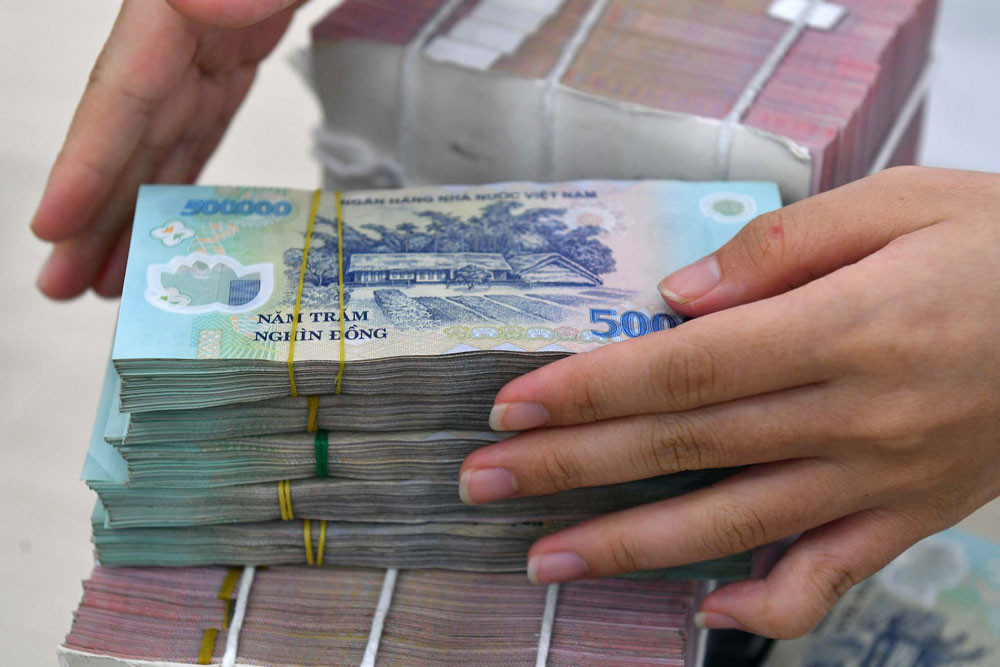
The country's capital-raising landscape is becoming more dynamic than ever.
According to FiinGroup, as of the end of May 2026, listed companies and firms registered for trading had announced plans to issue shares worth approximately VND289.5 trillion ($11 billion), up 86.5 percent from a year earlier and 2.5 times the five-year average.
Notably, around VND200 trillion ($7.6 billion) of these planned issuances have yet to be executed and are expected to be concentrated in the second half of the year. If completed successfully, this would represent the largest amount of equity capital ever raised in Vietnam's history.
The banking sector alone has entered an unprecedented capital expansion cycle, with plans to raise approximately VND128 trillion ($4.9 billion), more than seven times the amount recorded in 2025. Major lenders including Vietcombank, BIDV, VPBank, HDBank and MBBank are all pursuing significant capital increases to strengthen capital adequacy and support future credit growth.
Securities firms are also planning to raise more than VND48 trillion ($1.8 billion) to expand margin lending and investment capacity, while property developers intend to issue nearly VND37.3 trillion ($1.4 billion) worth of shares.
The corporate bond market has also shown a notable recovery. During the first five months of the year, total bond issuance reached approximately VND127.35 trillion ($4.8 billion).
However, pressure remains substantial, with around VND141.9 trillion ($5.4 billion) worth of bonds maturing between now and the end of the year. More than half of that amount is linked to the real estate sector.
Meanwhile, the banking system has entered its own battle to attract deposits. Effective deposit rates, supported by special promotional programs and preferential offers, have climbed to between 8 and 9 percent annually for terms ranging from six to twelve months.
Many banks continue adjusting interest rates to retain depositors, while overnight rates in the interbank market briefly exceeded 10 percent in early June, reflecting growing liquidity pressures.
The public sector's funding needs are also surging. Between 2026 and 2030, the government plans to implement public investment projects worth VND8.22 quadrillion ($313 billion), focusing on high-speed railways, expressways, airports, digital infrastructure and green transition initiatives.
Taken together, the government, banks and businesses are simultaneously competing for funding on a scale never before seen, creating intense rivalry for available capital.
What comes next for interest rates and financial markets?
When multiple sectors seek capital within a relatively short period, one of the first consequences is likely to be higher funding costs.
The price of money is reflected not only in deposit rates but also in corporate bond yields and the returns investors expect from new share offerings. As a result, businesses face rising financial costs and investment projects must deliver stronger returns to remain viable.
Competition is also making capital allocation more selective. In an environment of limited resources, funds tend to flow toward banks offering attractive deposit products and companies with strong financial foundations, transparent governance and clear growth prospects.
Smaller firms or those viewed as riskier may find it increasingly difficult to access capital.
For the stock market, the challenges are becoming more apparent. Nearly VND200 trillion worth of new shares are expected to be issued during the second half of the year, while foreign investors continue net selling and domestic funds increasingly shift toward deposits as interest rates rise.
Such a large supply of new shares could dilute available liquidity and place downward pressure on stock prices, even if issuance plans proceed successfully.
If companies fail to secure sufficient funding through equity or bond issuance, demand for bank loans may continue increasing. This could push credit growth above deposit growth, sustaining liquidity pressures and making a significant decline in interest rates unlikely in the near term.
Higher capital costs may also prompt some businesses to postpone investment, expansion or hiring plans, particularly in industries with relatively modest profit margins.
As a result, capital may continue rotating among stocks, deposits, bonds and other asset classes, contributing to greater market volatility.
However, the competition for capital also presents opportunities.
As funding becomes scarcer, financial resources are likely to be allocated more efficiently toward companies with strong governance, viable projects and promising long-term growth prospects.
This may also provide an opportunity for Vietnam's capital markets to play a larger role in sharing the burden of financing economic growth alongside the banking system.
The central issue today may not be a shortage of money within the economy, but rather the fact that funding demand is expanding faster than supply in the short term.
If financial markets successfully absorb the wave of new share issuance while continuing to attract domestic and foreign investment, pressure on the banking system could gradually ease.
Conversely, if fundraising efforts continue to accelerate while capital inflows fail to keep pace, interest rates may remain elevated and the stock market could face additional challenges in the months ahead.
Manh Ha
.svg)
