 Vietnamnet.vn

 Podcast



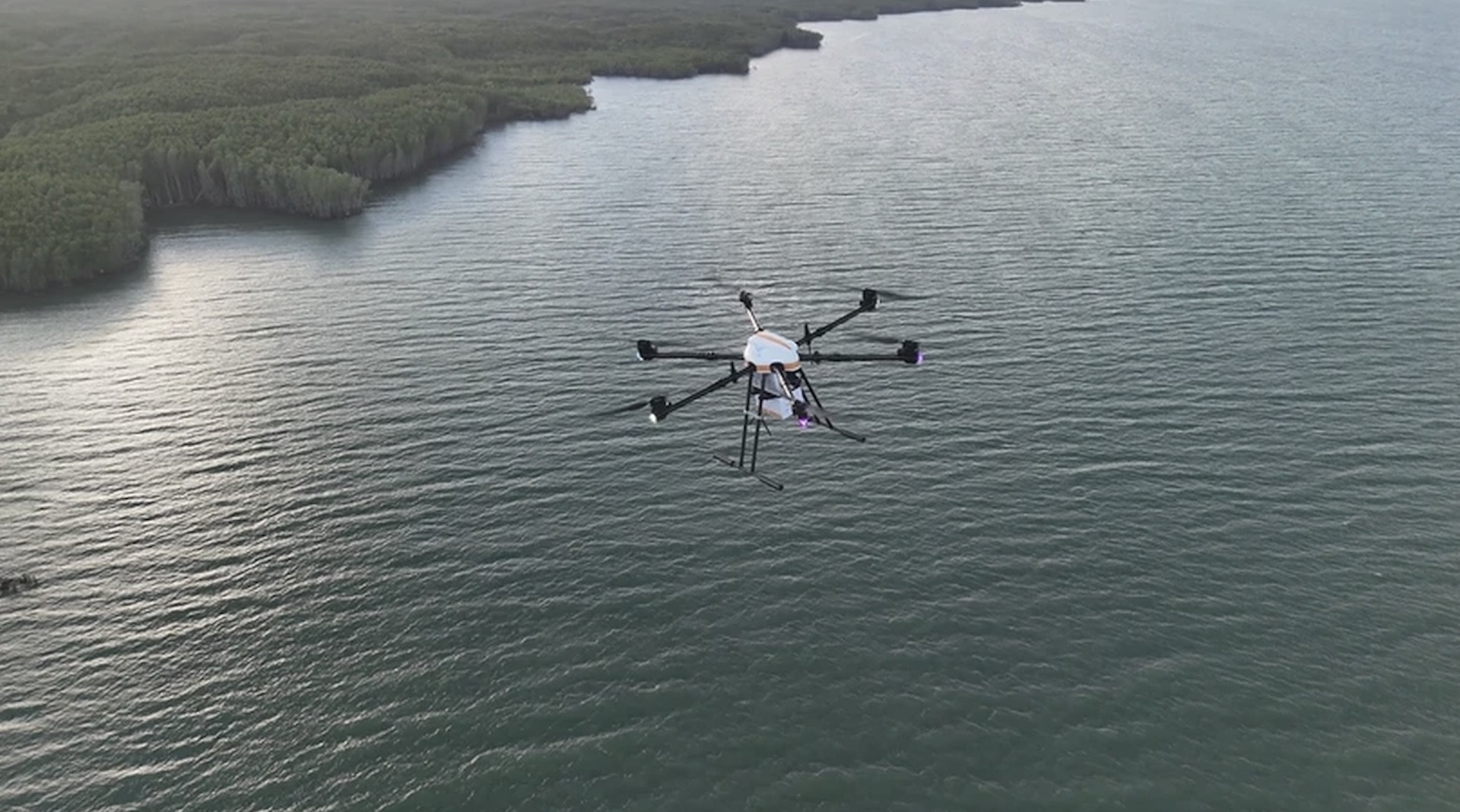
A UAV carrying a 2kg parcel flies across the sea from Can Gio to Vung Tau in one of Vietnam’s first low-altitude logistics experiments. Photo: CT UAV
A drone carrying a 2kg parcel across the sea between Can Gio and Vung Tau in just 15 minutes may appear to be a simple logistics experiment.
But behind that short flight lies a much larger ambition: Vietnam’s entry into the global race for the low-altitude economy, a rapidly emerging market projected to generate trillions of dollars worldwide over the coming decades.
A glimpse into the future of logistics
Vietnam officially launched its first cross-sea postal delivery route using unmanned aerial vehicles (UAVs) in February, connecting Can Gio Commune and Vung Tau Ward in Ho Chi Minh City.
Each UAV carries parcels weighing up to 2kg and flies more than 12km over the sea in around 15 minutes per trip.
The route cuts transportation time by roughly six times compared to road transport and three times compared to waterway delivery, marking a major step toward smart logistics development in Vietnam.
The experiment is only one example of how UAVs are beginning to reshape multiple sectors of the economy.
Recently, drones were also tested for aerial fertilizer spraying over coffee plantations in Muong Ang Commune in Dien Bien Province.
Beyond delivery services, UAVs are increasingly being used for digital mapping of construction sites, high-voltage power line inspections, agricultural monitoring and emergency rescue operations - all key components of what is known as the low-altitude economy.
A market worth hundreds of billions - or even trillions
Citing international research, Dr. Luong Viet Quoc, CEO of Vietnamese UAV developer Real-time Robotics (RtR), said the global market for UAV applications in the low-altitude economy could reach around $90 billion by 2030.
However, he noted that the sector is evolving so rapidly that forecasts are constantly being revised upward.
Even in defense industries, demand for unmanned aerial technologies has surged dramatically in recent years.
A study published in October 2025 by researchers from universities in China and Poland projected that aerial mobility services integrated with the low-altitude economy could surpass $1 trillion globally by 2040.
China has already designated the low-altitude economy as a strategic emerging industry and aims for it to contribute more than $500 billion to GDP while creating four million jobs by 2035.
To support that ambition, Beijing plans to establish 38 low-altitude air corridors and 200 heliports under a nationwide regulatory sandbox framework designed to accelerate innovation.
The initiative places China in direct competition with similar projects underway in the United States, the European Union, Singapore and the UAE.
Meanwhile, the International Civil Aviation Organization (ICAO) is developing global standards for managing low-altitude airspace, signaling that the sector is moving steadily toward large-scale commercialization.
Vietnam’s push to master core UAV technologies
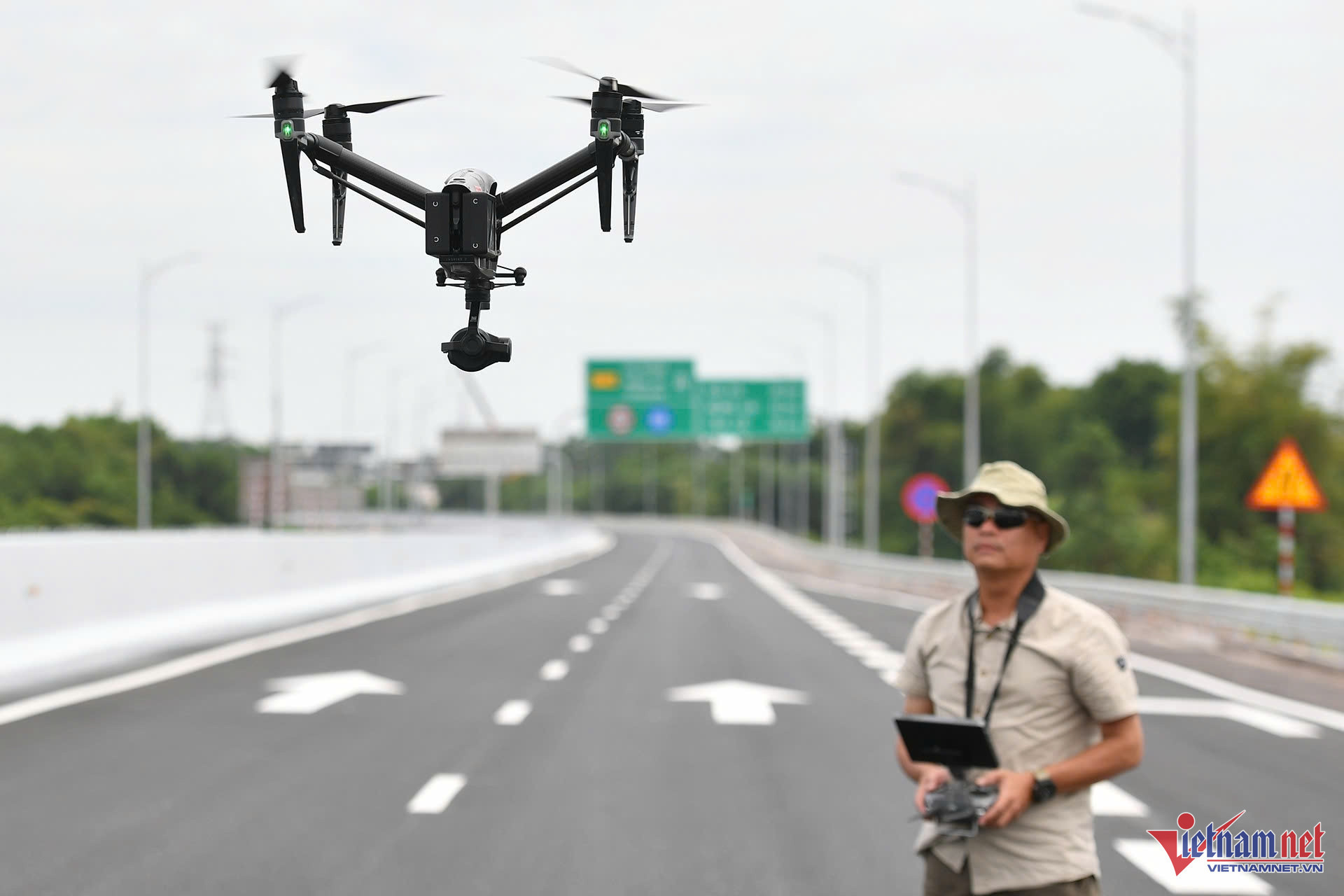
UAV technologies are expected to play a growing role in Vietnam’s low-altitude economy across logistics, agriculture and infrastructure sectors. Photo: Hoang Ha
Vietnam sees UAVs as one of the country’s six strategic technology products under the National Science, Technology and Innovation Program approved by the government in December 2025.
The program sets ambitious targets.
By 2027, Vietnam aims to master UAV design and integration technologies while controlling at least 60% of core technologies used in drone manufacturing.
The country also wants domestic value-added content to account for at least 50% of UAV sale prices and 30% of production costs.
By 2030, those figures are expected to rise further, with Vietnam targeting mastery of 80% of core UAV technologies and supplying at least 30% of domestic market demand.
For industry leaders, however, technological independence remains the defining challenge.
“If Vietnam only copies technologies developed elsewhere, we will always remain followers,” Dr. Quoc said.
“Vietnamese UAVs must contain real innovation and be competitive enough to enter demanding international markets. Otherwise, even the domestic market will eventually become difficult to protect.”
Universities and startups accelerate research efforts
According to Dr. Nguyen Hai Nguyen, a lecturer in robotics and mechatronics engineering at RMIT Vietnam, Vietnam’s research ecosystem is developing rapidly.
Many universities and research institutes now possess highly trained teams with expertise in automation, artificial intelligence, embedded systems and advanced manufacturing - the foundational technologies behind modern UAV systems.
As UAVs become a national strategic priority, universities are gaining stronger incentives to invest in long-term laboratories, specialized training programs and applied research initiatives.
Businesses, in turn, are becoming more willing to collaborate with academic institutions to commercialize research outcomes.
Still, Dr. Nguyen believes Vietnam’s biggest obstacle is not talent or ideas, but the gap between laboratory research and real-world deployment.
Regulatory bottlenecks slowing innovation
Unlike conventional software products, UAV systems require constant real-world testing.
Drone performance depends heavily on interactions between software, sensors, hardware and environmental conditions, meaning innovation cannot happen solely inside laboratories.
Many technological breakthroughs require thousands of hours of flight testing under different operational scenarios.
But in Vietnam, obtaining permits for UAV testing remains cumbersome and highly restricted.
According to researchers, that slows the crucial cycle of “design, testing and improvement” that drives innovation in the drone industry.
Without legal sandbox mechanisms and dedicated testing platforms where businesses and researchers can jointly experiment and share risks, experts warn Vietnam may struggle to bridge the gap between research and scalable UAV manufacturing.
More than technology - a new economic frontier
The rise of the low-altitude economy is increasingly being viewed as more than a transportation trend.
Globally, UAV ecosystems are expected to influence sectors ranging from logistics and agriculture to infrastructure management, surveillance, disaster response and defense.
For Vietnam, the 15-minute drone flight between Can Gio and Vung Tau represents more than just a technological milestone.
It signals the country’s intention to join a strategic global race where mastery of core technologies, regulatory agility and innovation ecosystems could determine future economic competitiveness.
Tran Chung
.svg)
