 Vietnamnet.vn

 Podcast



Former Minister of Agriculture and Rural Development Cao Duc Phat says the key to successfully piloting socialist wards and communes lies in organizing the initiative as a nationwide movement led by the Communist Party with broad participation from society.
During a voter meeting following the National Assembly session on May 4, Party General Secretary and President To Lam proposed piloting a socialist ward or commune model to draw lessons and clarify both the governance structure and the ability to meet residents’ living needs.
According to the Party chief, while nationwide implementation may not yet be feasible, the model could begin at the ward or commune level so people can directly experience its impact, creating a template for other localities to follow.
Drawing on the national rural development program, Dr. Cao Duc Phat said that from the earliest pilot stages in 2008 until now, every aspect of the program’s design and implementation had closely followed Party directives.

“New rural development in Vietnam has been carried out under a socialist orientation, not simply as a general development program,” he said. “We clearly defined it as building socialist-oriented rural areas. Therefore, when designing the criteria framework, we closely followed the characteristics of socialism and adapted them to rural conditions.”
Phat said implementing socialist communes and wards would require establishing a central steering committee similar to the structure Hanoi has proposed.
During the implementation of the national rural development program, the Standing Secretariat directly headed the steering committee, with participation from Politburo members and Central Committee officials.
The former minister also proposed separate criteria frameworks for wards and communes.
Although communes are gradually urbanizing, he stressed they should not lose their rural identity.
“Rural development must still remain prosperous socialist countryside development,” he said.
He added that the criteria should not merely represent a standard development model but must clearly reflect socialist characteristics aligned with the eight core socialist features outlined by the Party.
According to Phat, communes and wards should remain the central implementation units.
They are not only the administrative level closest to the people but also complete organizational systems encompassing Party bodies, local governments and mass organizations with sufficient legal authority to implement policies effectively.
However, he warned that the initiative should not be carried out as a conventional investment project.
“The secret behind the success of the new rural development program was organizing it as a social movement under Party leadership with participation from the whole society. If it is treated merely as an investment program, it will not succeed,” he said.
“Do not hand everything over to the private sector”
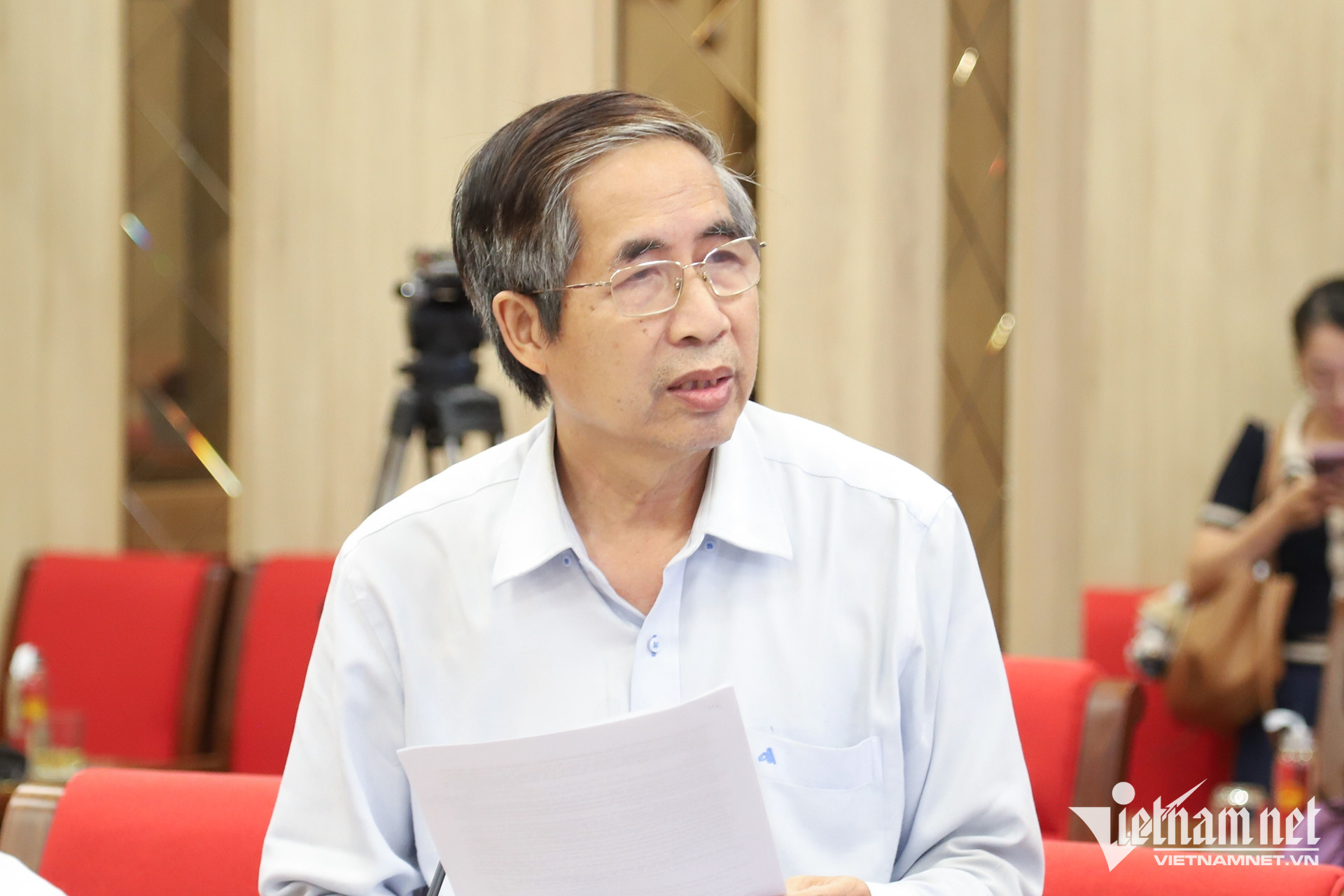
Meanwhile, Associate Professor Luu Duc Hai, former Director of the Institute for Urban and Rural Planning under the Ministry of Construction, said socialist communes and wards should not simply function as administrative units but as “cells of a happy, equitable and sustainable living space.”
According to him, infrastructure and social systems must be designed to serve all citizens equally, without favoring any social class, while public spaces and architecture should strengthen social cohesion.
Natural resources, he added, must be protected and shared fairly.
President To Lam previously suggested piloting socialist wards and communes with populations ranging from 500,000 to one million residents.
Hai described the proposal as a “strategic breakthrough” in national governance thinking and territorial organization.
As a result, he argued that traditional urban planning standards would no longer be sufficient, calling instead for a revolutionary planning framework with highly specialized criteria.
Regarding spatial planning and urban-rural design, Hai said communes or wards with populations between 500,000 and one million residents would no longer resemble conventional villages or neighborhoods.
Instead, they would function as either highly compact “mega urban zones” in the case of wards or large-scale modern ecological agricultural regions in the case of communes.
Under urban classification regulations issued by the National Assembly Standing Committee in late 2025, rural communes are typically limited to populations of 10,000-15,000 residents, while wards vary from 20,000-25,000 depending on classification.
Against that benchmark, the proposed scale of 500,000 to one million residents is exceptionally large.
Hai said socialist wards would require a major shift toward underground and vertical urban space planning.
He proposed fully adopting Transit-Oriented Development (TOD) models alongside the “15-minute city” concept, where residents could access metro systems, elevated rail lines, rapid bus transit, schools and hospitals within a 15-minute walk from home.
For socialist communes, Hai envisioned a modernized rural model combining high-tech agriculture with ecological services.
The planning framework would include clearly defined functional zones such as digital command centers, deep-processing industrial clusters and green environmental belts.
With populations approaching one million residents under a single grassroots administrative unit, infrastructure pressure would be enormous, he said.
As a result, all infrastructure systems would need to meet integrated smart-city standards.
Electric grids, public lighting, water supply, drainage systems, parks, traffic coordination and waste management would all need to be digitized and centrally managed through big data systems and artificial intelligence.
He also proposed that all waste be sorted, recycled and processed while green space per capita should meet the highest urban planning standards.
Welfare and social equality at the center
Hai argued that public welfare would become the defining feature separating socialist wards and communes from purely commercial urban developments.
Planning, he said, must place people at the center and social welfare as the ultimate objective.
He proposed a “high-quality welfare” network for healthcare and education, with public schools and general hospitals organized through layered service networks capable of providing free or low-cost education and healthcare access for all residents.
Hai also called for large-scale planning of social housing and modern worker housing complexes equipped with full amenities, ensuring every resident has access to safe and comfortable housing.
To manage such large populations under a commune- or ward-level administration, Hai said governance structures would also need to evolve.
He proposed streamlined digital government systems with paperless administration and automated public services operating entirely online.
“We should not hand everything over to private businesses because they will prioritize maximizing commercial profits, driving up real estate prices and undermining socialist equality,” he said.
At the same time, he cautioned against relying entirely on the state budget due to concerns over public debt burdens and bureaucratic delays.
Instead, he proposed establishing a high-level state steering committee acting as a “master architect” responsible for planning, land management and core infrastructure.
The state would then implement public-private partnership models, inviting major corporations to build and operate designated functional zones according to strict socialist welfare criteria established by the government.
Tran Thuong
.svg)
