 Vietnamnet.vn

 Podcast



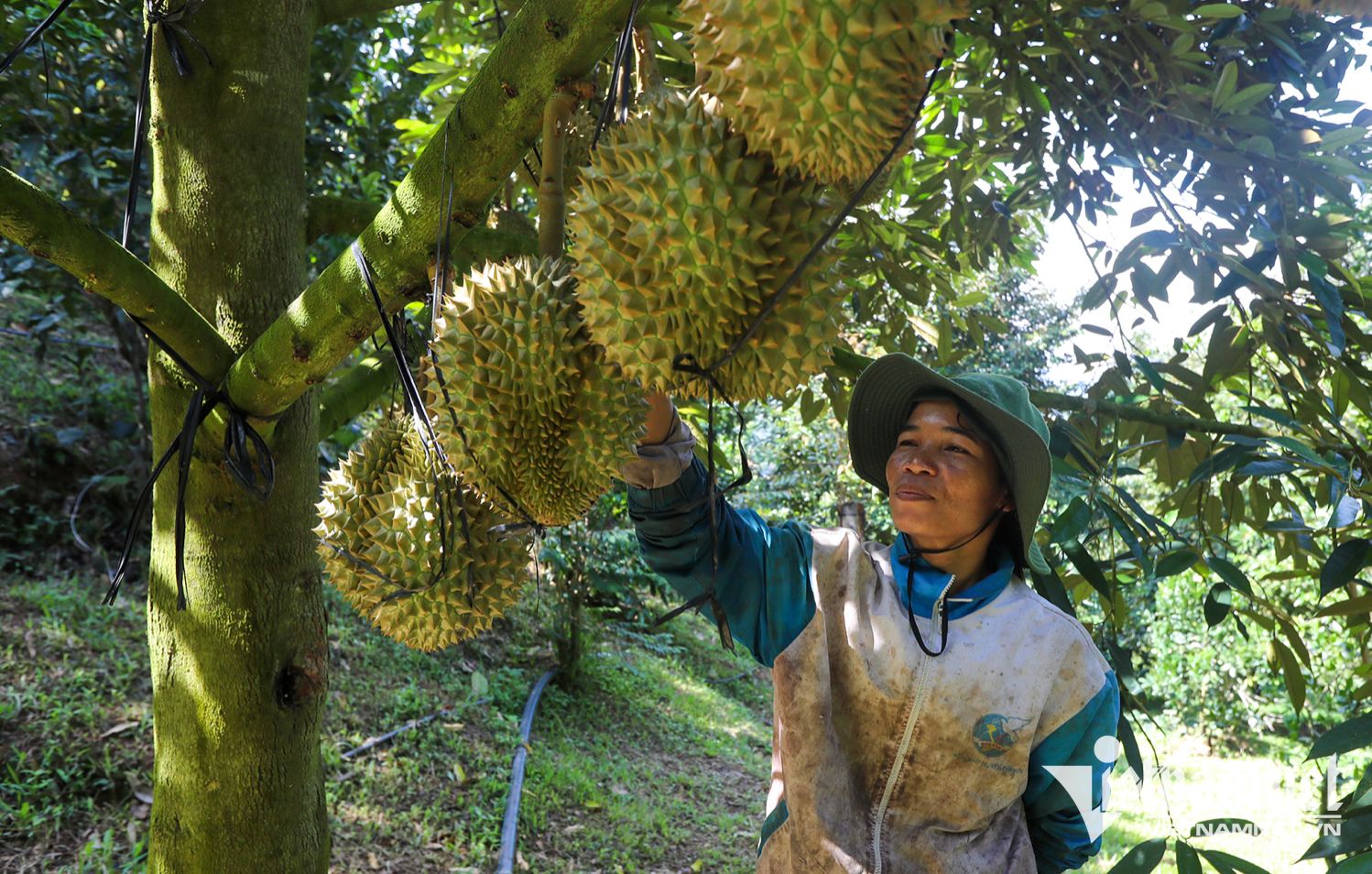
According to the Agency of Foreign Trade under the Ministry of Industry and Trade, Cambodia exported a record 5,738 tonnes of durian to China in the first seven months of 2026, nearly 40 times the volume shipped during the whole of 2025.
Exports surged after a new cross-border agricultural transport corridor from Cambodia through Laos opened in late June. Under the intermodal model, agricultural products can be transported by road into Laos before connecting with the China-Laos Railway.
The route can cut delivery times to around one week, compared with 15-20 days by sea.
Similarly, Malaysia’s fresh durian exports to China reached $30.26 million in the first half of this year, soaring 342% from the same period in 2025.
While their volumes remain relatively small, the figures show that Malaysia and Cambodia are rapidly gaining ground in China, the world’s largest durian import market.
Meanwhile, China has reduced imports of durian from southern Thailand after unripe fruit was detected in recent shipments.
Concerns over an emerging supply glut have prompted Thailand’s Ministry of Commerce to roll out emergency measures to boost consumption of around 300,000 tonnes of durian from the country’s southern region.
Monthong durian prices in Thailand currently range from 85-105 baht per kilogram ($2.54-$3.14) for grades A and B. Grade C fruit sells for 60-80 baht per kilogram ($1.79-$2.39), while grade D fetches 40-55 baht per kilogram ($1.20-$1.64).
Southern Thailand’s total durian output is reported at around 752,515 tonnes this season, up 30% from last year. Of that amount, approximately 489,199 tonnes have yet to be sold.
Durian prices fell early in the season as demand from China weakened. The decline was compounded by quality issues involving early-season shipments to China and increasingly fierce competition from other supplying countries seeking a share of the vast Chinese market.
In the first six months of 2026, Vietnam’s durian exports to China were worth nearly $987 million, up 43.1% year on year and accounting for 91% of the country’s total durian export turnover. Export volume to China exceeded 288,000 tonnes, an increase of 50.7%.
According to estimates by the Vietnam Fruit and Vegetable Association, Vietnam’s total durian export turnover reached an estimated $1.8 billion in the first seven months of 2026, including July.
A report by the Ministry of Agriculture and Environment shows that Vietnam’s durian output is projected to reach 2.08 million tonnes in 2026. By the end of July, the country had harvested 768,000 tonnes.
Another 1.31 million tonnes are expected to be harvested during the final five months of the year, including as much as 850,000 tonnes in the Central Highlands, where the harvest is set to peak between August and October.
With around 1.31 million tonnes still expected to come onto the market in the final five months of the year, Vietnam’s durian industry faces considerable pressure to find buyers. China remains by far the country’s dominant export market, accounting for more than 90% of total durian export turnover.
Such heavy dependence on a single market leaves the industry highly exposed to volatility. Even a relatively small change in Chinese policy or consumer demand could have a significant impact on Vietnam’s durian export earnings.
At the same time, Vietnamese durian faces increasingly intense competition from supplies originating in Thailand, Malaysia and Cambodia.
Tam An
.svg)
