 Vietnamnet.vn

 Podcast


Vietnam's two economic powerhouses pick up speed
Ho Chi Minh City's economy expanded 9.86% in the third quarter, its strongest quarterly growth in nearly a decade, according to the city's statistics office. The acceleration lifted growth for the first nine months to 9.06%.
Services contributed more than half of the city's growth, with transportation and warehousing standing out at 14.16%. Industrial production continued to expand, while investment also increased.
A survey of industrial enterprises pointed to a relatively positive outlook. More than one-third expected business conditions to improve in the fourth quarter compared with the third, while another 45.2% anticipated stability. Most surveyed firms therefore expected conditions to remain steady or improve during the final three months of the year.
Hanoi also gathered momentum, posting third-quarter growth of 10.02%, bringing its nine-month expansion to 8.85%, above the corresponding period last year. Services remained a key driver, while the city's infrastructure investment efforts were reflected in locally funded public investment reaching VND107.8 trillion (approximately US$4.1 billion), up 81.2%.
Nationwide, GDP grew 9.01% in the first nine months, including a 9.95% increase in the third quarter. Maintaining such growth amid fluctuations in fuel and transportation costs represents a notable achievement.
Manufacturing and processing output rose 12.9%, accompanied by a 12.8% increase in the consumption index. Exports exceeded US$434 billion, up 24.5%. Public investment disbursement reached 62.9% of the annual plan assigned by the Prime Minister by the end of September, with the disbursement rate 12.9 percentage points higher than a year earlier.
Against a backdrop of global uncertainty, Vietnam's achievements in economic growth, inflation management, macroeconomic stability and social welfare during the first nine months of 2026 deserve recognition. They reflect both the Government's policy efforts and the resilience of the broader economy.
Obstacles on the runway
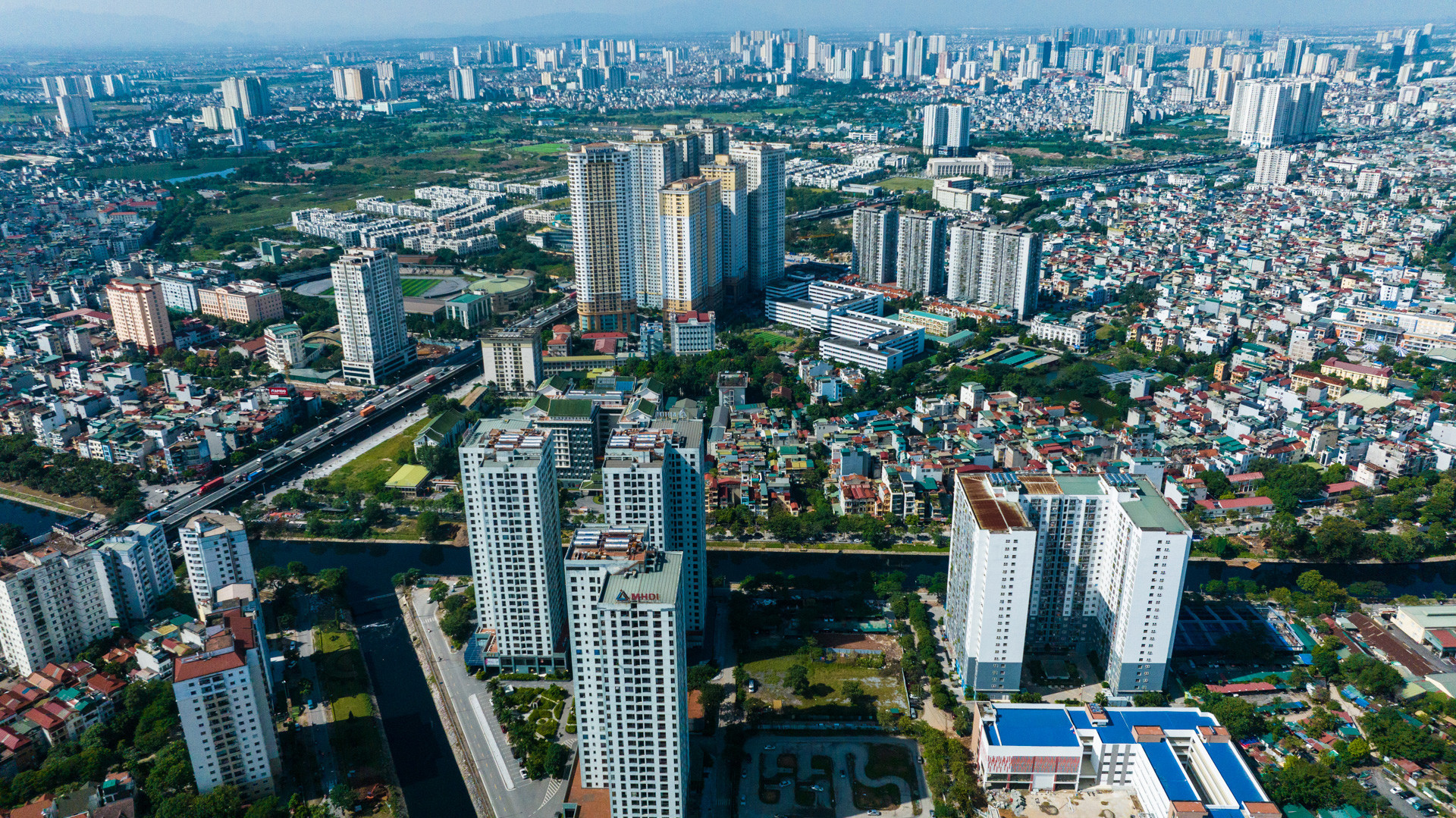
Even in Ho Chi Minh City, the industrial enterprise survey revealed underlying difficulties. Some 45.9% of respondents identified weak domestic demand as a factor affecting their operations, while 37.8% cited high borrowing costs.
Before expanding production, businesses must consider whether they can sell additional output and afford the interest payments on the financing required.
Private and other non-state investment in the city increased by 5.3%, compared with 22% growth in state investment. With the non-state sector accounting for nearly half of total realized investment, understanding why its capital spending is expanding more slowly is particularly important.
Are businesses waiting for stronger market demand, or are financing constraints, land access and administrative procedures holding them back?
In Hanoi, the sharp increase in budget-funded investment has not eliminated implementation difficulties. Some 190 public investment projects continue to face obstacles, mainly involving planning, land, site clearance and construction materials.
Another 287 projects funded outside the state budget still require further action, monitoring and follow-up. Projects delayed by land clearance or administrative procedures take longer to generate construction output and may incur additional costs.
At the national level, further obstacles have emerged along the runway toward faster economic growth.
Total social investment during the first nine months reached VND3.1096 quadrillion, equivalent to approximately 61% of the estimated VND5.1 quadrillion needed for the year to support double-digit growth.
That leaves nearly VND2 quadrillion to be implemented in the final quarter if the investment requirement is to be met.
More importantly, where will such an enormous amount of capital come from?
Mobilizing that volume of investment within such a short period is a formidable task. The requirement covers the entire economy, including the state sector, non-state businesses and foreign direct investment.
Securing the funding is only the beginning. Projects must also be ready for construction, while machinery and equipment need to be installed and brought into operation on schedule.
Meanwhile, 1,131 stalled projects, with combined registered investment of around VND779 trillion, have proposed solutions but have yet to be fully cleared of their obstacles.
This is not capital that can immediately be disbursed, but the figure illustrates the scale of resources still awaiting release.
Public investment disbursement also varies considerably among government agencies and projects. Seven ministries and agencies have disbursed less than 15% of their allocations or have yet to disburse any funds, while 37 projects and project components have achieved less than 40% of their planned disbursement.
According to the Ministry of Construction, construction sand supplies at major infrastructure projects currently meet only about two-thirds of demand. Material shortages could prolong construction schedules and push costs higher.
Businesses are facing mounting pressure as well.
The Ministry of Finance reported that, on average over the first eight months, corporate revenue increased 21%, while input purchasing costs rose 27%.
Selling more products does not necessarily leave businesses with additional funds to modernize equipment or expand production when their costs are rising even faster.
The number of enterprises entering or re-entering the market declined 3.2% year on year during the first nine months. The number resuming operations alone fell 14%.
Most businesses leaving the market were small enterprises temporarily suspending operations. Their ability to recover deserves particular attention because business activity is closely tied to employment and household income.
The scope for supporting growth through additional bank lending is also narrowing.
According to economists' calculations, Vietnam's loan-to-deposit ratio had reached approximately 115% by mid-2026.
Deposit mobilization has grown more slowly than credit for the past five years, while lending has accelerated this year to meet financing demand from major projects. To expand lending further, banks must secure corresponding funding.
As a result, average lending rates on newly originated loans have been moving toward double-digit levels, substantially higher than at the end of 2025.
For businesses borrowing at double-digit interest rates, profitability and debt-servicing capacity become even more important considerations before committing to expansion.
Simply raising credit limits does not create additional long-term funding.
When banks must mobilize deposits at higher costs, reducing lending rates becomes more difficult. They must also maintain adequate liquidity while monetary policy faces pressure from inflation and demand for foreign currency.
It is therefore unrealistic to expect bank credit alone to cover the remaining investment shortfall.
Despite strong export growth, imports approached US$454 billion, resulting in a merchandise trade deficit of US$19.42 billion during the first nine months. In the same period last year, Vietnam recorded a trade surplus of US$16.87 billion.
Imports of equipment and production inputs can help expand productive capacity. However, higher imports also increase demand for foreign-currency payments.
Any acceleration in investment and production must therefore account for foreign-exchange availability and the time required to turn imported inputs into finished products and revenue.
External pressures are also coming from energy markets.
Restrictions on maritime traffic through the Strait of Hormuz, together with shortages of diesel in international markets, have driven up fuel and transportation costs. Global petroleum prices have risen approximately 11-21% compared with their August average.
Domestic fuel supplies have remained broadly secure, but some localities have experienced restricted diesel sales, requiring supplies to be redirected to areas facing temporary shortages.
Higher fuel prices increase construction and manufacturing costs, while supply disruptions can delay projects even when financing has already been arranged.
Average consumer prices rose 4.52% during the first nine months, already slightly exceeding the full-year inflation target of around 4.5%.
Average employee income increased 9.1%, a positive development. However, improvements in living standards also depend on the cost of food, housing, transportation and education.
When essential expenses rise, households have less money available for other purchases, which in turn weakens demand for businesses' products and services.
What it will take to accelerate in the final quarter
Government Resolution 312/NQ-CP, issued on October 5, 2026, makes the scale of the remaining challenge clearer.
Under the Government's growth scenario, the national economy needs to expand 12.5% in the fourth quarter, compared with the 9.95% growth recorded in the third.
Ho Chi Minh City would need to achieve 13.23% growth and Hanoi 16.55%, compared with their respective third-quarter rates of 9.86% and 10.02%.
Together, the two cities accounted for 35.70% of the country's combined provincial-level gross regional domestic product in 2025. Representing more than one-third of the national economic total, their performance will have a substantial influence on full-year growth.
The acceleration requirements are similarly demanding elsewhere.
Hai Phong needs growth of 15.39%, Thanh Hoa 17.10%, Vinh Long 17.25% and Lang Son 18.41%.
These figures are targets under the Government's growth scenario, not forecasts of actual outcomes.
Each locality must identify precisely where the additional growth will come from.
Which projects are ready to begin construction immediately? Which businesses already have orders and can increase production during the remaining three months?
Resolution 312 itself acknowledges that traditional growth drivers have fallen short of expectations, while domestic demand has yet to receive a sufficiently strong boost.
Businesses continue to face difficulties accessing capital, and total social investment remains below requirements. Monetary conditions, credit, exchange rates and interest rates are also under pressure.
Considered alongside the substantial remaining investment requirement, increasingly constrained monetary policy and external fuel-price volatility, these assessments underline how difficult achieving double-digit growth will be.
An acceleration plan must therefore take account of all necessary conditions, particularly the need to preserve the economy's major macroeconomic balances.
Resolution 312 calls for growth to be closely linked to macroeconomic stability and inflation control, with economic efficiency, productivity, business development, employment and income serving as measures of success.
These are the essential macroeconomic foundations that must be protected if Vietnam is to accelerate and sustain its economic momentum.
Strengthening the runway for sustainable growth
Vietnam's economic performance during the first nine months reflects substantial Government efforts to manage the economy, resolve bottlenecks and promote production and investment amid considerable external uncertainty.
Growth accelerated from quarter to quarter, public investment disbursement improved and exports continued to expand.
Together with businesses' ability to adapt, these achievements have strengthened the basis for pursuing ambitious growth targets.
To sustain that momentum, economist Nguyen Dinh Cung has emphasized the need to pay greater attention to how efficiently resources are used.
One of the most important considerations is that investment and credit continue to support growth, but banks' lending capacity must remain consistent with their funding sources, liquidity positions and loan maturities.
As financing costs rise, selecting projects with viable markets and the ability to generate cash flow becomes increasingly important.
Cung pointed to the figures showing corporate revenue growth of 21% against a 27% increase in input purchasing costs.
While those percentages alone are insufficient to determine changes in profitability, they indicate that businesses need support in reducing costs so they can retain more resources for investment and expansion.
Faster administrative processing, timely payments and the removal of unnecessary procedures can all help enterprises conserve resources.
Cung also highlighted the difficulties small and medium-sized enterprises face in accessing finance, land and labor.
As major projects are implemented, more opportunities should be created for domestic businesses to supply goods and services.
With additional orders and the conditions needed to improve production capacity, these firms can contribute more to economic growth while sustaining employment and household incomes.
Accelerating investment must also go hand in hand with securing adequate construction materials, energy and transportation capacity.
Stable supplies will help projects stay on schedule, limit cost overruns and reduce upward pressure on prices.
This is particularly important when households are already having to adjust their spending in response to higher prices for essential goods and services.
According to the Ministry of Finance, 1,131 stalled projects still have unresolved obstacles despite having proposed solutions.
Continuing to address these difficulties would unlock additional resources for development.
For projects nearing completion, bringing them into operation sooner would allow invested capital to begin generating economic benefits.
For businesses already operating, resolving specific bottlenecks could help them maintain production and gradually expand without necessarily taking on additional debt.
Cung raised a fundamental question: will the assets created through today's investment improve productivity, expand productive capacity and generate cash flow in the future?
Closely monitoring these outcomes would help policymakers identify where resources should be concentrated.
Every infrastructure project that operates efficiently and every business that gains the capacity to invest further will help strengthen the foundations for Vietnam to maintain high economic growth in the years ahead.
Tu Giang

