 Vietnamnet.vn

 Podcast



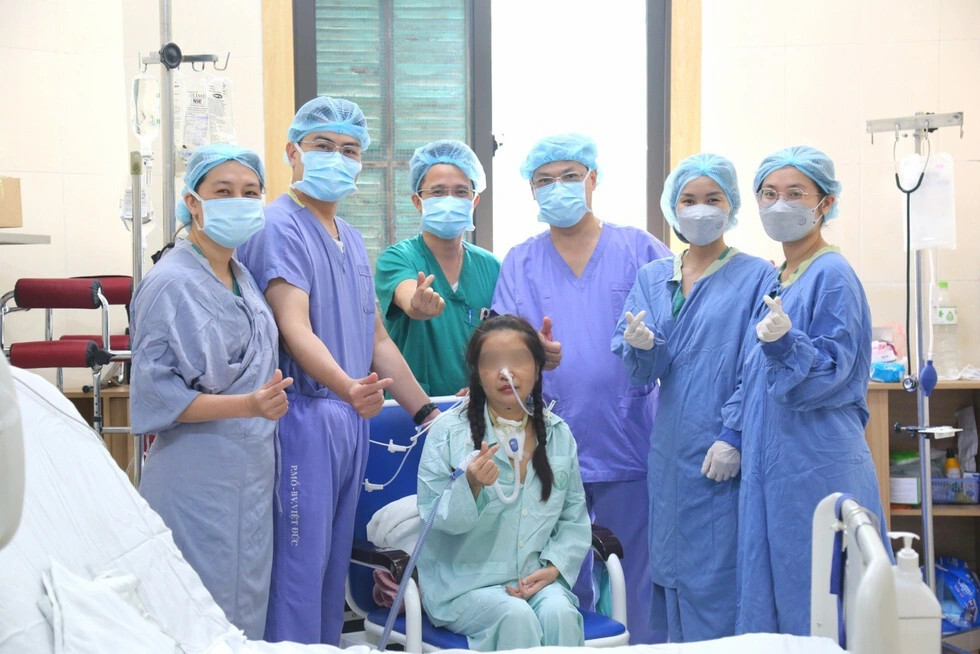
First simultaneous heart–lung transplant
On August 23, 2025, Viet Duc Friendship Hospital (Hanoi) announced the successful completion of Vietnam’s first simultaneous heart–lung transplant. This is among the most challenging techniques in cardiothoracic surgery, as it requires replacing the heart and both lungs at the same time using donated organs.
The patient, T.N.Q (38), suffered from Eisenmenger syndrome, leading to irreversible right heart failure and severe tricuspid regurgitation (TR). Her health had deteriorated day by day, and her chances of survival were extremely slim.
The surgery lasted more than seven intense hours, followed by nearly 50 days of intensive care. This success not only saved a patient’s life but also placed Vietnam among the small group of countries capable of performing simultaneous heart–lung transplants, affirming its multi-organ transplant capacity at a regional level and approaching international standards.
Prior to that, in October 2023, the National Lung Hospital (Hanoi) made an impression by performing two consecutive lung transplants within 24 hours. Notably, both cases satisfied the highest technical level according to the standards of the UCSF Lung Transplant Program (University of California, USA), one of the world's leading centers.
This success puts Vietnam on the list of prestigious lung transplant centers capable of handling complex cases with internationally standardized processes.
Temporarily attaching a hand to the leg
In September 2025, Binh Duong General Hospital (HCMC) successfully performed a rare microsurgery: "nurturing" a severed hand on a leg for nearly two months before reattaching it to its original position. The patient was a woman nearly 20 years old, carrying twins at 34 weeks, who suffered a labor accident that crushed the lower third of her right forearm and completely severed her hand.
Immediate reattachment would have required a 7–8 hour operation with a high dose of anesthesia, posing a serious risk of miscarriage. If the stump was closed, the mother would be permanently disabled. Facing this life-and-death puzzle, the multi-disciplinary team decided to temporarily graft the hand onto the lower leg to maintain blood supply to nurture the tissue, waiting for the fetuses to be old enough.
On November 28, 2025, once the twins were developing stably, doctors separated the hand from the leg and reattached it to the forearm in a 13-hour microsurgical operation. Blood vessels, tendons, muscles, and nerves were meticulously reconstructed, while fetal heart rates were closely monitored throughout the procedure.
Post-surgery, the hand was warm and pink, starting to move slightly. Later, the mother gave birth to two healthy baby boys via cesarean section.
Taking a kidney out for repair and re-transplantation
In October 2025, Central Military Hospital 108 (Hanoi) performed a rare autologous kidney transplant, opening a new direction in organ preservation. A 37-year-old woman had a large aneurysm in her left renal artery, with a life-threatening risk of rupture.
Many experts recommended that the female patient have her kidney removed. However, to avoid the patient having to undergo lifelong dialysis, doctors decided to perform laparoscopic surgery to remove the kidney from the body, reconstruct the blood vessels externally, and then re-transplant that same kidney.
The surgery lasted nearly 4 hours, with a "golden time" of 20-30 minutes to process the vessels outside the body to avoid irreversible ischemic damage. The aneurysmal part was removed and reconstructed using autologous vessels, after which the kidney was re-transplanted into the left iliac fossa.
After surgery, the kidney functioned well, and the patient did not need anti-rejection drugs because it was an autotransplant.
Three months of reviving+ a child in a vegetative state after drowning
The patient was T.Q.M (3), from Thai Nguyen Province. On October 25, 2025, the child drowned for about 20 minutes in a pond. When found, the child was floating face down, with bluish lips and pale skin. The family performed first aid for 15–20 minutes without response before rushing the child to emergency care.
On the sixth day, the child unexpectedly opened his eyes and moved his legs, then gradually weaned off the ventilator and survived the critical phase.
Severe sequelae remained: profound hypoxic brain injury, quadriplegia, cognitive impairment, complete loss of gross motor function, inability to speak or cry, and no response to the surrounding environment. Doctors predicted cerebral palsy or a prolonged vegetative state.
In mid-November 2025, the family transferred the child to another hospital in Tu Liem (Hanoi) for continued treatment.
Doctors devised a treatment regimen combining hyperbaric oxygen therapy with intensive rehabilitation.
By February 24, after three months of treatment, the child could walk independently, communicate well, and had near-normal cognitive function.
Phuong Thuy
.svg)
