 Vietnamnet.vn

 Podcast



Vietnam’s current food safety management system is organized under a sector-based model, with responsibilities divided among the Ministry of Health, the Ministry of Agriculture and Environment, and the Ministry of Industry and Trade. Each ministry oversees specific categories of food products.
The Ministry of Health currently manages six food sectors, while the Ministry of Agriculture and Environment oversees 19 sectors and the Ministry of Industry and Trade is responsible for eight.
At the local level, People’s Committees at all levels perform food safety management functions assigned by the government and delegated by the relevant ministries.
Under the existing model, where food safety oversight is divided by product categories, coordination among state management agencies remains limited. This has led to overlaps, inconsistencies and, in some cases, uncertainty over which agency bears responsibility, particularly when food supply chains fall under the jurisdiction of multiple ministries and sectors.
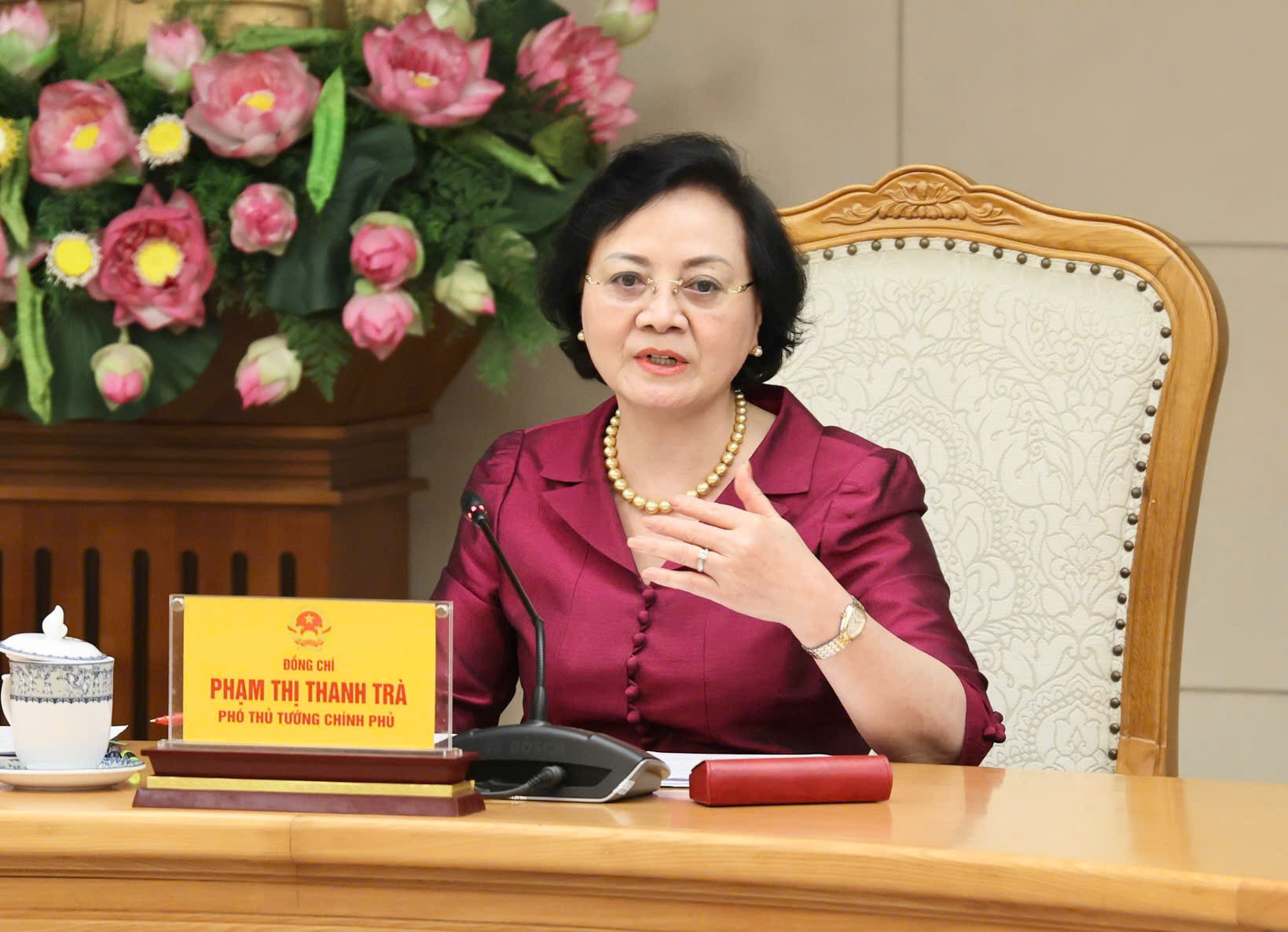
Speaking at the meeting, Deputy Prime Minister Pham Thi Thanh Tra stressed that the proposal must clearly explain the necessity of reforming the state management apparatus for food safety.
According to the Deputy Prime Minister, protecting people's health and lives must remain the top priority. She described the reform as an objective requirement to improve the effectiveness and efficiency of state management while meeting the demands of national development and international integration in a new stage.
She noted that current realities require a candid assessment of the shortcomings of the existing management framework, including fragmentation, overlapping responsibilities and, at times, unclear accountability.
For that reason, restructuring the organizational system is necessary to clearly define functions, responsibilities and management methods, while creating a foundation for further improvements to food safety laws, regulations and policies.
Emphasizing the proposal’s guiding principle, the Deputy Prime Minister said any organizational restructuring must be carried out within the broader effort to reform the political system, ensuring a leaner structure that operates more efficiently and effectively.
In particular, establishing a single focal authority would mean assigning one agency primary responsibility for policy advice, coordination and implementation. However, related ministries and agencies would continue to perform all duties and responsibilities within their respective jurisdictions.
"The Ministry of Health will be the lead agency, but other ministries and sectors must continue to fully carry out their responsibilities in accordance with their assigned functions and duties," the Deputy Prime Minister said.
She also commented on plans to strengthen the Food Safety Authority under the Ministry of Health by transferring part of the functions, responsibilities and personnel currently managed by the Ministry of Agriculture and Environment and the Ministry of Industry and Trade.
At the same time, she outlined the direction for reorganizing food safety management models at provincial and commune levels to ensure a designated lead agency, effective coordination mechanisms and appropriate human resources at every level.
One of the key principles highlighted by the Deputy Prime Minister is stronger decentralization to local governments, particularly at the commune level, combined with inspection, supervision and administrative enforcement mechanisms.
Food safety management plays a particularly important role at the grassroots level, where authorities directly engage with consumers, producers, business establishments and daily commercial activities. Therefore, she emphasized the need for dedicated personnel and greater accountability among local administrations.
The Deputy Prime Minister also requested clarification on the resources needed to implement the proposal, including dedicated food safety positions at the commune level. In addition, the responsibilities of each ministry and agency must be clearly defined in areas such as standards setting, technical regulations, inspection, supervision and enforcement.
She instructed the Party Committee of the Ministry of Health and the ministry itself to fully incorporate feedback and urgently finalize the proposal dossier to the highest possible standard, ensuring its feasibility and completeness before submission to competent authorities for consideration and approval.
Tran Thuong
.svg)
