 Vietnamnet.vn

 Podcast



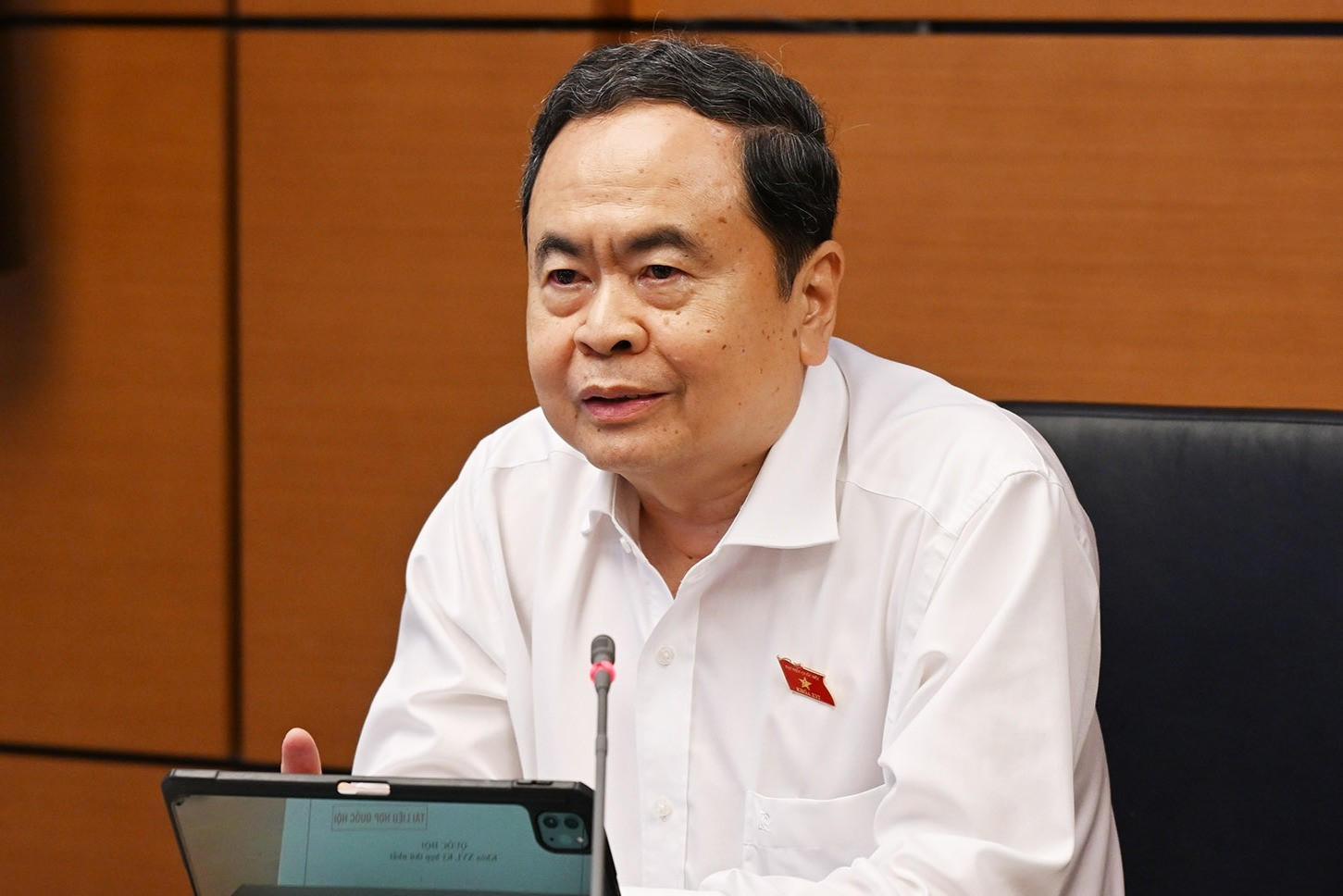
The National Assembly continued discussions on the supplementary assessment of socio-economic development and state budget implementation in 2025, as well as progress in the early months of 2026.
At the Ho Chi Minh City delegation, Tran Thanh Man underscored that achieving high growth requires a fundamental shift from a management mindset to one focused on enabling development.
According to him, this transformation must be backed by synchronized, decisive solutions and, most importantly, a commitment to follow through with concrete outcomes.
“Everyone may have ideas and vision, but without action, there will never be tangible results,” he said, stressing that a spirit of action must permeate from top leaders to officials at all levels and across all sectors.
The Chairman identified institutional reform as the foremost breakthrough needed to remove bottlenecks in production and business, while mobilizing all social resources.
He also stressed that economic development must go hand in hand with social equity, education, healthcare, vocational training, job creation, and social welfare.
“If we focus only on the economy and neglect social issues, pressing problems will remain unresolved,” he said, noting that many policies have already been implemented in this regard.
Another major requirement, he added, is to significantly reduce compliance costs, shift broadly from pre-inspection to post-inspection mechanisms, and eliminate the fear of making mistakes. This would require leaders at every level to protect officials who dare to think, act, and take responsibility for the common good.
At the same time, he called for stronger and more substantive decentralization, granting local authorities greater autonomy in decision-making and implementation, while the central government focuses on institution-building, oversight, and supervision.
Crucially, Tran Thanh Man highlighted the private sector as one of the most important drivers of double-digit growth.
Vietnam, he said, must continue to develop more large private corporations with strong financial resources, advanced technology, and modern governance, capable of undertaking major national projects.
In reality, many large-scale projects led by the private sector have demonstrated rapid progress and high quality, while numerous public investment projects remain delayed, over budget, or even tainted by negative issues.
Therefore, creating a favorable environment for the private economy to grow is not only an economic imperative but also a strategic solution to enhance national competitiveness.
On macroeconomic management, the Chairman called for flexible yet decisive policies, with proactive responses to external uncertainties such as conflicts, trade wars, and volatility in global financial markets.
Fiscal policy, he said, should be expanded in a targeted manner, prioritizing major infrastructure projects with strong spillover effects, while avoiding fragmented and inefficient investment.
He also stressed the need to resolve long-standing stalled projects and prioritize key national works that can drive regional development and strengthen connectivity.
“The implementation process must clearly assign responsibilities - who does what, when it will be done, and what outcomes are expected - to avoid a situation where officials ‘show up in the morning and leave in the afternoon’ without producing results,” he said.
“We must not waste a single day, delay a single week, miss opportunities in a month, or remain passive for an entire year,” he concluded.
Tran Thuong
.svg)
