 Vietnamnet.vn

 Podcast


Economic growth momentum becomes clearer
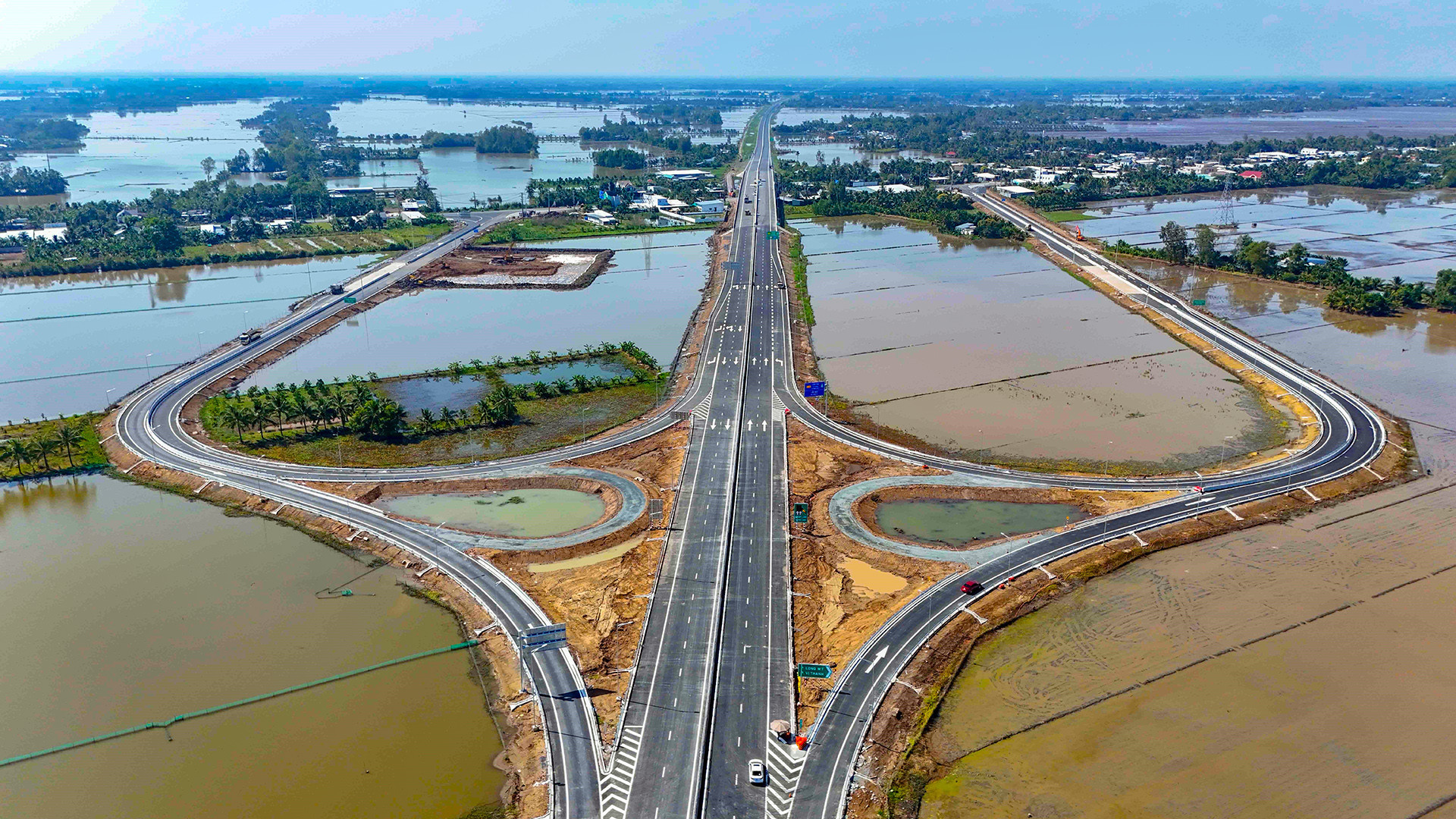
Vietnam's latest economic indicators point to strengthening growth momentum, although achieving the government's ambitious year-end targets will require further acceleration.
Industrial production in October was estimated to have increased 15% year on year, bringing growth for the first 10 months of 2026 to 12.4%. Manufacturing and processing expanded by 13%, while 33 of the country's 34 provincial-level localities reported industrial production growth.
The Purchasing Managers' Index (PMI) reached 52.3 in October, up from the previous month and marking the 16th consecutive month above the 50-point threshold separating expansion from contraction.
Manufacturing continued to expand despite increasingly complex conflicts in the Middle East, rising fuel prices and a tightening monetary policy trend among major economies.
Vietnam's total import-export turnover surpassed $1 trillion for the first time within the first 10 months of a year.
Exports reached $499.24 billion, up 27.5%, exceeding the full-year growth target of 15-16%.
October alone recorded a trade surplus of $7.31 billion, narrowing the cumulative trade deficit from $19.42 billion after nine months to $12.07 billion.
Registered foreign investment reached $54.85 billion, up 74%, while disbursed foreign investment totaled $24.08 billion, an increase of 13.1%.
The latter figure is particularly significant because it represents investment already implemented and contributing to economic activity during the year.
To achieve stronger results in the remaining months, authorities must promptly resolve obstacles facing investors so that projects can proceed on schedule.
Domestically, total retail sales of goods and consumer service revenue increased 13.5%.
Approximately 243,600 businesses entered or re-entered the market, exceeding the nearly 182,000 businesses that withdrew.
Public investment disbursement also accelerated.
By the end of October, disbursement had reached VND708.57 trillion (approximately $26.9 billion), equivalent to 74.1% of the annual plan and VND217.5 trillion higher than in the same period last year.
Meanwhile, 902 previously stalled projects, with combined investment of VND342.6 trillion (approximately $13 billion), had been completed and brought into operation.
Putting these projects into use means finally generating returns from capital that had remained tied up during prolonged delays.
The results demonstrate that removing administrative and implementation bottlenecks can unlock additional growth from resources already available within the economy.
State budget revenue reached approximately VND2.44 quadrillion (about $92.7 billion), equivalent to 96.4% of the annual estimate.
At the same time, the government provided approximately VND366.6 trillion in tax and fee exemptions, reductions, deferrals and related support measures for businesses and individuals.
Budget revenue has therefore nearly met its annual target despite substantial fiscal support for economic activity.
These achievements provide a foundation for the government to continue pursuing high economic growth.
However, the requirement for fourth-quarter growth of 12.5% means production and business activity must accelerate even further.
Businesses remain under pressure from rising costs
Despite the encouraging headline PMI figure, the underlying survey revealed several warning signs.
Output and new orders expanded at their slowest rates in six months, while new export orders continued to decline.
Employment also fell slightly for the third consecutive month.
Although the overall index remained in expansion territory, slowing new orders could make it harder for manufacturers to increase production toward the end of the year.
Consumer demand is also weaker than nominal revenue growth suggests.
Retail sales and consumer service revenue increased 13.5% over the first 10 months, but growth was only approximately 7.7% after adjusting for inflation.
Increasing sales therefore depends partly on how much disposable income households retain after paying for essential goods and services.
For businesses, costs are rising faster than revenue.
During the first nine months, revenue increased 20%, while input costs climbed 27%.
This widening gap indicates that companies must spend substantially more to generate additional sales, making business operations increasingly difficult.
According to official figures, interest rates on newly issued loans have exceeded 10% annually, while outstanding credit did not increase in October.
Capital mobilization from economic organizations had risen only 5.83% as of October 21 compared with the end of the previous year, reflecting persistent corporate cash flow difficulties.
A manufacturer considering higher production must calculate raw material expenses, borrowing costs and the likelihood of selling additional products.
When lending rates are high and demand remains uncertain, businesses are understandably reluctant to borrow more.
Measures to reduce lending rates, particularly for working capital, therefore need to deliver tangible benefits to borrowers as soon as possible.
Although business entries and re-entries exceeded withdrawals over the first 10 months, the number entering or returning to the market in October fell 19.8% year on year.
This marked the fifth consecutive monthly decline.
Authorities must eliminate procedures that delay business operations and reduce unnecessary costs.
The effectiveness of reforms should be measured by the time and money businesses actually save.
Macroeconomic stability is essential for business confidence
The government has set a target of double-digit economic growth while maintaining macroeconomic stability and keeping inflation around 4.5%.
High borrowing costs and rising input prices are already putting pressure on businesses, while increasing consumer prices are forcing households to spend more cautiously.
Maintaining economic stability therefore has direct implications for both production and household consumption.
Average consumer price inflation reached 4.57% in the first 10 months, exceeding the full-year target, while the Consumer Price Index (CPI) rose 5.09% year on year in October.
Fuel prices were the primary driver.
Reducing energy-related cost pressures and ensuring adequate supplies of essential goods during the year-end period would help contain inflation and ease the financial burden on households.
Foreign exchange and exchange rate conditions have remained broadly stable.
As of October 21, Vietnamese dong deposits had increased 12.65% compared with the end of the previous year, outpacing the 10.2% growth in dong-denominated credit.
Efforts to lower lending rates must therefore be coordinated with measures to maintain banking system liquidity, address non-performing loans and preserve foreign exchange market stability.
Vietnam's trade balance also requires close monitoring.
Within the country's cumulative trade deficit of $12.07 billion, domestic enterprises recorded a deficit of $36.9 billion, while the foreign-invested sector posted a surplus of $24.83 billion.
The overall trade deficit could widen again during the final two months of the year as manufacturers increase imports of raw materials and components in preparation for production in early 2027.
Imports needed for production must continue to be supported.
At the same time, authorities should promote exports, monitor orders across individual industries and reduce logistics costs, as recommended in the government's report.
Fiscal management will also require careful planning.
Although budget revenue nearly reached its annual estimate after 10 months, revenue growth has been slowing, partly because of extensive tax and fee support measures.
Preventing revenue losses and reducing recurrent expenditure could free up additional resources for investment while allowing continued support for households and businesses.
Other essential economic conditions include reliable supplies of electricity, petroleum products and construction materials.
Factories cannot increase shifts without sufficient electricity, and construction sites cannot accelerate work without adequate materials.
Without these basic conditions, additional investment allocations may fail to translate into higher output or completed infrastructure.
A business considering expansion needs to know what interest rate it can borrow at, whether raw materials will be available and whether exchange rates will remain stable.
Maintaining these conditions would give companies greater confidence to invest, accept new orders and expand production.
That confidence would also help sustain economic growth in the months and years ahead.
Accelerating measures that are already within reach
The reduction of the special consumption tax on gasoline to 0% and a 2% cut in retail electricity prices from November 1 have helped ease some production and household expenses.
However, authorities need to monitor whether prices of related goods and services decline accordingly.
They must also address cases in which businesses exploit fuel price fluctuations to raise prices or fail to pass on cost reductions, as required in the government's report.
A total of 1,206 stalled projects remain unresolved, representing combined investment of VND873 trillion (approximately $33.2 billion).
Every additional project cleared of obstacles would allow investment capital to flow and implementation to resume.
Public investment disbursement also remains significantly behind schedule in several areas.
Major transport infrastructure projects have disbursed only 66.8% of their allocated plans.
Among 103 projects and component projects, 24 have disbursement rates below 40%.
National target programs have performed even more poorly, with disbursement reaching just 11.1% of their budget estimates and plans.
Projects delayed by land clearance problems need specific solutions to land acquisition and site handover.
Those facing material shortages need reliable supply arrangements.
General instructions to accelerate progress are unlikely to make construction sites move faster.
Ministries and local authorities must identify individual bottlenecks, assign clear responsibility for resolving them and reallocate funds when projects cannot proceed according to plan.
Ho Chi Minh City and Hanoi also need to accelerate economic activity during the final months of the year.
The two cities accounted for 23.3% and 12.4%, respectively, of Vietnam's total gross regional domestic product (GRDP) in 2025.
Given their economic weight, resolving additional investment obstacles and stimulating production and consumption in these two cities could make a substantial contribution to national growth.
Tourism faces another demanding target.
Vietnam still needs to attract an additional 5.5 million international visitors to reach its full-year goal of 25 million.
With little time remaining, existing visa policies must be used more effectively, alongside targeted tourism stimulus measures for priority markets identified in the government's report.
Achieving double-digit growth requires authorities to resolve the specific problems slowing production and investment.
Allocated capital must reach construction sites, and payments must be made promptly to contractors.
Businesses need relief from costs and administrative procedures already identified as unreasonable.
The final two months of the year leave little room for delay.
The government's determination must be matched by concrete accountability and effective action across every ministry and locality.
The first 10 months have demonstrated the Vietnamese economy's resilience and capacity for growth, despite continuing difficulties for businesses and households.
The remaining period should focus on practical measures that strengthen that momentum: removing another obstacle, bringing another project into operation or reducing another unnecessary expense.
The higher the country's growth ambitions, the more important it becomes to seize every opportunity for immediate action.
Tu Giang

