 Vietnamnet.vn

 Podcast


Ho Chi Minh City leads proposed capacity allocation
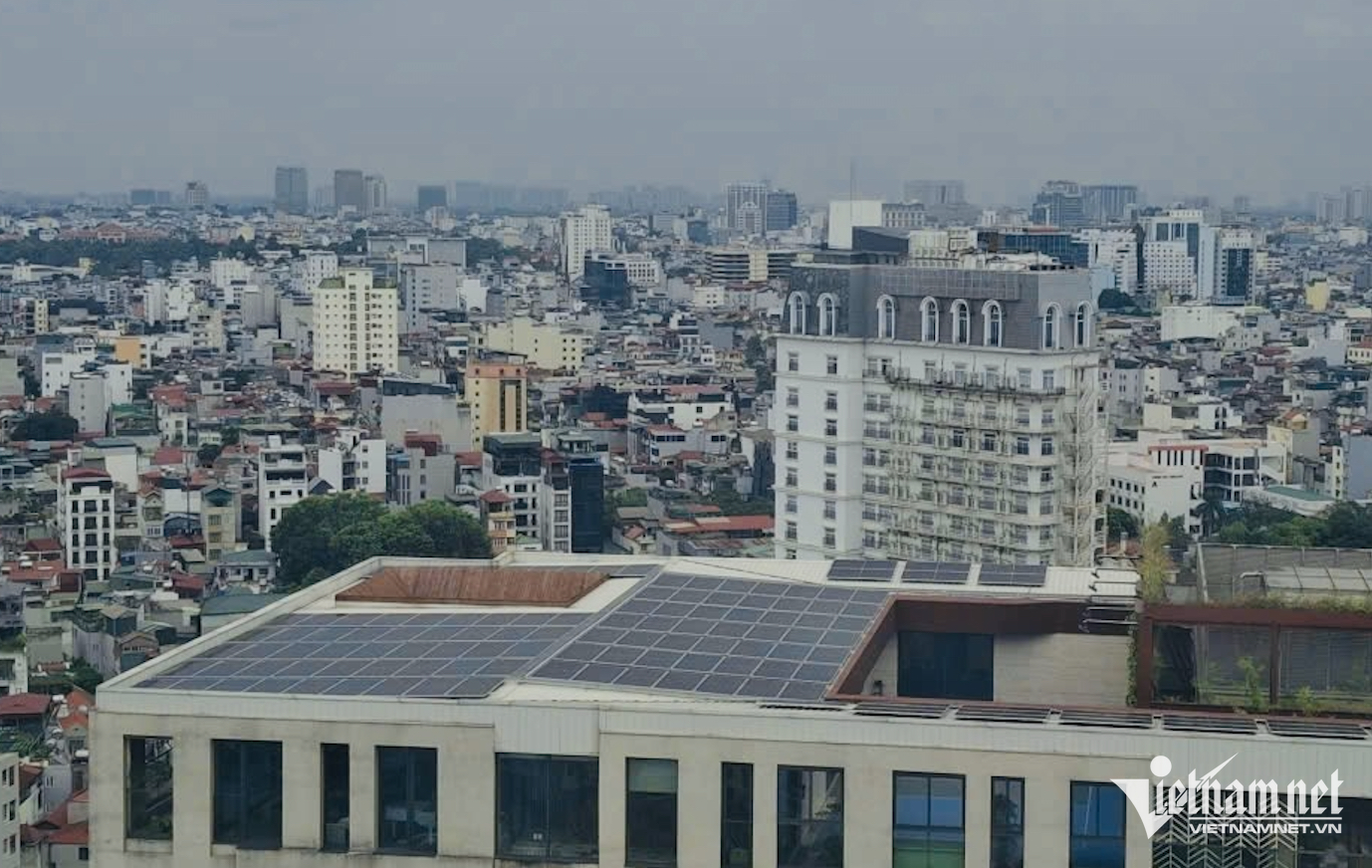
The Ministry of Industry and Trade has submitted a draft resolution to the Government proposing targets for the development of rooftop solar power for self-generation and self-consumption across localities through the end of 2027.
Under the proposal, a total capacity of 5,630 MW would be allocated across Vietnam’s 34 provinces and centrally governed cities.
Of this, 2,630 MW is expected to be installed by the end of March 2027, with the remaining 3,000 MW to be developed between April and December 2027.
Northern localities are encouraged to fulfill their entire targets before the dry season in the second quarter of 2027.
According to the draft resolution’s appendix, Ho Chi Minh City would receive the largest capacity allocation at 628 MW, followed by Hanoi with 510 MW, Phu Tho with 421 MW and Ninh Binh with 352 MW.
Other localities with proposed targets exceeding 300 MW include Bac Ninh, Tay Ninh, Hai Phong and Thanh Hoa.
The ministry said the proposed allocations were based on projected electricity demand growth in each locality during the 2026-2027 period.
Total investment required to develop 5,630 MW of rooftop solar capacity nationwide by the end of 2027 is estimated at VND67.56 trillion.
The estimate is based on current installation costs of approximately VND12 million per kW, excluding battery energy storage systems (BESS).
Funding is expected to come from private-sector participation, the state budget and corporate financial resources. Investment and disbursement at government offices must comply with regulations governing state budgets, public investment and public assets.
According to the ministry, allocating capacity based on electricity demand growth would help align additional power generation with local consumption needs.
Localities experiencing rapid electricity demand growth, particularly those with numerous industrial parks, industrial clusters and extensive factory rooftop areas, are well positioned to exploit this energy source and reduce their reliance on the national power grid.
The proposal comes as the Government calls for urgent measures to ensure adequate electricity supplies through the end of 2027.
No mandatory installation targets for households
Government leaders previously called for the development of approximately 6,000 MW of rooftop solar power in 2027, following recommendations from the National Power System and Market Operation Company (NSMO).
The Ministry of Industry and Trade said rooftop solar power combined with battery storage could supplement on-site electricity supplies and reduce peak demand, particularly during daytime hours.
Utilizing existing rooftops could also reduce the need for investment in centralized power generation facilities and ease pressure on electricity transmission and distribution networks.
However, localities have reported plans to develop only around 1,678 MW by the end of 2027, substantially below the proposed national target of approximately 6,000 MW.
As of November 18, Ho Chi Minh City, Dong Nai, Khanh Hoa and Tay Ninh had yet to submit the requested data.
The ministry acknowledged that some localities had provided incomplete figures and forecasts that did not accurately reflect current and future electricity demand.
The limited preparation time has also made it difficult to fully assess the factors needed to determine and balance capacity targets.
The ministry warned that tight implementation schedules, unsecured funding and pressure to meet targets could lead to irregularities in contractor selection and equipment procurement, or the omission of essential roof structural assessments and fire safety inspections.
Equipment supply capacity is another concern. No assessment has yet been conducted to determine whether suppliers can meet the anticipated surge in demand for solar panels and inverters as localities simultaneously implement projects through the end of 2027.
Given these challenges, the ministry has proposed replacing mandatory targets with aspirational goals that reflect actual implementation capacity and local conditions.
The draft resolution also stipulates that households, manufacturing facilities and businesses would participate voluntarily.
Local authorities must not impose mandatory installation targets on individual households or businesses, nor make rooftop solar installation a condition for processing administrative procedures.
For government agencies and public service institutions, the proposed average installation capacity is 30 kW per provincial-level facility and 20 kW per commune-level facility.
Local authorities are encouraged to assign subordinate units or cooperate with businesses, including power companies, to organize centralized installation and facilitate operation and maintenance.
Financial incentives and regulatory support
To address regulatory barriers, the Ministry of Finance would be tasked with reviewing regulations on public investment, state budgets and public assets.
It would also provide guidance on accounting for investment and operating costs, as well as revenue generated from the sale of surplus electricity at public institutions.
The ministry would additionally study tax incentives for equipment and components, alongside other relevant preferential policies.
Provincial and municipal People’s Committees are expected to submit proposals to their respective People’s Councils in December 2026 for policies supporting households in installing rooftop solar power and battery storage systems.
According to the Ministry of Industry and Trade, only five localities have introduced such policies so far: Bac Ninh, Lai Chau, Quang Tri, Hanoi and Vinh Long.
Vietnam Electricity (EVN) would be responsible for providing grid connection guidance, conducting initial inspections, ensuring safe operation and coordinating assessments of grid hosting capacity.
Power companies would also be required to comply with existing regulations and avoid creating unnecessary obstacles to rooftop solar development.
Tam An

