 Vietnamnet.vn

 Podcast


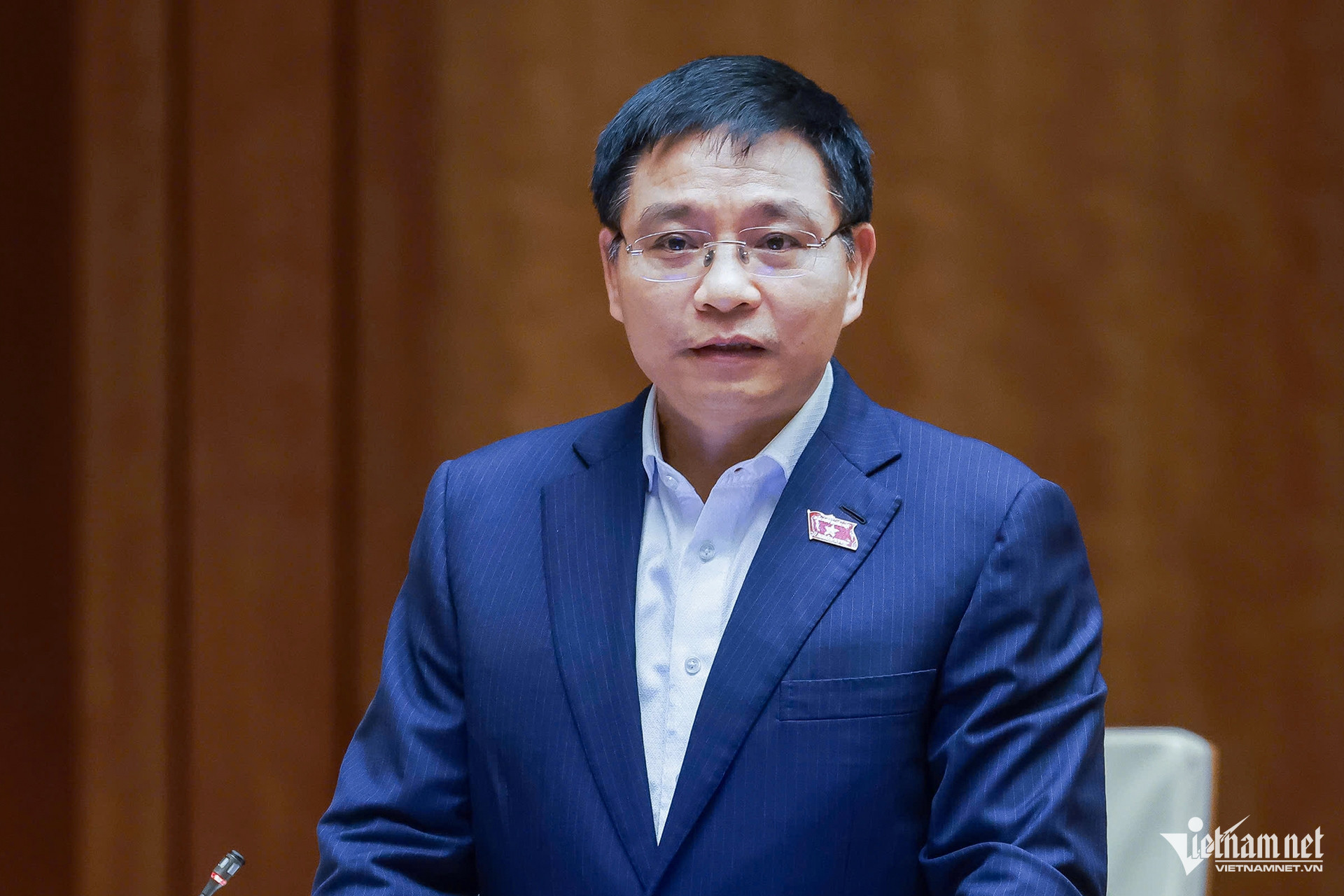
Deputy Prime Minister Nguyen Van Thang announced that the Ministry of Finance and the Ministry of Construction are developing a pilot scheme to auction or tender toll collection rights on selected expressway sections, including parts of the North-South Expressway.
Speaking at a National Assembly question-and-answer session on financial matters on November 12, Thang addressed three major issues under the Government's responsibility: mobilizing private investment through public-private partnerships (PPP), utilizing official development assistance (ODA) and accelerating public investment disbursement.
Private firms could operate expressways without construction risks
According to the Deputy Prime Minister, Vietnam currently uses two main approaches to attract private businesses to transport infrastructure development.
Under the more common model, private companies invest in building infrastructure and subsequently collect tolls to recover their investment.
The second approach involves operation and maintenance (O&M) contracts, under which the State finances and constructs infrastructure before granting private companies the right to operate it and collect tolls.
The Ministry of Finance and the Ministry of Construction are working on a pilot scheme to auction or competitively tender toll collection rights for several projects, including selected sections of the North-South Expressway.
"The Ministry of Finance and the Ministry of Construction are working on this. I believe businesses will be enthusiastic about this model because they will not face risks related to land clearance, construction or price fluctuations," Thang said.
For projects directly financed and constructed by private companies, he noted that toll collection periods typically last around 20 years.
However, bank loans generally have repayment terms of 10-12 years, requiring investors to contribute additional equity to bridge the financing gap.
Thang explained that state capital contributions to PPP projects commonly account for 50% of total investment, rising to as much as 70% in exceptional cases.
Previously, when businesses were required to provide all the necessary capital, many infrastructure projects struggled to achieve financial viability once all costs were taken into account.
State participation has therefore helped improve the feasibility of new projects and encouraged greater private-sector involvement.
Vietnam seeks more selective use of ODA financing
Addressing the mobilization of ODA, Thang said Vietnam had effectively graduated from traditional concessional development assistance, making it increasingly difficult to access low-cost loans on the same terms as in the past.
At the same time, the country's financing requirements for development remain substantial.
Nevertheless, Vietnam still has room to mobilize additional capital because its public debt, government debt and external borrowing indicators remain below the ceilings approved by the National Assembly.
Thang emphasized that borrowing decisions must be based on comprehensive cost assessments and careful reviews of relevant conditions, including construction requirements and contractor selection.
The Government intends to concentrate ODA resources on major projects that demonstrate strong economic, social and financial benefits rather than spreading funding across numerous smaller investments.
Public investment disbursement reaches 74% after 10 months

The Deputy Prime Minister reported that Vietnam had disbursed 74% of its planned public investment capital during the first 10 months of 2026.
The Government is directing ministries, agencies and local authorities to strive for full disbursement of the annual allocation.
Thang described public investment disbursement as a critical factor in achieving the country's economic growth target of 10% in 2026.
Responding to lawmakers' concerns about advance payments to contractors, he explained that contractors, particularly those implementing major infrastructure projects, may receive advances of up to 30% of contract value after signing agreements.
These payments are intended to finance material purchases and other preparations before construction begins.
According to Thang, only a small number of longstanding advance payments remain unsettled.
The Government has instructed relevant agencies to ensure that disbursement reflects actual project implementation and contributes meaningfully to economic growth during the year.
National Assembly calls for action on outstanding issues
Concluding the question-and-answer session on financial matters, National Assembly Chairman Tran Thanh Man said 25 deputies had raised questions and three had participated in debates.
Another 29 lawmakers had registered to ask questions but were unable to do so during the session.
These deputies may submit their questions to the National Assembly Standing Committee, which will forward them to the Minister of Finance for written responses.
Man assessed that lawmakers' questions had closely followed the issues under discussion.
He also noted that the Minister of Finance had prepared thoroughly, demonstrated a firm grasp of his responsibilities and addressed most of the concerns raised by deputies.
The National Assembly Chairman urged the Government, the Minister of Finance and relevant ministries and agencies to take lawmakers' feedback into account and develop concrete measures to address the shortcomings identified during the session.
Thanh Hue

