 Vietnamnet.vn

 Podcast



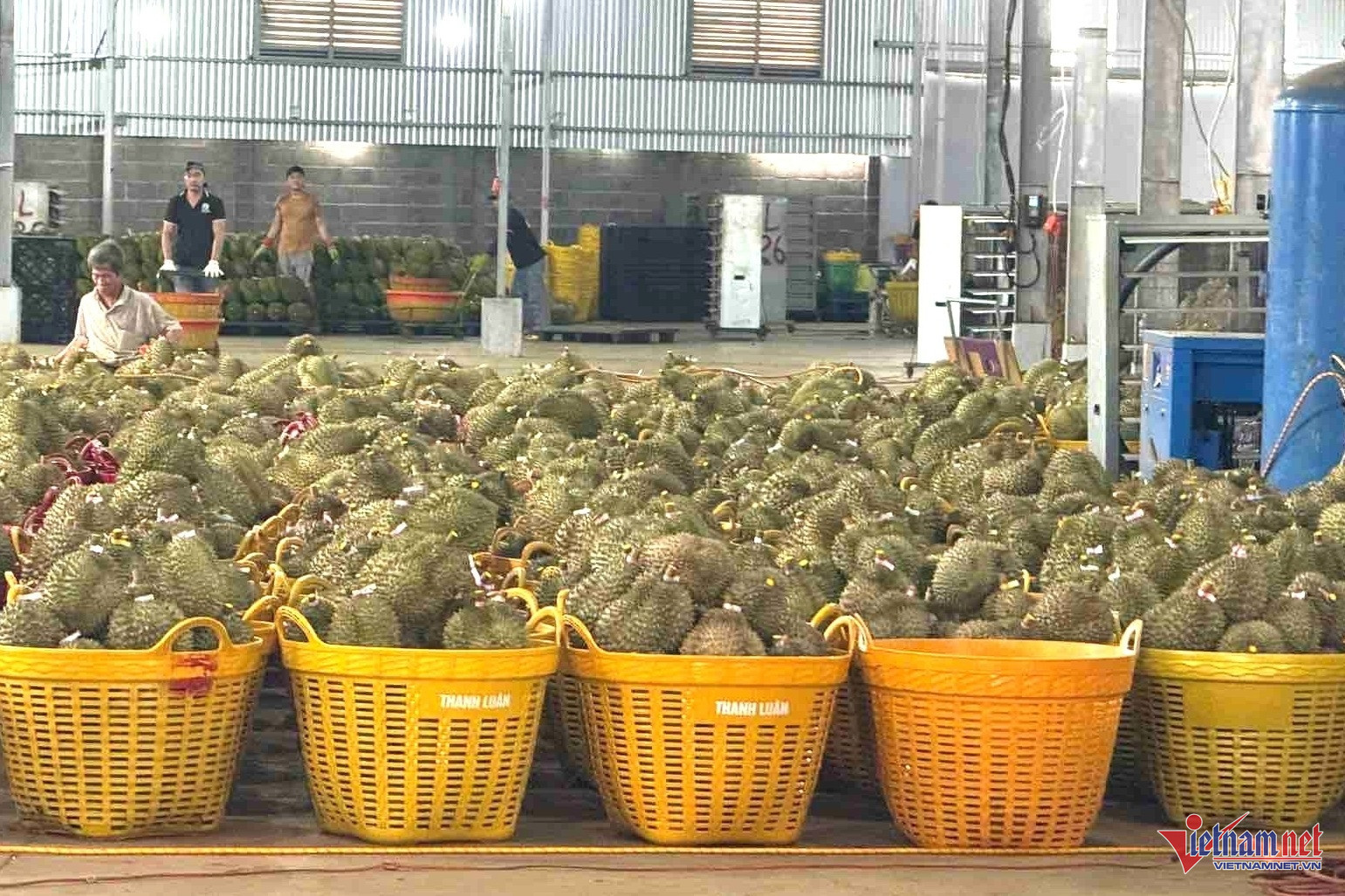
N.V.T., the owner of a durian trading company in Krong Pak Commune, said his business previously had to spend around VND150 million (about US$5,750) per shipping container to obtain access to growing area codes and packing facility codes through intermediary arrangements.
The company also paid an additional VND100-130 million (US$3,800-5,000) per container for mandatory laboratory testing.
As a result, total compliance costs approached VND300 million (US$11,500) for every export container.
According to T., businesses that had already obtained official growing area and packing facility codes were often able to charge high fees to exporters seeking to use those codes.
Testing costs were also inflated because only a limited number of laboratories were authorized to perform export inspections, resulting in lengthy waiting times.
He said his company's application for a packing facility code had been submitted three years ago but had yet to be approved.
Testing costs fall sharply
Another exporter, T.V.H., whose company operates in Tan An Ward, said his business already possesses its own packing facility and therefore had not encountered problems obtaining the required code.
However, laboratory testing had remained a major challenge.
During previous harvest seasons, exporters often paid VND70-130 million (US$2,700-5,000) per container for testing, sometimes through intermediaries, while waiting up to a week for results before shipments could clear customs.
This season, exporters say conditions have improved considerably.
More testing providers are now operating, allowing inspectors to travel directly to companies once shipments are ready.
Testing costs have fallen to approximately VND25-30 million (US$960-1,150) per container - less than half the level seen during the previous harvest.
Growers await changes to growing area codes
Despite lower testing costs, growers continue to hope the proposed amendments to Decree 38 will resolve remaining obstacles to obtaining growing area codes.
Exporter N.V.T. said orchards with official growing area codes continue to receive higher purchase prices, while fruit from uncertified orchards is generally exported only to markets that do not require such certification.
Hoang Quoc Tiep, who owns a durian orchard in Quang Phu Commune, said most growers in his area have not been granted growing area codes because their orchards are fragmented or intercropped with coffee and pepper plantations, making it difficult to meet the current requirement for at least 10 contiguous hectares.
He expects fruit from uncertified orchards to be purchased at lower prices once the harvest begins.
"When we heard that the authorities were considering relaxing the requirements, growers were very pleased," Tiep said. "Without a growing area code, traders are much more selective or simply offer much lower prices."
Government reviewing proposed changes
Nguyen Thien Van, Vice Chairman of the Dak Lak People's Committee, said provincial authorities recently met with the Ministry of Agriculture and Environment to discuss difficulties related to the issuance, management and supervision of growing area codes and packing facility codes.
According to Van, the ministry has acknowledged the concerns and is working with local authorities, including Dak Lak, to advise the Government on amendments to Decree 38 that better reflect actual production conditions.
Dak Lak has also assigned its Department of Agriculture and Environment to develop a province-wide agricultural traceability system, standardize and update databases on growing area and packing facility codes, and integrate those systems into the province's broader digital transformation strategy to support agricultural production, trade and exports.
Hai Duong
.svg)
