 Vietnamnet.vn

 Podcast



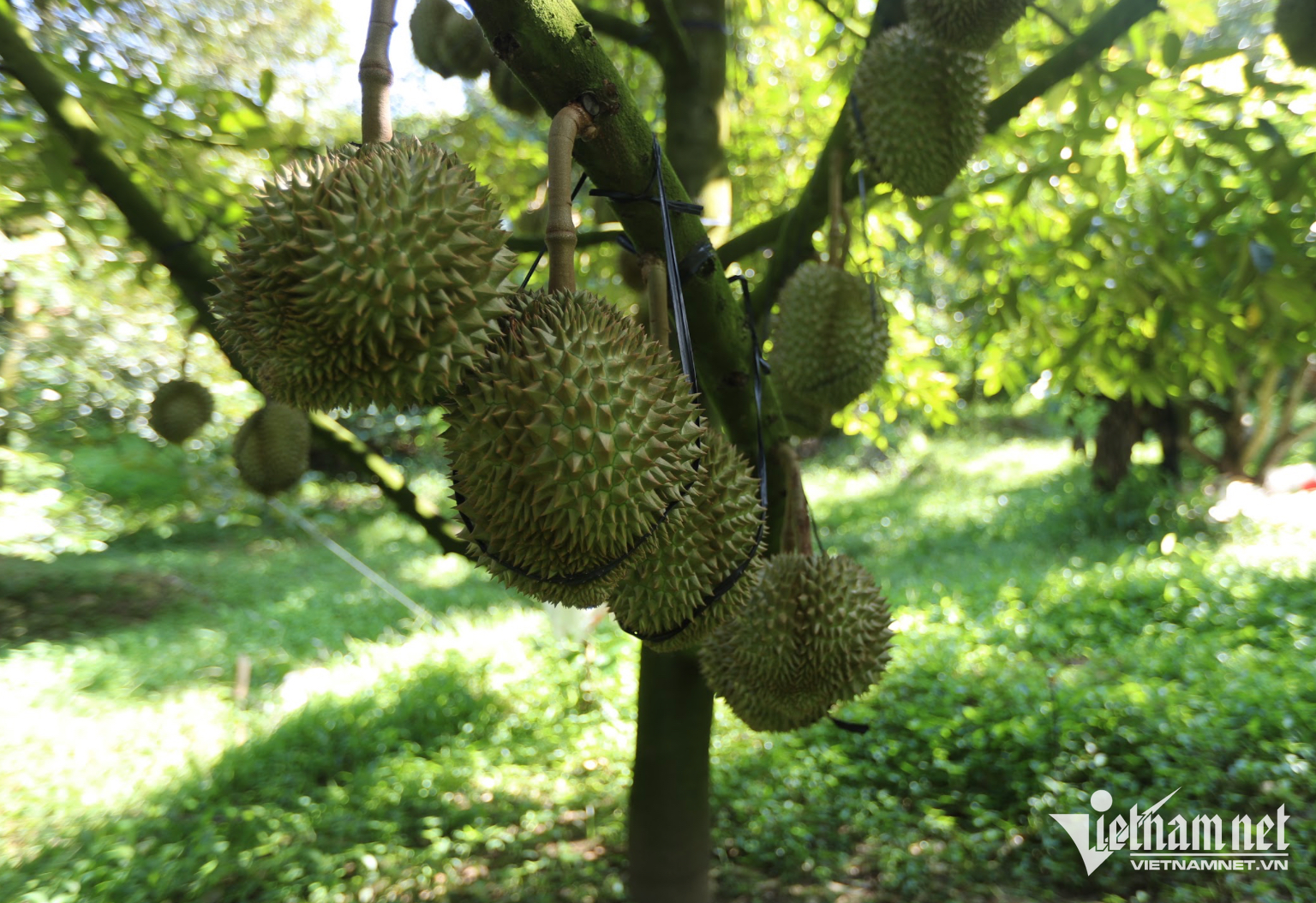
Vietnam is entering its main durian harvest season with an output reaching one million tons. Dak Lak Province alone estimates an output of 500,000 tons, harvested primarily between August and November. This harvest schedule differs from other producing nations, offering a competitive advantage to supplement market supply.
China is the main market for Dak Lak durians, accounting for about 70 percent of the province’s total durian output.
At the “Vietnam-China Durian Supply Chain Business Matching and Cooperation Networking Program, Dak Lak 2026” on August 19, Liu Xu from China Coop said demand for high-quality durians in China continues to grow, while favorable trade policies and Vietnam’s growing-area advantages are creating major opportunities for both sides to deepen cooperation.
However, cooperation should go beyond buying and selling commodities and focus on building a long-term, safe and sustainable industry chain.
“We do not just want to buy durians from Vietnam. We want to work with our partners to build a stable supply chain with long-term growth potential,” he said.
China Coop wants to work with Vietnamese partners to standardize production in growing areas, covering variety selection, cultivation practices, pest and disease control, harvesting and post-harvest handling. It would organize “field classes” to help farmers improve their techniques and develop raw-material areas that meet Chinese market requirements.
Another Chinese importer said at the event that the Chinese market still has enormous room for growth. About 1 billion Chinese people have never eaten durian, while retail demand for the fruit continues to rise, particularly for high-quality products and premium brands.
However, he also pointed out that some investors have suffered losses because information about growing areas, prices and sales channels has not been transparent, while there are still too many intermediaries.
“With about 1,800 retail chains, we have extensive market experience and want to share information so cooperatives and farmers in Dak Lak can be more proactive. At the same time, we will continue expanding investment in Vietnamese cooperatives,” he said.
Building partnerships
Regarding concerns among farmers and cooperatives that obtaining a growing-area code does not guarantee stable outlets or selling prices, Le Anh Trung, chair of the Dak Lak Durian Association, said: “A growing-area code is not a brand, nor does it guarantee that durians will be purchased at a higher price.”
According to Trung, growing-area codes and packing-facility codes are simply conditions for exports. He likened the code to a “passport,” while building a brand and creating higher value requires long-term cooperation.
The current problem in the durian supply chain is that relationships between growing areas and purchasing companies remain unstable. A company may offer VND60,000 per kilogram, but if the price rises to VND70,000 the next day, farmers may decide not to sell. Conversely, when prices fall, companies also face risks if they continue purchasing.
Trung said the purchasing model needs to change as the industry has grown significantly. Farmers and cooperatives should choose exporters with sufficient capacity and build long-term relationships with them, rather than selecting buyers based solely on the price offered at a particular time.
“To build a brand, you have to stay committed and choose exporters with the capacity to build the brand together,” he said. The process can take many years before consumers in importing markets recognize and trust the product and are willing to pay a higher price.
The chair of the Dak Lak Durian Association also said exporters need to play a leading role in the supply chain, from arranging financing and investing in processing plants to establishing purchasing systems and meeting export requirements. Cooperatives, meanwhile, need to organize production and maintain stable cooperation with businesses.
He also noted that Chinese businesses and traders do not typically come directly to farms to purchase durians in the conventional manner. Instead, they need to work with qualified Vietnamese companies to organize purchasing and exports.
Such partnerships must ensure that all parties can sustain their operations. Chinese companies need to benefit from the cooperation and Vietnamese businesses need to remain viable, and only then can cooperatives and farmers have a solid foundation for maintaining production.
Tam An
.svg)
