 Vietnamnet.vn

 Podcast



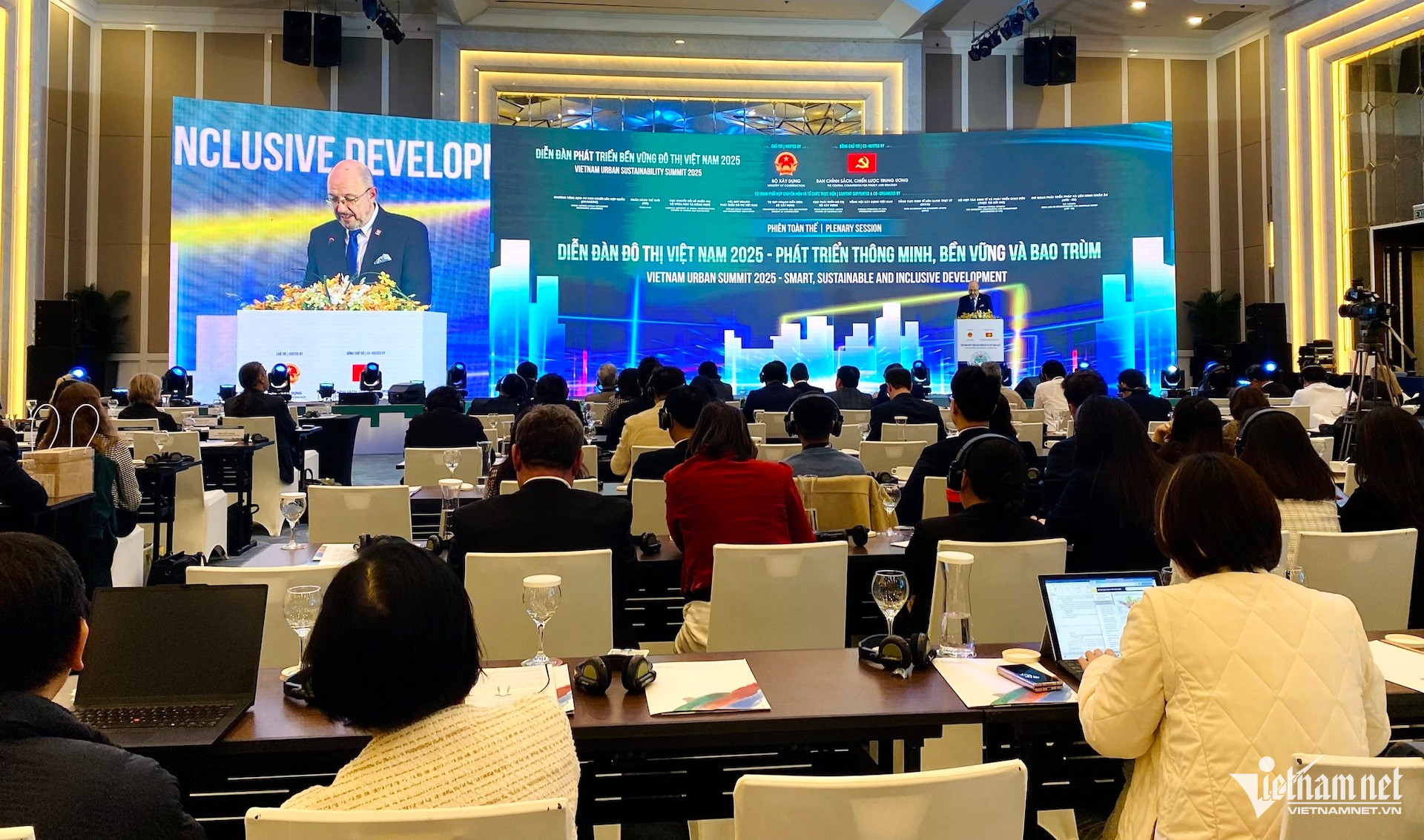
Speaking at the recent “Smart, sustainable and inclusive urban development 2025” forum, Nguyen Duy Hung, Deputy Head of the Central Policy and Strategy Committee, directly addressed persistent issues in Vietnam’s urban development process.
He pointed out overlapping, fragmented, and patchwork urban planning in many areas. Infrastructure, he emphasized, has not kept pace with the rapid rate of urbanization. It remains inconsistent and reactive, failing to meet growing demands.
He added that traffic congestion, flooding, poor waste and wastewater treatment systems, and a lack of public infrastructure such as schools and hospitals remain widespread, especially in cities like Hanoi and Ho Chi Minh City. “Suspended” master plans and delayed projects are still common in many urban areas.
“Planning, infrastructure, and the capacity to withstand natural disasters and extreme weather events remain weak. The nation’s attention is now focused on central provinces like Hue and Da Nang, which are suffering heavy losses from storms and floods,” said Hung.
Given these realities, Hung stressed that building smart, sustainable, and inclusive urban environments is not just an option - it is a necessity for this new era.
He called for a complete shift in planning mindset, modernized governance, accelerated digital transformation, and green development to improve quality of life and ensure safety for citizens while laying the foundation for sustainable growth.
A forum dedicated to urban resilience
At the November 5 forum, Hung highlighted the strategic importance of sustainable urban development - not only for economic growth but also for political stability, cultural preservation, public welfare, and living standards.
A critical task, he said, is reforming the legal framework: revising laws governing planning, construction, land use, and infrastructure development, including underground spaces, water surfaces, and green zones. At the same time, integrating technology and digital data will be essential to boost cohesion and efficiency in regional planning.
Hung also recommended focusing on a healthy real estate market and effectively implementing the government's program to build one million social housing units. He emphasized strong investment in real-time weather forecasting and alert systems to enhance urban disaster preparedness and resilience.
Old climate data driving new cities
At the same event, Antonie Mougenot, an urban development specialist at the French Development Agency (AFD), warned that many urban plans in Vietnam are still based on outdated climate data. These no longer reflect the reality of extreme rainfall and rising sea levels.
“Resilience begins with planning, and planning must start with risk identification,” he said. Mougenot urged Vietnam to integrate hydrological and hydraulic modeling into all planning efforts, update building codes to reflect new climate scenarios, and develop inter-ministerial data platforms for better coordination.
Smart planning to tackle floods and congestion
Dr. Han Minh Cuong, Director of the Institute for Construction Science and Technology (AIST) and Chairman of SGroup Vietnam, shared that the government had issued Decree 269/2025 in October, laying the legal groundwork for nationwide smart urban planning.
The decree mandates that smart planning must be integrated into all levels of urban development and planning adjustments. The Ministry of Construction has also released technical guidelines to help local authorities implement these frameworks.
“Vietnam is gradually realizing the concept of smart cities through digital infrastructure, GIS, BIM, and sensor technologies for urban management,” said Cuong. “These efforts not only align Vietnam with global trends but are expected to address internal challenges like traffic congestion, flooding, pollution, and overburdened infrastructure through smarter, more sustainable planning solutions.”
He stressed that in an increasingly complex and vulnerable global environment, the need for a new urban governance model is urgent.
“To truly build smart cities, we need more than technology - we need institutions and people,” Cuong said. “In the coming period, the question is no longer whether to implement smart cities, but how to do it effectively.”
Achieving this, he added, requires a dramatic shift in the mindset of urban management agencies, investment in digital infrastructure and smart planning, and cooperation from communities and the private sector.
“Smart urban planning will lay the foundation for smarter, more sustainable cities that are better adapted to human needs,” Cuong concluded.
Hong Khanh
.svg)
