 Vietnamnet.vn

 Podcast



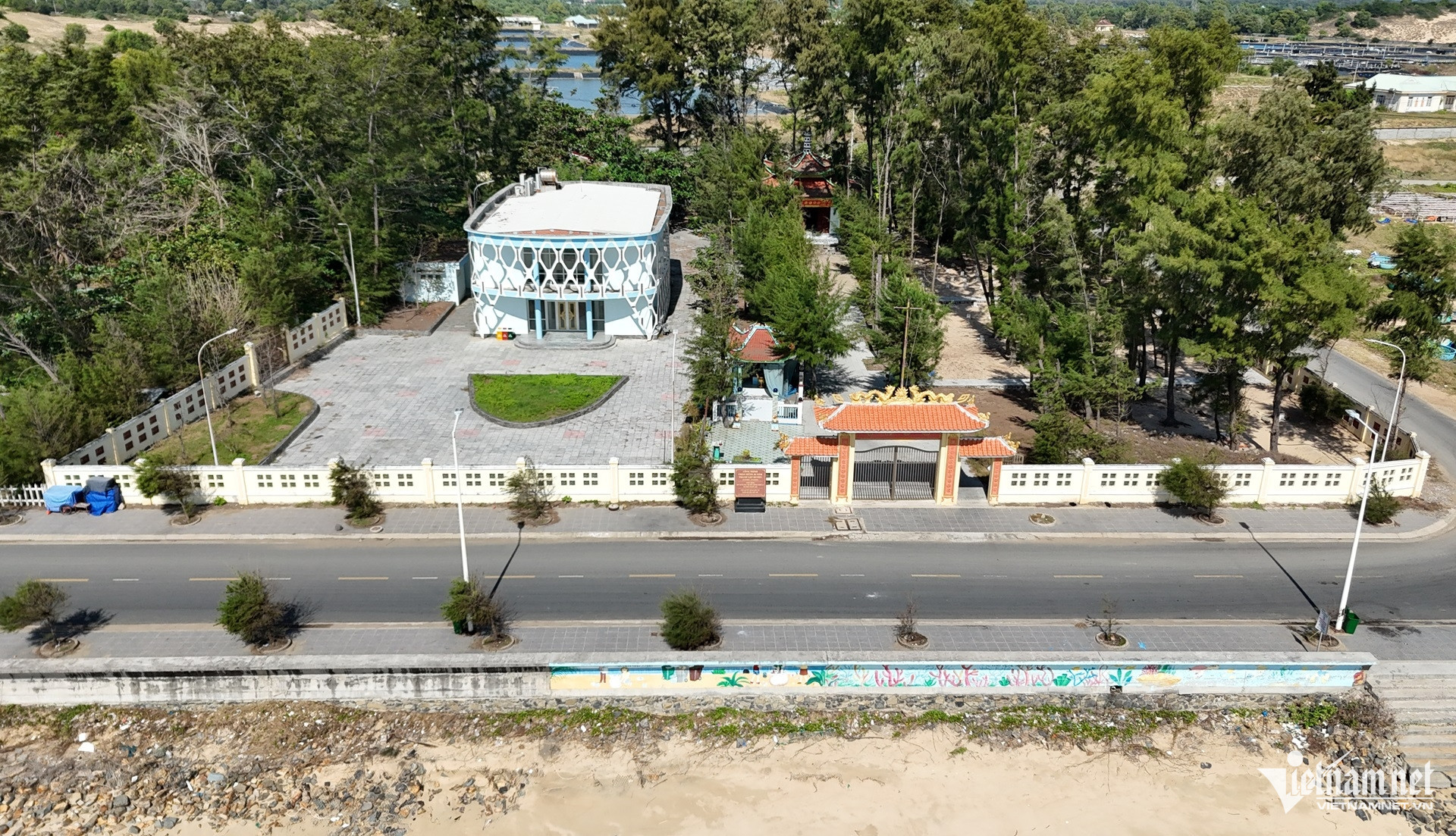
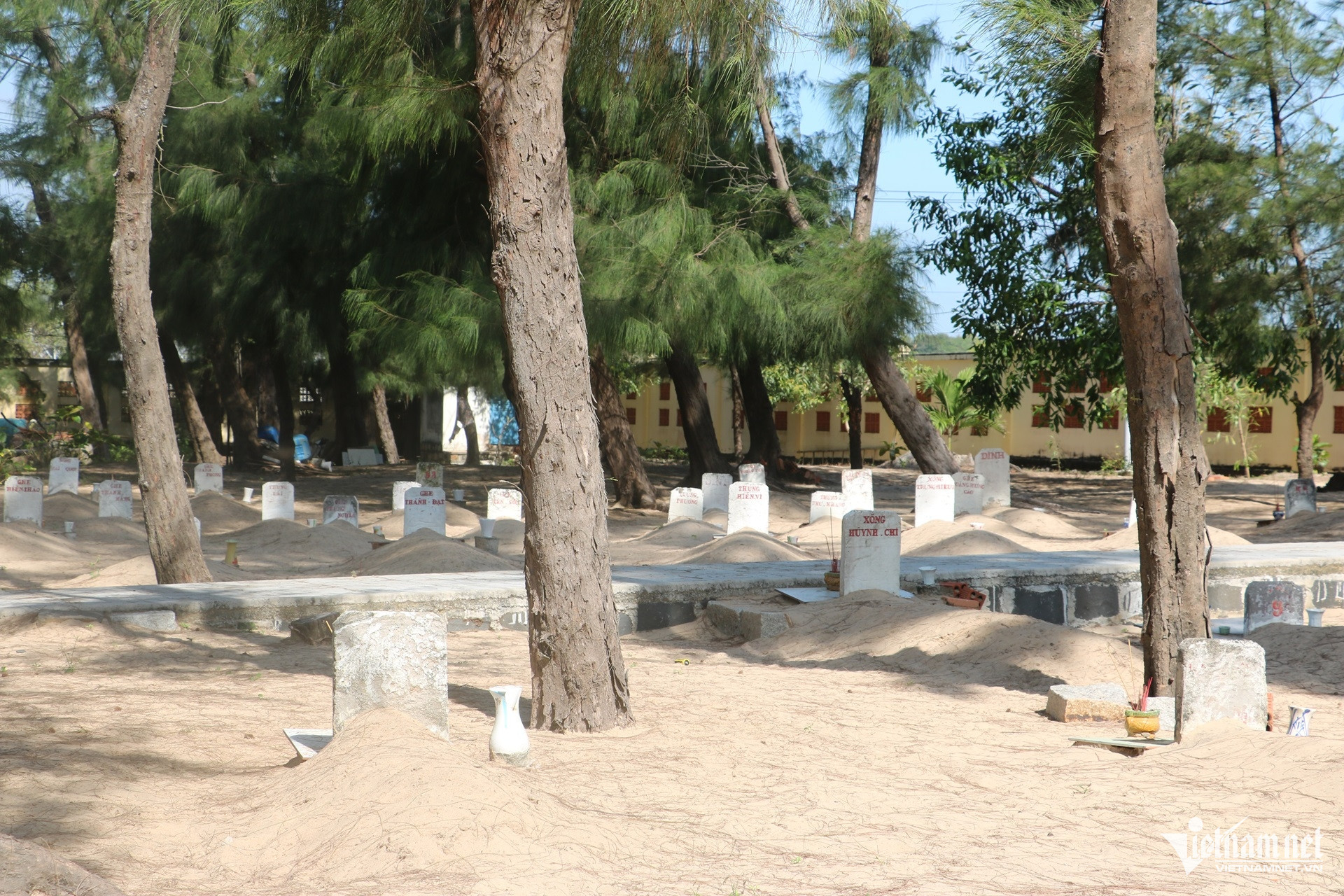
Along the quiet shoreline of Phuoc Hai commune in Ho Chi Minh City lies Ngoc Lang Nam Hai - Vietnam’s largest whale cemetery, where local fishermen bury whales that have died after washing ashore, believing them to be sacred protectors of those at sea.
Covering 2,000 square meters under the shade of whispering casuarina trees, this resting place for the “gods of the sea” is locally known as “nghia dia Ca Ong” - the whale cemetery. For generations, coastal communities have honored whales as manifestations of the deity Nam Hai, who ensures safe and prosperous fishing trips.
Founded in 1999, the cemetery was built out of reverence and gratitude. When a whale becomes old or sick and drifts ashore, fishermen treat it with the same solemnity reserved for a close relative. Rituals are held with great care and respect, embodying the deep spiritual bond between seafarers and the sea.
To the left of the cemetery’s main entrance stands an altar dedicated to Guan Yin of the Southern Sea, where locals often pray before setting out on their fishing journeys. Nearby is the Phuoc Hai Fishing Heritage House, opened in 2022, showcasing about 40 artifacts and traditional fishing tools.
“This place helps visitors understand both the practical life and spiritual values of the fishing community, while preserving the unique maritime culture of Phuoc Hai,” said Tran Thi Ngoc Han, the heritage house’s curator.
The cemetery itself holds hundreds of whale graves, divided into four zones based on when each whale was discovered and buried. Each tomb is marked “Nam Hai chi mo” (Tomb of Nam Hai), listing the date the whale was found and the name of the fishing boat captain who led the burial.
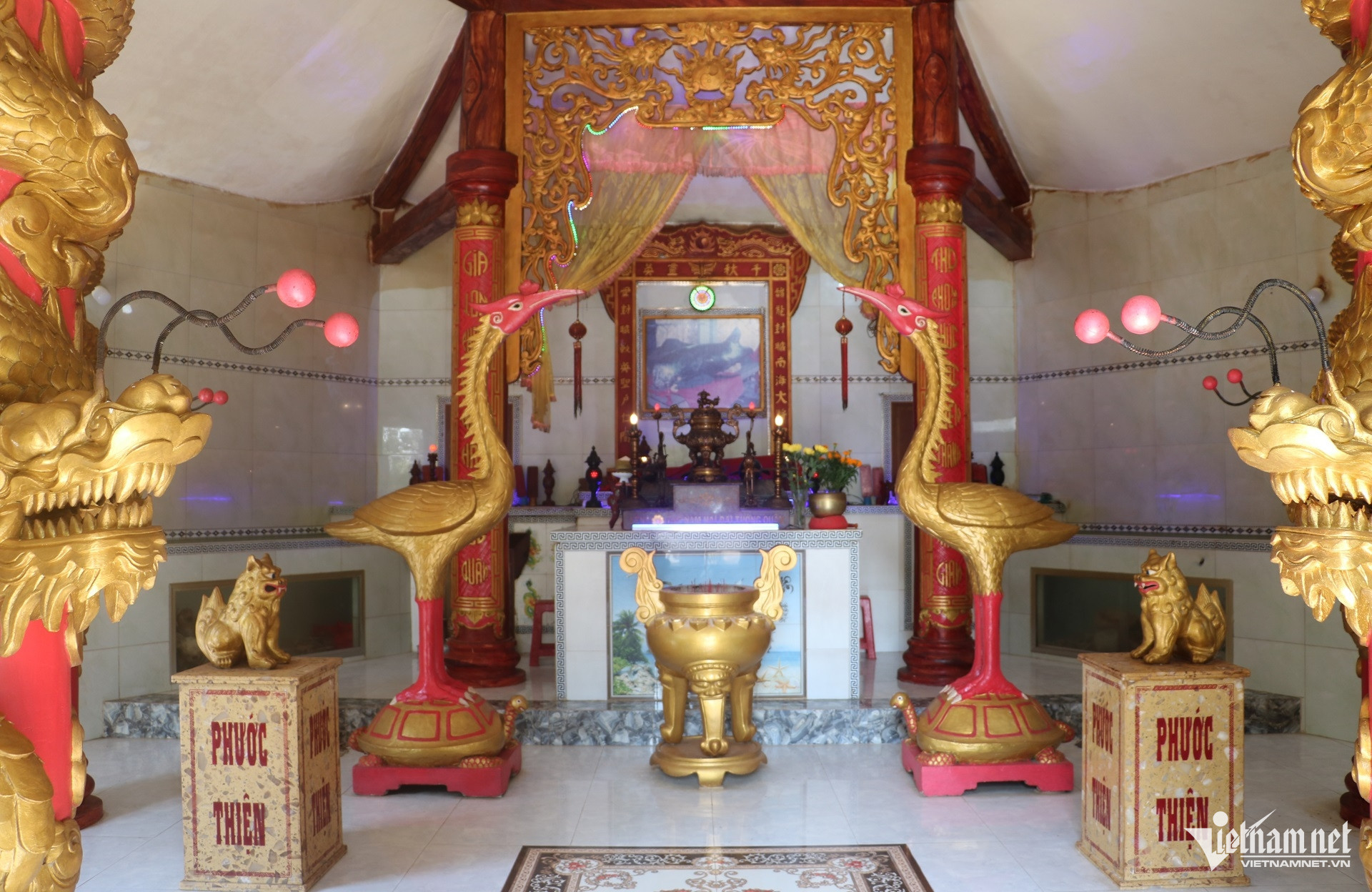
At the heart of the cemetery rises a hexagonal temple housing multiple whale skeletons, including a prominent 2-meter-long specimen placed in a position of honor. Local lore says that more than 25 years ago, this whale repeatedly returned to shore despite three rescue attempts by fishermen, until it finally passed away - an act interpreted as a sacred return home.
Roughly 1.2 km inland lies the Dinh Ong Nam Hai (Temple of Nam Hai), where whale bones are transferred for worship after the traditional three-year mourning period. This temple, once a burial site itself, now serves as a spiritual center after the graves were moved to preserve the environment amid rising population density.
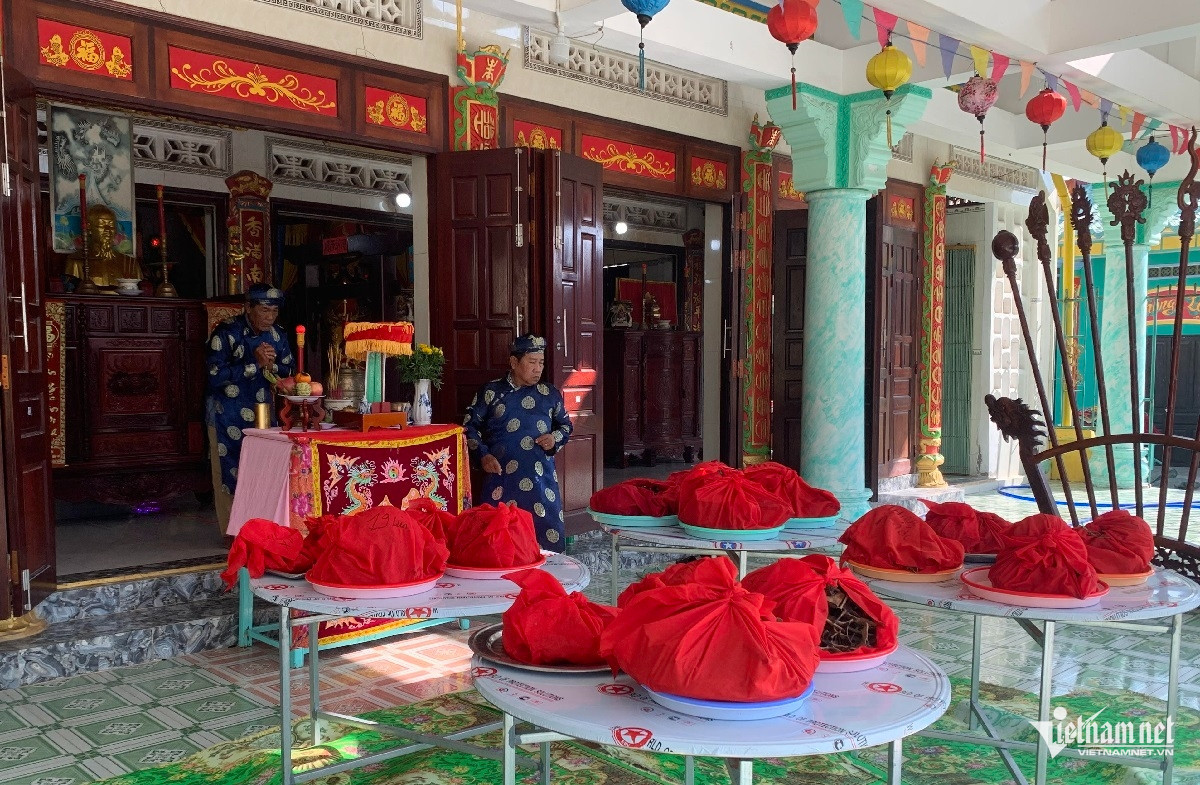
“According to our custom, the person who first finds the deceased whale is like the ‘eldest son.’ He must build the tomb and host ceremonies for the 49th day, 100th day, and the first death anniversary,” explained a local elder.
On the first and fifteenth days of each lunar month, fishermen visit the graves to offer incense and prayers for safe voyages. After three years, the whale’s bones are moved to the temple’s Nine Memorial Hall for final resting and continued worship.
Danh Huong, a volunteer caretaker at the cemetery, shared that dozens of whales typically wash ashore each year - most often in the early months. Each is buried according to long-standing rituals passed down through generations.
In 2011, the Vietnam Records Book Center recognized this site as the country’s largest whale cemetery. From the 15th to 17th day of the second lunar month each year, Phuoc Hai holds the Nghinh Ong Festival - a vibrant celebration featuring rituals and cultural performances that draw both locals and tourists seeking blessings and spiritual connection with the sea.






Quang Hung
.svg)
