 Vietnamnet.vn

 Podcast


On November 13, the National Assembly adopted a resolution approving the 2025 state budget settlement, with 458 of the 461 deputies present voting in favor.
Under the resolution, total state budget revenue exceeded VND4.2 quadrillion (approximately $160 billion), including funds carried over from 2024 to 2025, local budget surpluses from 2024 and revenue from financial reserve funds.
Total state budget expenditure exceeded VND4.5 quadrillion, including spending carried forward from 2025 to 2026.
The state budget deficit stood at more than VND400 trillion, equivalent to 3.1% of GDP, excluding local budget surpluses.
The National Assembly also approved total government borrowing of VND763.909 trillion to finance the budget deficit and repay principal debt.
Government ordered to account for unused salary reform funds
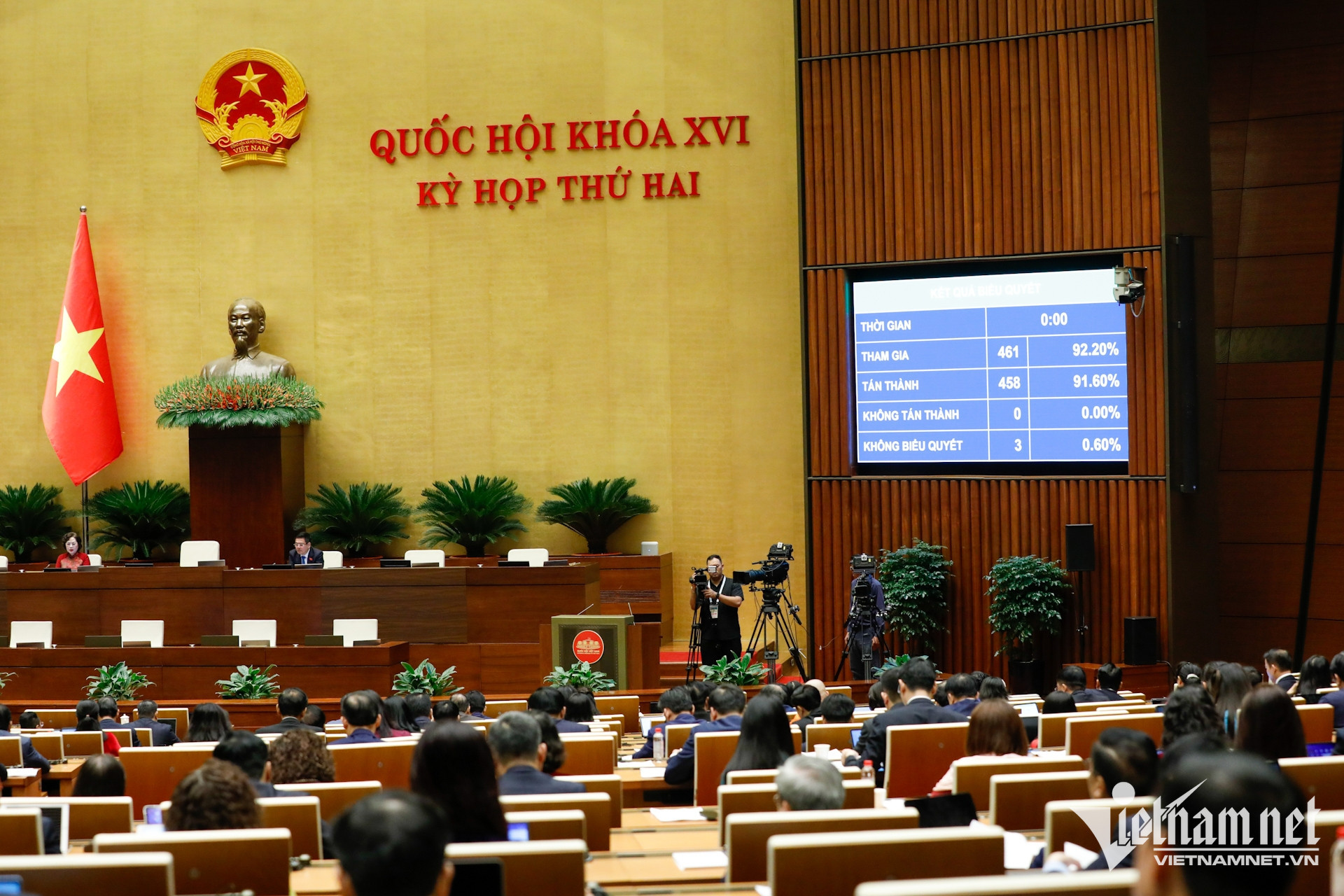
The resolution requires the government to submit a detailed report on budget expenditures carried forward from 2026 to 2027, as well as unused salary policy reform funds held by individual ministries, central agencies and local authorities as of December 31, 2026.
Lawmakers also called for stricter oversight of budget preparation, implementation and settlement following shortcomings identified in the management of the 2025 state budget.
The National Assembly demanded clarification of the causes of these shortcomings and the responsibilities of agency heads, organizations and individuals that failed to comply with legal requirements.
It also called for strict action against violations.
The government was instructed to closely manage and use additional state budget revenue while coordinating borrowing plans to cover deficits and repay principal debt, ensuring efficiency, economy and compliance with the law.
The resolution further requires tighter control over budget funds carried forward between fiscal years.
Allocations transferred in violation of regulations, no longer needed or past their legally permitted disbursement deadlines must be canceled or recovered by the state budget.
The National Assembly also directed the recovery of central government budget support provided to local authorities in 2026 and previous years if the funds were improperly managed or used, or if their disbursement deadlines had expired.
Recovered funds are to be used to reduce the central government budget deficit.
Stricter oversight of budget advances and public investment
The National Assembly emphasized the need to strengthen management of state budget advances and advance allocations.
During 2027, the government must continue resolving and recovering overdue advances and previously allocated funds.
Authorities must also identify and clarify cases in which overdue advances cannot be recovered.
The requirements form part of broader efforts to improve fiscal discipline, reduce inefficient spending and strengthen accountability across ministries, central agencies and local governments.
Finance minister acknowledges shortcomings in budget management
Before lawmakers voted on the resolution, Minister of Finance Ngo Van Tuan presented a report explaining the government's responses to lawmakers' comments and revisions to the draft.
He said state budget management in 2025 took place against a backdrop of considerable volatility in the global economy.
Domestically, Vietnam faced severe natural disasters that caused significant damage to production and people's livelihoods.
At the same time, the country was implementing major administrative restructuring, streamlining the state apparatus and introducing a two-tier local government model.
Tuan acknowledged several shortcomings in budget planning, implementation and settlement.
Revenue and expenditure estimates had not always accurately reflected actual conditions, while growth in domestic revenue had yet to become sufficiently sustainable.
He also pointed to delays in implementing recurrent expenditure plans, allocating and disbursing public investment capital, and deploying funding for Resolution 57 and national target programs.
These delays affected several ministries, central agencies and local authorities.
In addition, substantial amounts of investment capital remained outstanding as advances that could not yet be recovered because the corresponding work had not been completed.
The volume of budget funds carried forward between fiscal years also remained high.
Tuan said the government would improve budget management, implementation and settlement procedures, address existing shortcomings and strengthen financial discipline.
It would also seek to improve the efficiency of public spending and tighten controls over budget carryovers.
These measures would be linked to the decentralization of budget management and clearer accountability for agency heads responsible for implementation.
Tran Thuong

