 Vietnamnet.vn

 Podcast


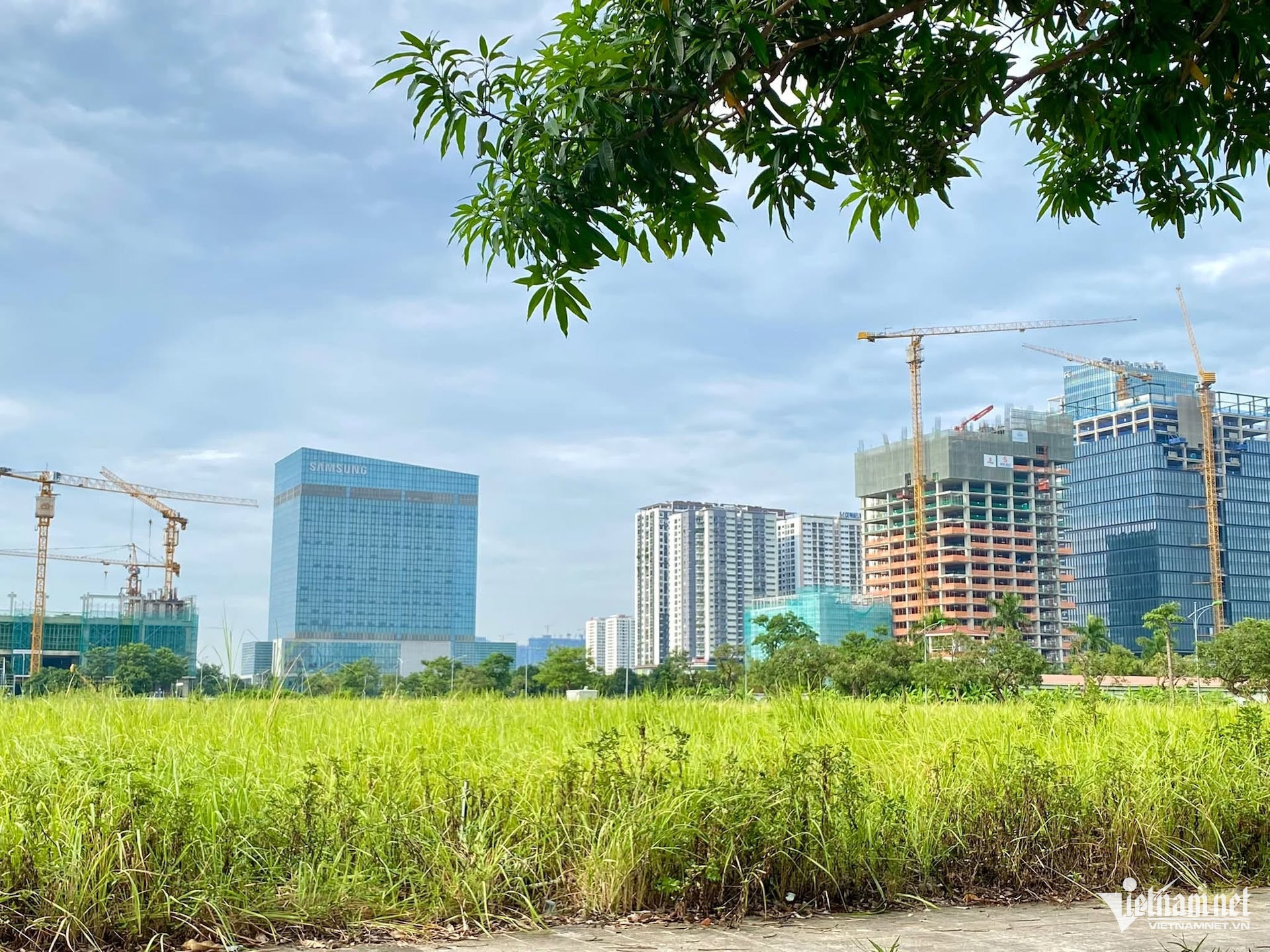
Vietnam's proposed 0.2% tax on vacant, unused or underutilized land must be accompanied by precise criteria to prevent property owners from being unfairly taxed, according to a real estate legal expert.
During a National Assembly discussion on November 6 concerning proposed amendments to several tax laws, Finance Minister Ngo Van Tuan explained the government's proposal to impose a 0.2% tax rate on land left vacant, unused or brought into use behind schedule.
The minister said the government had carefully considered the proposal, but determining whether a plot qualifies as unused land must be clearly regulated under land legislation.
Tax authorities would coordinate with land management agencies to establish the area and actual use status of individual plots, using interconnected land and population databases.
"The two agencies must coordinate closely to ensure accurate identification, achieve the intended objectives and prevent abuse and tax evasion," Tuan emphasized.
Three conditions for an effective vacant land tax
Speaking to VietNamNet, Pham Thanh Tuan, a lawyer with the Hanoi Bar Association and a real estate legal specialist, supported the policy of using taxation to discourage landowners from leaving land vacant or delaying its use.
He explained that the fundamental purpose of the measure is to increase the cost of holding unused land, encouraging owners either to develop their properties or transfer them to individuals and organizations capable of using them more effectively.
However, he argued that setting a new tax rate is only one element of an effective policy.
To genuinely promote productive land use, the proposed tax must satisfy three conditions: accurately identify taxable properties, create sufficient financial pressure and be practically enforceable.
The first requirement is to clearly determine which properties are subject to the higher tax rate.
Land users in Vietnam already face various financial obligations at different stages of land ownership and use.
Depending on their circumstances, they may be required to pay land-use fees when the state allocates land subject to payment, permits changes in land-use purposes or recognizes land-use rights.
During land use, they must also pay non-agricultural land-use tax.
For residential land, the applicable tax rates range progressively from 0.03% to 0.15%, depending on whether the land area falls within or exceeds prescribed limits.
When transferring real estate, individuals are subject to personal income tax of 2% of the transfer price, while businesses pay corporate income tax at a rate of 20% on taxable income from property transfers.
Against this background, Tuan said introducing a 0.2% tax on unused land requires clear criteria to avoid treating all undeveloped properties as abandoned.
He recommended that the Land Law and its implementing regulations establish both qualitative and quantitative criteria.
Qualitative criteria should determine whether a plot is legally and practically ready to be used for its designated purpose but remains vacant because of the landholder's decision.
The regulations should also clarify how to handle cases in which owners cannot use their land because of planning restrictions, administrative procedures or other objective circumstances beyond their control.
Quantitative criteria should specify how long a plot must remain continuously unused before being classified as vacant, as well as the starting point for calculating that period.
For land that has not been brought into use on schedule, authorities should establish specific deadlines or project milestones against which delays can be assessed.
These distinctions are particularly important for land held by individual households.
According to Tuan, investment projects can be assessed against the actual land handover date, approved land-use schedules and implementation progress.
Residential land owned by individuals, however, presents a different situation.
Authorities must first determine whether the landholder is legally required to build a house within a specified period.
The mere absence of a house does not necessarily mean that the owner has failed to use the land as required.
Clause 4, Article 2 of Circular 45/2011/TT-BTNMT excludes residential land held by households and individuals from the definition of land not used in accordance with regulations for the purpose of applying the 0.15% tax rate.
Regarding the proposed 0.2% rate, Tuan said lawmakers must clarify whether privately owned residential plots without houses would be subject to the tax.
If they are included, residents must be informed of the criteria used to classify their properties and the date from which any period of non-use would be calculated.
"The fact that a plot has no house on it is not, in itself, sufficient grounds to conclude that the owner has abandoned the land and should face a higher tax rate," he explained.
A 0.2% tax may not be enough to discourage land speculation
The second requirement is to ensure that the tax creates meaningful financial pressure on those deliberately holding land unused.
Tuan questioned whether the proposed 0.2% rate would be sufficient to change the behavior of investors who hold land in anticipation of future price increases.
For example, a plot with a taxable value of VND10 billion (approximately $380,000) would incur an annual tax of VND20 million (about $760) if the entire area were subject to the proposed rate.
However, if the owner expects the property's value to increase by hundreds of millions or even billions of dong, the annual tax may represent only a minor expense.
In such cases, owners could simply pay the tax and continue waiting for prices to rise rather than developing or transferring their land.
"As a result, tax revenue may increase while the land remains vacant," Tuan warned.
He therefore called for a thorough assessment of the proposed rate's impact, particularly on owners who are legally able to develop their land but deliberately leave it unused for speculative purposes.
The effectiveness of the policy should not be measured solely by the amount of additional revenue collected for the state budget.
Instead, authorities should assess how much previously unused land is actually brought into productive use and how significantly the duration of vacancy is reduced.
Land databases are essential for enforcement
The third requirement is to ensure that the tax can be implemented effectively in practice.
Tuan described interconnected land and population databases as the foundation and backbone of the proposed taxation system.
For each plot, authorities must be able to identify the responsible taxpayer, the area subject to the higher rate, its actual use status and the relevant period of non-use.
This requires coordinated information sharing among land management agencies, tax authorities and construction regulators.
Relevant information from electricity and water suppliers, along with other data systems, could also support the assessment process.
However, Tuan cautioned that electricity and water consumption records should be treated only as supplementary evidence.
Such information must be cross-checked against legal documents, approved project schedules and the actual condition of the land.
If the classification of vacant land depends primarily on manual inspections or inconsistent assessments across localities, enforcement costs could become substantial.
The lack of standardized criteria could also generate complaints and legal disputes.
According to Tuan, a successful vacant land tax policy should ultimately be judged by whether it brings more land into use and reduces the time properties remain idle, rather than simply increasing government revenue.
At the proposed rate of 0.2%, the tax may have only a limited impact on landholding decisions if anticipated property price appreciation continues to outweigh the annual tax burden.
An effective policy must therefore combine a sufficiently strong financial incentive with clearly defined taxable conditions and a practical, transparent enforcement mechanism.
Hong Khanh

