 Vietnamnet.vn

 Podcast



Some policy changes do more than open up new avenues for action. They also reflect a profound shift in the way leaders think about governance and development.
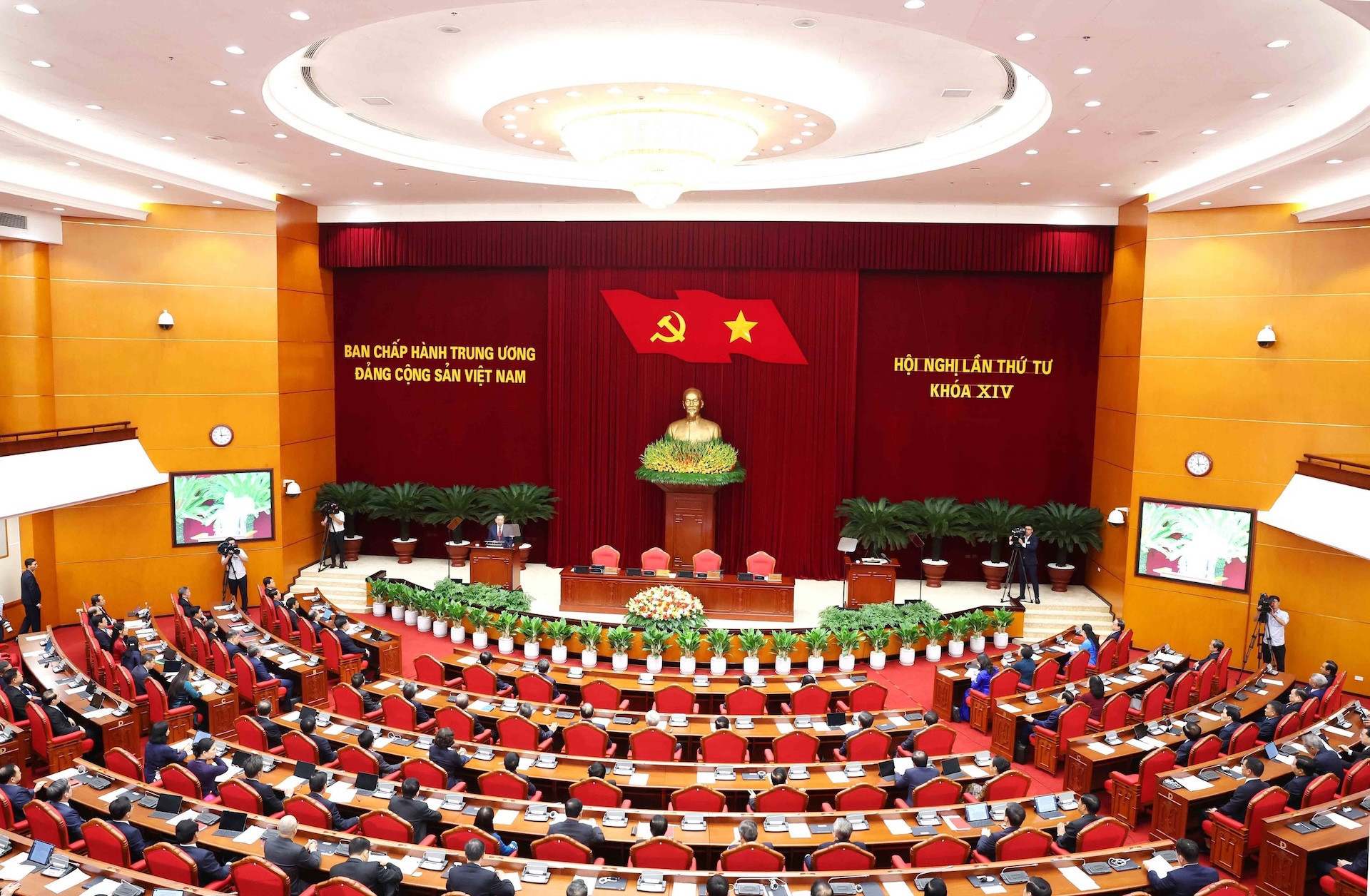
At the fourth plenum of the 14th Communist Party Central Committee, members reached a broad consensus on the need to fundamentally rethink the participation of Party members in investment and business activities. The emphasis is shifting from simply "allowing" such activities to "encouraging and facilitating" legitimate wealth creation as a contribution to national development.
This marks a new understanding of the role Party members can play in economic development. Rather than focusing primarily on what they are permitted to do, the new approach seeks to create conditions in which legitimate capabilities, initiatives and resources can flourish, while maintaining sufficiently robust safeguards to prevent individuals from exploiting public office or authority for personal gain.
From regulatory control to enabling development
The terms "allowing" and "encouraging and facilitating" may both imply recognition of a lawful activity, but they represent fundamentally different approaches.
An approach based on permission generally focuses on defining what is allowed and what is prohibited. Individuals wishing to undertake an activity must satisfy certain conditions and demonstrate that their actions fall within accepted boundaries.
Such an approach remains necessary in governance, particularly in activities involving public authority, state assets and the responsibilities of officeholders.
However, when too much emphasis is placed on control and risk prevention, without sufficient consideration of the potential to create value, regulation can unintentionally become an obstacle to initiatives and resources that deserve encouragement.
By contrast, encouraging and facilitating reflects a more proactive approach.
The question is no longer simply whether Party members may invest or run businesses. It is also how those with the skills, ideas and legitimate resources can be supported in developing productive and commercial activities, and how the results of their work and creativity can make a greater contribution to society and the country.
This transition is consistent with the call for renewed leadership methods, stronger capacity to foster development and fuller use of the resources, knowledge and creativity of officials, Party members and society as a whole, as emphasized by the Central Committee at its fourth plenum.
In a modern economy, development resources extend far beyond capital, land, natural resources and infrastructure.
They also include knowledge, management experience, organizational capabilities, innovation and the ambition of individuals to succeed.
If these resources remain untapped or lack an enabling environment, the country risks missing valuable opportunities for development.
What needs to change, therefore, is not merely the rules governing a particular group, but the broader approach to economic activity.
Instead of concentrating mainly on controlling economic activities, policymakers must also create conditions for lawful activities to grow.
Rather than responding cautiously to every potential risk, governance should become more targeted, clearly distinguishing between unavoidable business risks, legitimate economic activities and unlawful conduct.
Of course, fostering development does not mean relaxing oversight.
A favorable business environment must go hand in hand with transparent laws, fair competition and effective mechanisms for controlling the exercise of power.
Good governance does not mean making every activity more difficult in an attempt to minimize risk. It means identifying risks accurately, applying controls where they are needed, protecting legitimate interests and ensuring that unnecessary restrictions do not suppress the drivers of development.
Legitimate wealth creation is a contribution to the country
Throughout Vietnam's economic reform process, perceptions of the private sector and the economic activities of Party members have gradually evolved.
Experience has shown that Party members can contribute to national development not only through their work in political institutions, but also through productive labor, innovation, effective production management and lawful business activities.
A successful enterprise can create jobs, raise workers' incomes, contribute tax revenue, promote technological innovation and develop supply chains.
A rural manufacturing business can increase the value of agricultural products, expand access to markets and provide stable livelihoods for local residents.
A responsible entrepreneur can help foster a healthy business culture, improve product quality and promote respect for the law.
When these achievements result from hard work, knowledge, management capabilities and lawful business practices, wealth creation is not merely a matter of personal gain.
It also generates additional prosperity for society, expands employment opportunities and contributes to broader economic development.
Party members can demonstrate their pioneering role in many ways, including leading innovation, organizing efficient production, complying with the law, honoring commitments, protecting workers' rights and fulfilling responsibilities to their communities.
At a time when Vietnam is pursuing rapid and sustainable development, advancing science and technology, accelerating digital transformation and strengthening competitiveness, making better use of Party members with business capabilities is particularly important.
They can introduce technological advances into production, develop new products, expand markets, establish modern management models and connect domestic resources with international opportunities.
This is especially relevant in the private sector, which encompasses a growing number of enterprises, household businesses and startup ventures.
The legitimate participation of Party members in economic activities also creates opportunities for them to lead by example directly within the business environment.
Their pioneering role should not be measured solely by statements or compliance with regulations. It should also be demonstrated through business performance, product quality, responsibility toward employees and tangible contributions to society.
It must be emphasized, however, that encouraging legitimate wealth creation does not mean celebrating wealth at any cost.
What matters is not simply how many assets an individual possesses, but how those assets were acquired, what value their business activities generate and how they fulfill their social responsibilities.
Building wealth through labor, knowledge, creativity, investment and fair competition is fundamentally different from profiting through the abuse of public office, misappropriating state assets, manipulating policies or securing unfair advantages through political connections.
Drawing a clear distinction between these two forms of wealth acquisition is essential to encouraging honest entrepreneurs while preserving Party discipline and integrity.
Encouragement must go hand in hand with checks on power
A progressive policy can achieve its full potential only when translated into clear, practical regulations that can be implemented consistently.
This is particularly important when Party members participate in investment and business activities, as such activities may be directly or indirectly connected to their official duties, authority, access to information and public assets.
The Central Committee has established principles for developing regulations that link the pioneering role of Party members in economic development with the preservation of the Party's fundamental character.
These principles call for clearly defining rights, conditions and restrictions according to individuals' legal status, official responsibilities and potential conflicts of interest.
They also emphasize protecting lawful economic activities while identifying and monitoring those who actually exercise control over businesses or benefit from them.
Public authority, privileged information and state assets must not be turned into sources of private advantage.
This direction demonstrates that the reform agenda is inseparable from the continuing effort to strengthen and improve the Party.
Encouragement and effective oversight must operate within the same framework.
If encouragement is emphasized without adequate supervision, economic activities could be exploited to conceal private interests.
Conversely, if regulations focus exclusively on preventing violations, impose unclear restrictions or apply controls more broadly than necessary, legitimate entrepreneurs may lose the incentive to invest and expand their businesses.
The first priority, therefore, is to distinguish clearly between lawful business activities and the misuse of public office or authority for personal benefit.
Individuals who have the power to make decisions, provide advice or influence licensing, resource allocation, land management, state budgets, public assets, inspections, examinations or contractor selection may face different conflict-of-interest risks from those who do not exercise public functions.
Regulations must account for these differences rather than applying a uniform approach to everyone.
At the same time, mechanisms are needed to identify the individuals who ultimately own, control or benefit from business activities.
The name appearing on official ownership documents does not always reflect who exercises actual control.
Without identifying the ultimate beneficiaries, preventing the use of nominees or controlling the misuse of official information to secure commercial advantages, even strict regulations can be circumvented in practice.
Oversight mechanisms must also be transparent, evidence-based and proportionate to the risks involved.
Party members should not automatically be viewed with suspicion simply because they engage in business.
Equally, Party membership or the appearance of lawful economic activity must never serve as a shield for misconduct.
Those who act lawfully must be protected, while individuals who exploit public authority for personal gain must be identified and dealt with firmly in accordance with the law.
Dr. Dinh Van Minh
Former Director of the Legal Affairs Department, Government Inspectorate of Vietnam
.svg)
