 Vietnamnet.vn

 Podcast



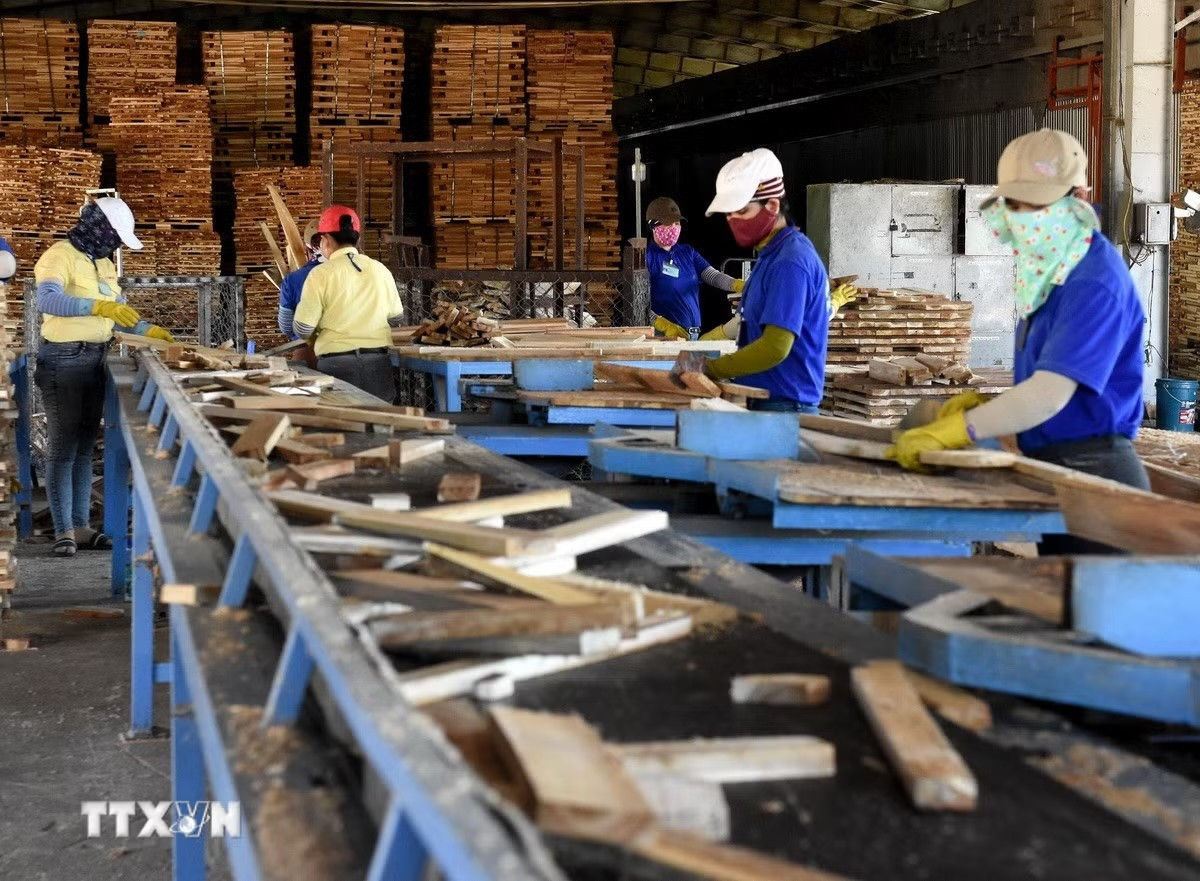
With an industry that has thin profit margins and hardworking labor, will there come a time when Vietnam "hands over the field" to latecomer nations?
There are two sides to this story. Developed countries like the US or Europe, about 40–50 years ago, once "expelled" the wood industry from their territories to make room for industries with higher added value.
The global wood industry has thus "migrated" through many regions, from the U.S. and Europe to Northeast Asia, Southeast Asia, and is currently "settled" in China and Vietnam as the last major stops. The total furniture export turnover of Vietnam alone is now more than double the total wood export value of the rest of ASEAN combined.
However, that does not mean Vietnam is “alone in the market” or wood is a “golden goose”.
If we do not move up to higher rungs - Design (ODM), Branding (OBM), and Distribution - the Vietnamese wood industry will forever be in a vulnerable position. The next 10 years should be seen as the decade of transformation: from OEM to ODM and OBM, meaning mastering design and brand.
What do wood enterprises currently want from the Government?
In a market economy, enterprises cannot and should not rely on direct "backing" from the Government. Furthermore, support packages are very easy to be "endoscoped" and accused of subsidies and dumping.
However, there is a reality worth reflecting on: Vietnam has become a leading global hub for furniture production, yet it remains in a state of "Wearing a brocade robe at night" (hidden success). "Made in Vietnam" products still carry the brands of foreign importers and retailers.
In trade promotion, we have not yet "told our story." We export individual products, but we have not been able to export a living space imbued with Vietnamese cultural flavor and values.
Meanwhile, Vietnam is a pioneer in complying with standards for legal timber and sustainable forest management. The signing and implementation of the VPA/FLEGT with the EU, as well as the preparation for the EUDR, demonstrate that Vietnam does not evade but actively embraces high standards.
What is needed now is to strengthen foreign communication at the national level, with Government involvement, to send a clear message to major markets that Vietnamese wood products are not only price-competitive but also reliable in terms of legality and sustainability.
Furthermore, there needs to be a national strategy for branding the wood industry -Vietnam is no longer a processing hub, but a symbol of quality, design, and responsibility.
What about the value-added tax (VAT) refund story that has haunted wood enterprises for many years?
The VAT refund story has truly been a "arduous journey" for many enterprises. Due to the fragmented nature of the domestic planted forest raw material supply chain, input documents are often complex and inconsistent. When management agencies tighten inspections to prevent tax refund fraud, many honest enterprises are also "caught in the crossfire."
The VAT refund story has truly been a "arduous journey" for many enterprises. Due to the fragmented nature of the domestic planted forest raw material supply chain, input documents are often complex and inconsistent. When management agencies tighten inspections to prevent tax refund fraud, many honest enterprises are also "caught in the crossfire."
For an industry with a profit margin of only 5–6 percent, delayed tax refunds directly affect cash flow, interrupt production, increase financial costs, and erode competitiveness. If tariffs are an external risk, then VAT refunds are an internal risk.
In summary, escaping US reliance is not about leaving, but about reducing dependence by diversifying outlets and quickly upgrading the position of Vietnamese wood in the global value chain. The "labor-for-profit" trap can only be broken when enterprises decisively shift from processing to mastering design, brand, and distribution.
At the same time, domestic bottlenecks – from VAT refunds, policy inconsistency and lack of transparency, to weak linkages – must be decisively removed. Only with fast and strong actions can Vietnam wood sector increase value and stand firm against global “shocks.”
Tu Giang
.svg)
