 Vietnamnet.vn

 Podcast



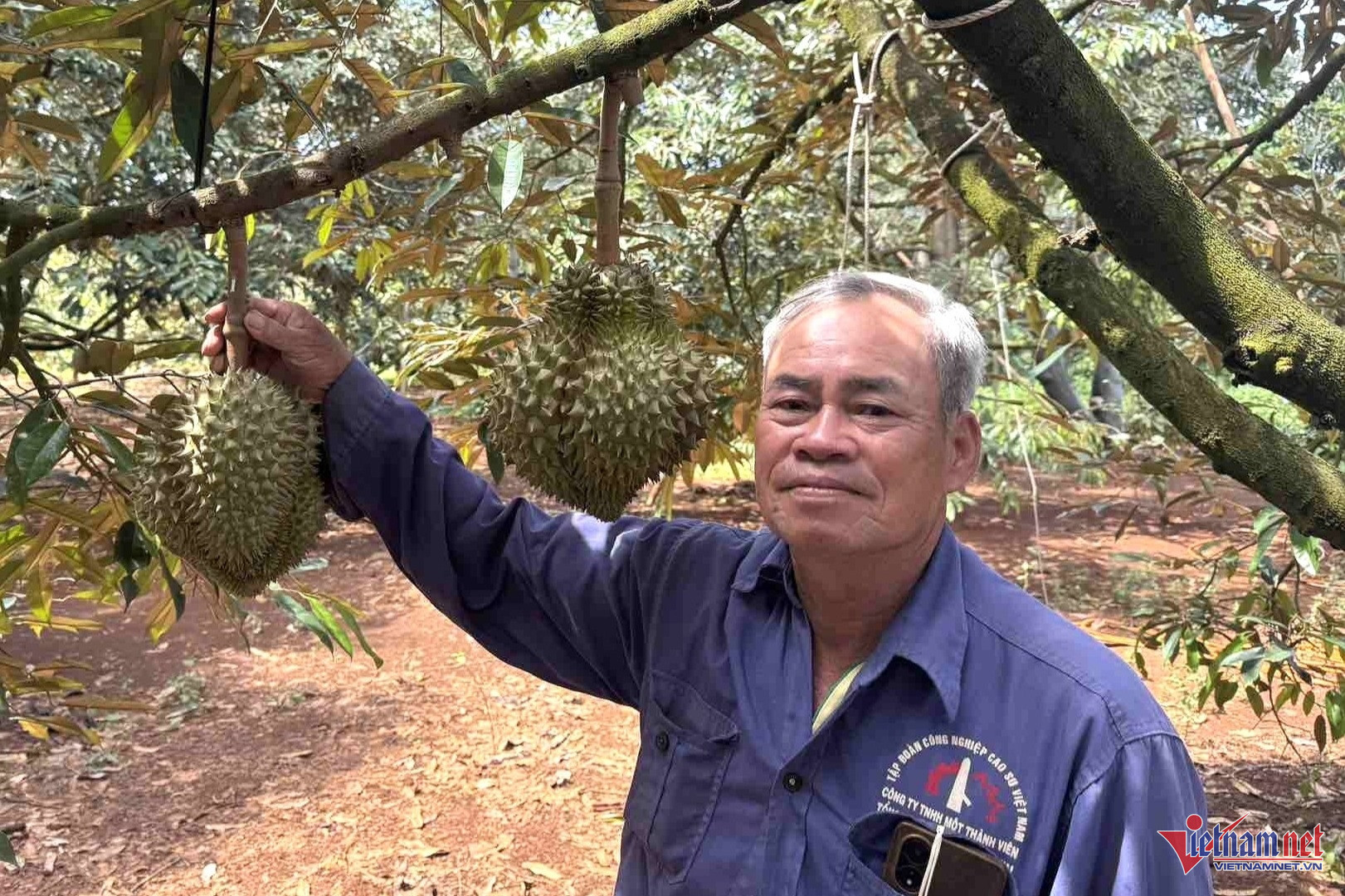
China’s customs authority has approved 140 growing-area codes and 31 packing-facility codes for durians from Dak Lak, marking a major breakthrough for one of the province’s billion-dollar agricultural industries.
On August 20, Dak Lak Vice Chairman Nguyen Thien Van told VietNamNet that the General Administration of Customs of China (GACC) had approved nearly 200 growing-area and packing-facility codes for the province’s durian industry.
Specifically, GACC approved 140 growing-area codes covering more than 14,321 hectares and 31 packing-facility codes covering 91,135 square meters, with a combined capacity of 5,470 tonnes per day.
To facilitate smooth and sustainable fruit exports to China while safeguarding the reputation of Vietnamese produce, the Department of Crop Production and Plant Protection under the Ministry of Agriculture and Environment has asked the Dak Lak Department of Agriculture and Environment to formally notify growing areas and packing facilities whose codes have been approved by GACC and ensure they are managed and monitored in accordance with regulations.
The department has also instructed approved facilities to comply fully with Vietnamese regulations and the requirements of the importing market. Export consignments must be inspected before shipment to ensure they are free from plant quarantine pests of concern to China and meet all quarantine and food-safety requirements.
Relevant parties must also strictly comply with Decree No. 38/2026/ND-CP, Resolution No. 36/2026/NQ-CP and requirements imposed by the importing country.
According to Van, the approval of nearly 200 growing-area and packing-facility codes at this point in the season will provide significant support for durian growers and trading businesses during the 2026 harvest.
Dak Lak has around 45,000 hectares of durian in the 2026 crop year, with output estimated at about 500,000 tonnes.
Rapid durian expansion raises fears of oversupply
The approval comes as agricultural officials warn that Vietnam’s durian industry has expanded at an exceptionally rapid pace, creating challenges in production, quality control and market sustainability.
Durian became a billion-dollar export commodity for Vietnam in 2023. In 2025, exports reached $3.86 billion, accounting for more than 45% of the country’s total fruit and vegetable export turnover.
In July 2026 alone, durian exports were estimated at $600-700 million, bringing the total for the first seven months of the year to around $1.85 billion, nearly 30% higher than a year earlier.
At a seminar on removing bottlenecks and building sustainable durian exports held by Tien Phong newspaper on August 20, Vu Duy Hai, CEO of Vinacam Group, highlighted a series of issues that need to be addressed.
Among them, Hai placed particular emphasis on cadmium management. Before warnings were issued by Vietnam’s SPS Office in 2022 and before some durian shipments were rejected, he said, relatively little attention had been paid to cadmium and the risk of residues originating from fertilizers.
He recalled that when durian shipments were once rejected by China, domestic consumers were subsequently urged to help “rescue” the fruit. In his view, the episode illustrated a broader lack of awareness about cadmium risks and the absence of adequate warnings.
Because cadmium may be present in certain phosphate fertilizers and can potentially be absorbed by plants, Vinacam believes controls should begin with agricultural inputs.
Hai also raised concerns over the substance known as “Yellow O,” which some growers have used in post-harvest treatment to extend storage life and give durian flesh a more attractive, evenly ripened yellow color.
However, once concerns emerged over potential health risks, the absence of safe alternatives could prompt growers to seek other unregulated solutions, creating further risks.
He therefore called on specialized agencies to quickly research, approve and promote safe biological or chemical alternatives. Regulators should also prepare for the possibility that importing markets may tighten limits on chlorine, arsenic and other potentially harmful substances.
Nguyen Thanh Binh, chairman of the Vietnam Fruit and Vegetable Association, said product quality, testing capacity, growing-area codes, traceability and customs procedures remain major bottlenecks for the durian industry.
Unless these problems are addressed promptly, exporters and growers will continue to face considerable risks.
Binh said quality controls should begin with agricultural inputs, growing areas and production rather than being delayed until harvest or immediately before export.
Businesses currently face substantial exposure because they may purchase fruit, pay farmers and load containers before testing is completed. If the produce subsequently fails to meet standards, exporters can be left bearing the entire cost.
He suggested Vietnam could study Thailand’s approach, under which authorities monitor harvest schedules, farmers and growing areas, with only compliant areas permitted to harvest. Such a system could reduce risks and strengthen confidence across the export chain.
Nguyen Dinh Tung, CEO of Vina T&T Group, meanwhile, said concerns over cadmium in durian need to be assessed carefully according to individual growing regions and specific cases.
Fresh-fruit exports, particularly durian, carry considerable risks because businesses have almost no time to respond when problems arise. A disruption in inspection, logistics or customs clearance can force hundreds of containers to turn back, while fresh durians continue to ripen and cannot be stored for long periods.
Tung therefore called for greater investment in processing technologies, particularly freezing, to extend shelf life and reduce export risks.
Amid recent testing difficulties, frozen durian exports have been increasingly directed to Europe, the US and other markets, he said. Without sufficient freezing capacity, the industry remains highly vulnerable whenever unexpected problems arise, making policies to encourage investment in this area increasingly important.
Nguyen Quoc Manh, deputy director of the Department of Crop Production and Plant Protection, described durian as an important crop that has expanded rapidly in recent years.
But the pace has been so fast that it could be described as “overheated,” he said, exposing a range of difficulties in management, production and consumption.
One immediate challenge is maintaining quality control as cultivation areas expand sharply. In some localities, durian has also been planted in areas considered unsuitable for the crop’s ecological requirements, leading to consequences for production.
“There are areas where durian cultivation was not recommended, yet acreage was still expanded. And we have paid the price,” Manh said.
Rapid expansion has also complicated the management of seedling quality, pest control across large production areas, and the issuance, management and use of growing-area codes required by importing countries.
Vietnam’s durian acreage and output have grown sharply over roughly the past five years and have essentially reached sufficient production scale. At the same time, however, other countries are also rapidly expanding their durian industries.
Manh warned that if Vietnam continues increasing acreage and production at the recent pace, the industry could eventually face an oversupply crisis.
Rather than pursuing further rapid expansion, he said, the sector should prioritize quality management, food safety and research into new, higher-quality durian varieties.
Hai Duong - Tam An
.svg)
