 Vietnamnet.vn

 Podcast



“Vietnam will not accept low growth. We must remain committed to achieving high, sustainable, and substantive economic growth,” General Secretary To Lam emphasized.
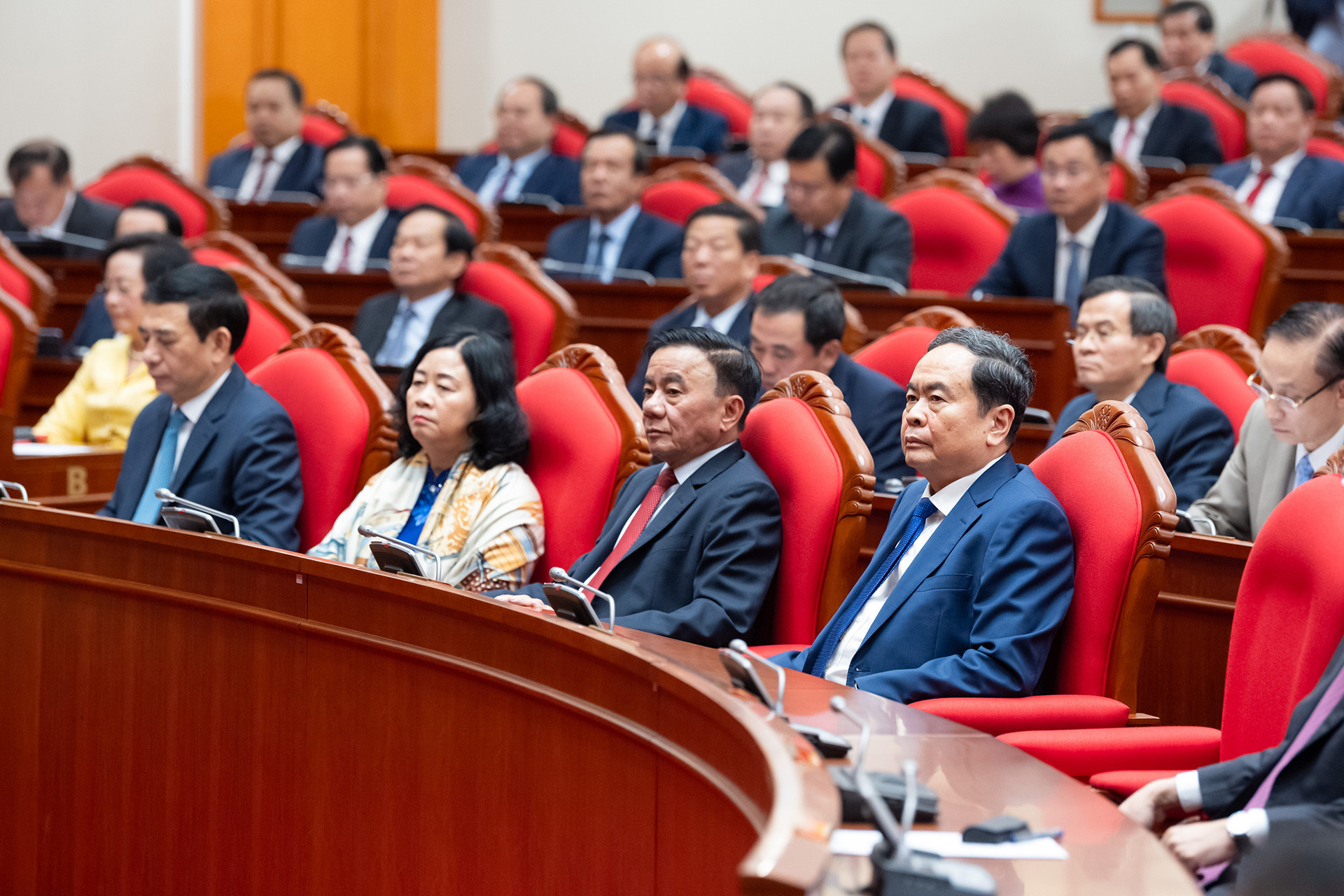
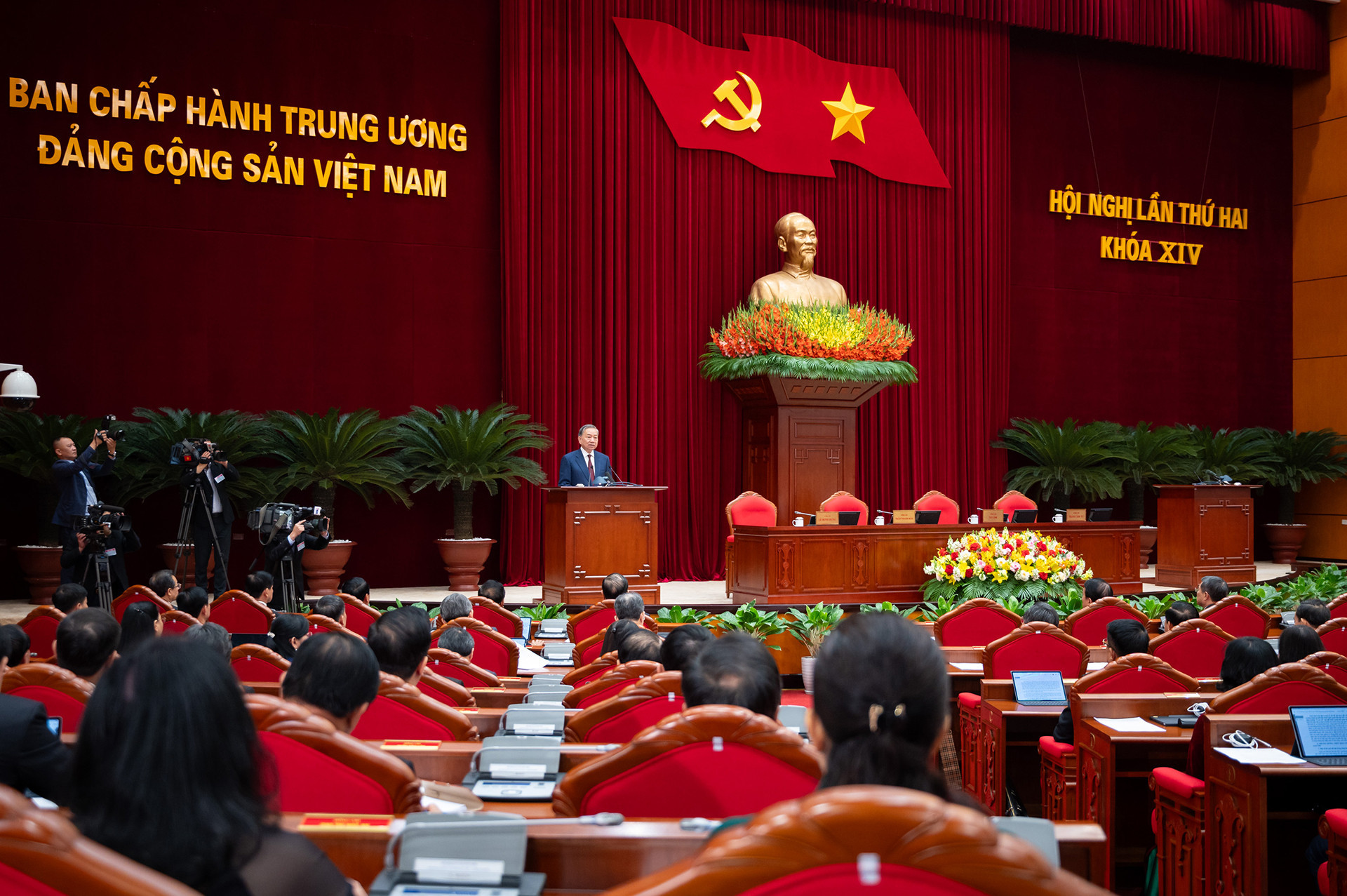
He delivered the statement in his closing remarks at the second plenum of the 14th Party Central Committee, held on the afternoon of March 25.
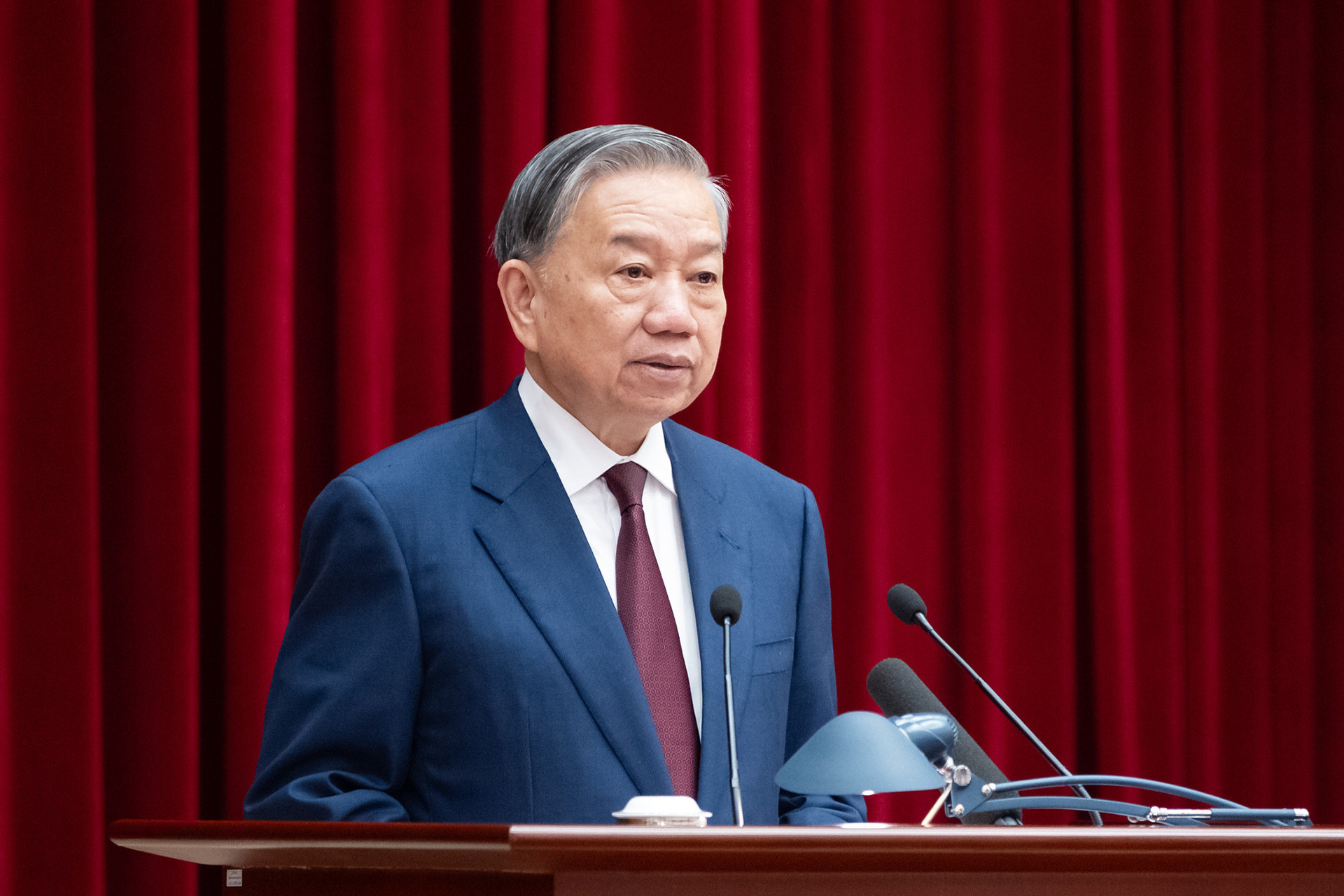
After three days of working, the General Secretary noted that the meeting had completed all agenda items. The Party Central Committee reached a high level of consensus on major and strategic issues concerning the Party and the nation, particularly those related to organizational work, personnel, and foundational Party regulations.
Four steadfast principles - four core foundations
Regarding political and ideological work within the Party, the General Secretary stressed that Party building in this area must continue to be strengthened in the new phase, forming a solid foundation to enhance political resolve, vanguard spirit, combativeness, and the Party’s leadership and governing capacity.
He called on officials and Party members nationwide to deeply internalize and strictly, consistently implement the “four steadfast principles” in political and ideological work.
First is steadfast adherence to, and creative development of, Marxism-Leninism and Ho Chi Minh Thought. This ensures the Party maintains its revolutionary nature while flexibly adapting to Vietnam’s realities and the demands of the era.
Second is steadfast commitment to the goal of national independence and socialism - a historic choice that runs consistently throughout Vietnam’s revolutionary journey and remains the Party’s guiding ideal.
Third is steadfast adherence to the Party’s renewal policy, seen as an objective and continuous revolutionary process to advance society, unlock productive forces, mobilize resources, expand development space, and elevate the country’s position.
Fourth is steadfast adherence to the Party’s organizational and operational principles to firmly build and safeguard the Socialist Republic of Vietnam.
According to the General Secretary, the newly issued regulation on political and ideological work within the Party is a concrete manifestation of these four principles.
On the goal of achieving “double-digit” economic growth, he described it as an objective requirement stemming from the country’s development needs in the new phase and the aspiration of the entire nation.
He outlined four core principles to guide this effort.
First, growth must be substantive. Economic expansion should not come at the expense of quality or sustainability. Growth must be driven by improvements in total factor productivity, enhanced product quality, stronger national competitiveness, and real value creation.
Each percentage point of GDP growth, he said, must carry greater knowledge content and added value. Today’s growth must not undermine tomorrow’s development foundations or deplete resources for future generations. He cautioned against the pursuit of superficial achievements, warning that prioritizing speed over quality would lead to unsustainable outcomes and heavy long-term costs.
Second, Vietnam must firmly maintain macroeconomic stability, control inflation, and ensure major economic balances. These are essential pillars for the safe, flexible, and effective functioning of the economy.
Third, all available resources must be utilized efficiently, with priority given to key projects and the promotion of public-private partnerships to enhance investment efficiency and national competitiveness.
Fourth, high economic growth must ultimately serve the people, improving both material and spiritual well-being and ensuring social equity. All policies, projects, and investments must generate tangible value for citizens, raise incomes, reduce poverty, narrow development gaps, enhance social welfare, and safeguard the legitimate rights and interests of all social groups.
To create what he described as the “engine of engines” for development, the Central Committee is expected to soon formulate a resolution on a new development model based on science, technology, innovation, and digital transformation, to be submitted to the third plenum for consideration.
No one-size-fits-all model for local governance
On promoting the strengths of the two-tier local government model, the General Secretary stressed that this must be understood as a governance reform, not merely an organizational adjustment.
If reform stops at reducing administrative layers, merging units, or simplifying structures without simultaneously innovating decentralization mechanisms, redesigning workflows, standardizing data systems, clarifying leadership responsibilities, and shifting from administrative control to service-oriented governance, its effectiveness will remain limited.
He emphasized the principle that the provincial level should focus on strategy, while the commune level should excel in implementation.
Provincial authorities should avoid micromanaging local affairs or taking over tasks that can be handled at lower levels. Instead, they should concentrate on planning, strategic development, major investments, resource coordination, risk management, supervision, and ensuring regional coherence.
At the same time, commune-level authorities must be provided with adequate resources and conditions to create development space, while serving as the frontline in addressing issues directly affecting people, businesses, local communities, daily life, social welfare, grassroots order, administrative procedures, and urgent practical needs.
The General Secretary affirmed the principle: authority must go hand in hand with resources; decentralization must be accompanied by strict oversight; and assigned responsibilities must be matched with corresponding capacity building.
He stressed that the operation of the two-tier local government model must be guided by flexible, scientific, and practical thinking, avoiding rigid or mechanical application.
“A single template cannot be imposed on all localities or grassroots units,” he noted, pointing out the wide differences in population size, geographic conditions, urban and rural characteristics, cultural and security requirements, levels of socio-economic development, and workload across regions.
Rigid implementation, he warned, could lead to the emergence of a new cumbersome bureaucracy at the grassroots level, undermining the goal of building a streamlined, effective, and efficient system.
Ultimately, he emphasized that public and business satisfaction must be the true measure and final criterion for evaluating the success of the two-tier local government model.
Reform effectiveness, he concluded, must not be measured merely by the number of administrative units reorganized, but by tangible improvements in daily life - ensuring citizens are not burdened, and that administrative procedures are handled swiftly through science, technology, and digital transformation.
Tran Thuong
.svg)
