 Vietnamnet.vn

 Podcast



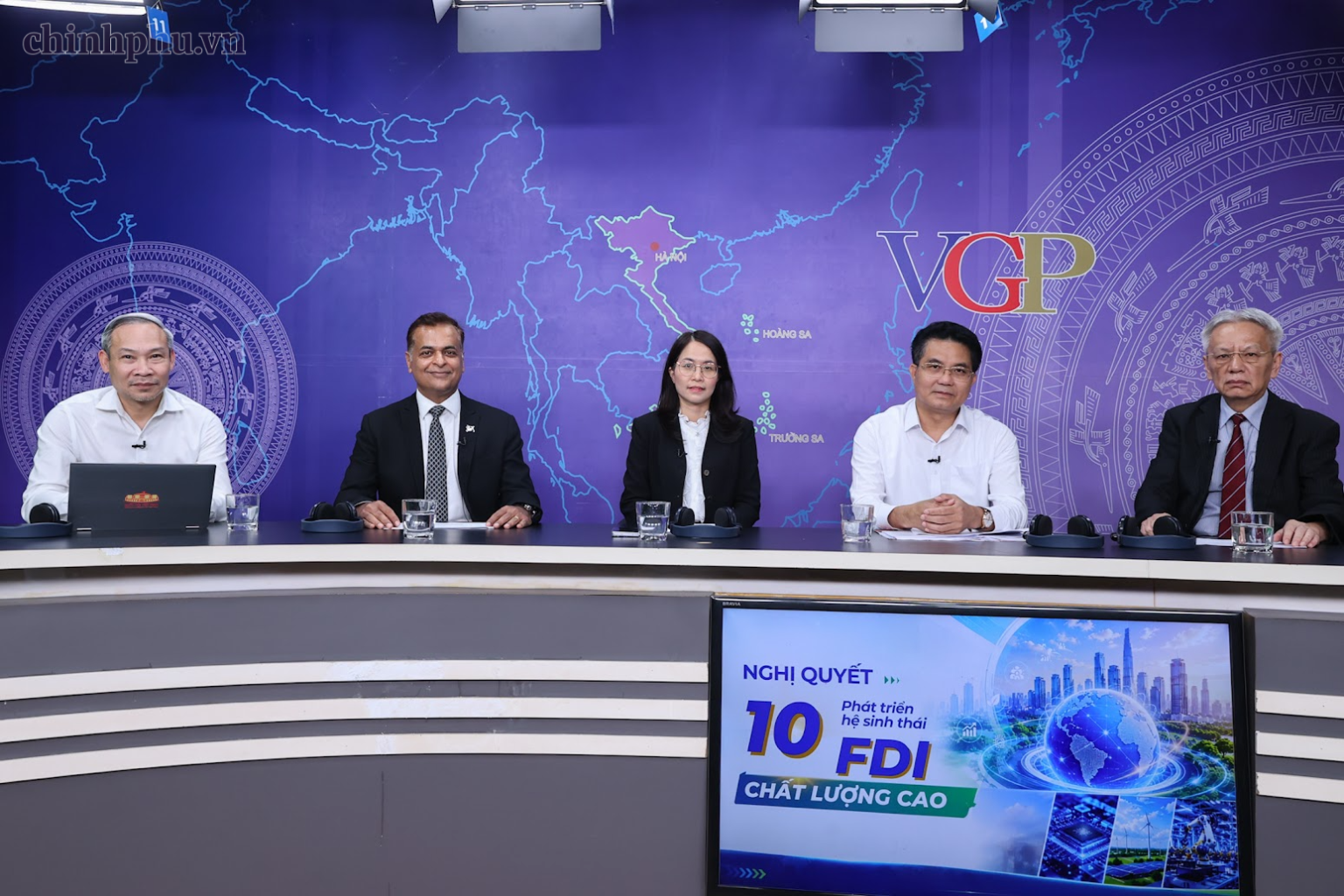
The first is a move from “attracting foreign investment” to “developing the foreign-invested economy,” recognising the foreign-invested sector as an integral part of the national economy.
The resolution also marks a shift away from prioritising the scale and volume of investment toward quality, efficiency and added value.
At the same time, Vietnam plans to move from investment incentives based largely on industries, sectors or locations toward incentives linked to outcomes, spillover effects, technology transfer and the tangible contribution that foreign capital makes to the economy.
Rather than attracting individual FDI projects in isolation, Vietnam will seek to develop an integrated ecosystem connected to international capital flows, Thuy said.
The country also intends to move from an “investment management” mindset toward creating a more enabling business and investment environment, with infrastructure, human resources and institutions prepared to improve the economy’s capacity to absorb high-quality capital.
To translate these objectives into practice, the Ministry of Finance is coordinating with relevant agencies to study how the new approach can be incorporated into the Investment Law and related legislation.
The government is expected to design stronger incentives for FDI companies, including tax measures, support for research and development costs, assistance with the cost of training Vietnamese businesses to participate in supply chains, and new approaches to supporting domestic companies.
Building Vietnam’s capacity to benefit from FDI
Phan Duc Hieu, a full-time member of the National Assembly’s Economic Committee, said the most important feature of Resolution 10 is a fundamental change in approach.
He described its new direction through four characteristics: more methodical, more systematic, more in-depth and more practical.
The key difference, Hieu said, is that Vietnam is no longer focusing solely on incentives designed to attract FDI. Instead, it is seeking to create an ecosystem that supports the entire lifecycle of foreign investment, from promotion and attraction to the operation of projects.
That ecosystem encompasses not only conventional investment policies but also the living and working environment, human resources and infrastructure.
For Vietnam to improve the quality of FDI, Hieu argued, the critical issue is strengthening the economy’s capacity to absorb investment and translate it into broader domestic gains.
“High-quality FDI will not automatically generate spillover effects if we lack the capacity to absorb them,” he said.
Resolution 10 therefore introduces a range of measures intended to strengthen the host economy’s absorptive capacity, particularly by improving the quality of the domestic business sector and upgrading infrastructure for production and business activities.
Hieu stressed that stronger absorptive capacity would do more than make Vietnam a more attractive destination for high-quality FDI. It would also strengthen the economy’s self-reliance and autonomy.
The longer-term ambition, he said, is to develop global value chains in which Vietnamese businesses themselves take leading roles.
To implement Resolution 10 effectively, Hieu said policies covering FDI, the private economy and state-owned enterprises need to be implemented simultaneously and in a coordinated manner.
He also called for a comprehensive review of the Investment Law, the Law on Support for Small and Medium Enterprises and policies governing supporting industries to eliminate overlaps and deliver more substantive results.
Support policies, he added, need to be sufficiently strong and precisely targeted rather than spread too thinly. Additional mechanisms should also encourage FDI companies to deepen their links with Vietnamese businesses.
Domestic companies still face barriers
From a provincial perspective, Le Quang Hoa, vice chairman of the Hung Yen Provincial People’s Committee, said Vietnamese companies continue to face significant challenges in human resources, technology and access to capital when trying to join the value chains of major corporations.
Hung Yen will therefore focus on encouraging FDI businesses to provide workforce training and transfer technology, while helping domestic companies strengthen management capabilities, upgrade technology and forge closer connections with foreign-invested businesses.
Hoa also called for investment promotion activities to be reformed under a unified national focal point, alongside stronger regional links and expanded trials of breakthrough mechanisms.
These efforts reflect the broader goal of ensuring that foreign investment creates benefits extending beyond individual projects and contributes to the development of Vietnamese businesses themselves.
Global investors look beyond tax incentives
Binu Jacob, CEO of Nestlé Vietnam, said that amid the global minimum tax, traditional investment incentives are no longer the decisive factor for multinational corporations.
Instead, global companies are paying closer attention to the government’s strategic direction, transparent and predictable policies, a highly skilled workforce and a sufficiently strong business ecosystem that gives investors confidence to make long-term commitments.
Jacob also proposed moving away from the term “foreign investor” and instead using expressions such as “investment partner” or “FDI partner.”
Such a change in terminology and approach, he argued, could serve as a form of strategic commitment, more accurately reflecting a long-term relationship in which Vietnam and the FDI business community share both responsibilities and benefits.
The broader shift outlined in Resolution 10 signals that Vietnam’s next phase of foreign investment policy will be measured less by how much capital enters the country and more by what that capital leaves behind.
Greater technology transfer, stronger Vietnamese companies, deeper domestic participation in supply chains and ultimately Vietnamese-led global value chains are emerging as central measures of success in the country’s new FDI strategy.
Nguyen Le
.svg)
