 Vietnamnet.vn

 Podcast



Vietnam needs to stop equating talent with degrees, academic titles and seniority and instead judge people by their capabilities and results, experts say, warning that some managers are even reluctant to put people with greater expertise than themselves in key roles.
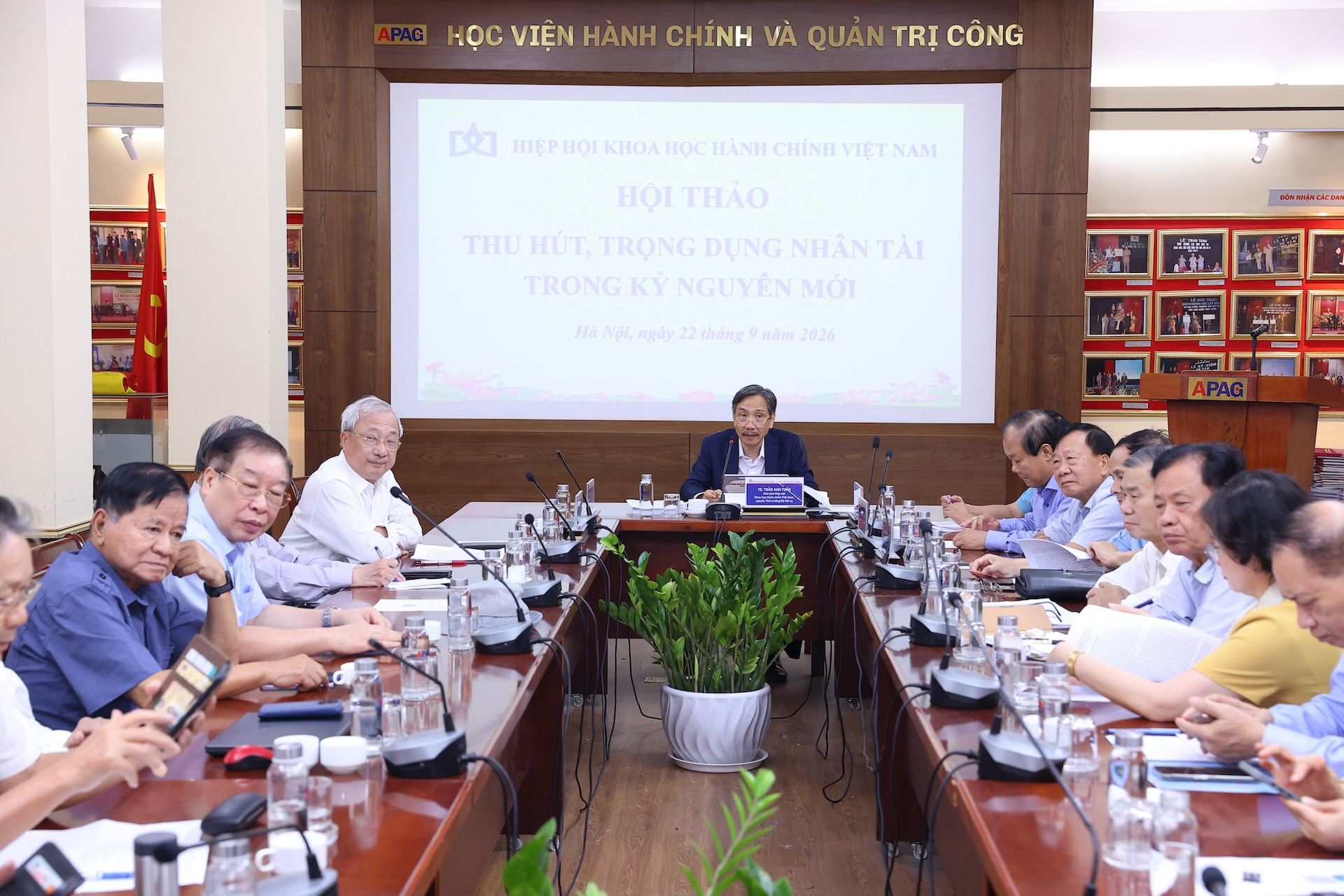
The Vietnam Association of Administrative Sciences held a seminar on Sept. 22 to discuss how the country can attract and make better use of talent in a new era.
Talent should be treated as a strategic national resource
Opening the discussion, Tran Anh Tuan, president of the Vietnam Association of Administrative Sciences and a former deputy minister of home affairs, said Vietnam has introduced numerous policies covering the identification, training, recruitment, utilization, remuneration and recognition of talented people.
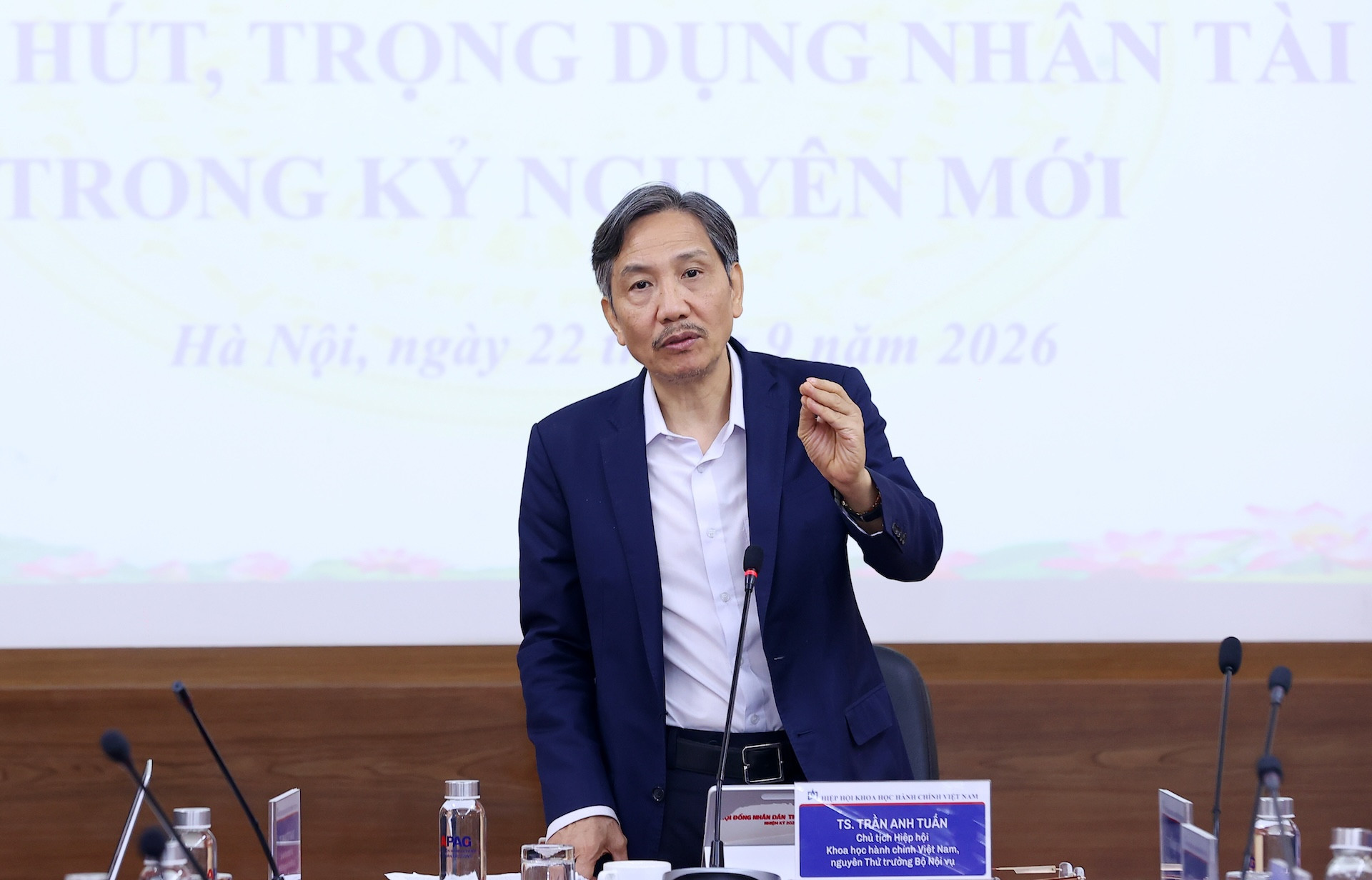
However, he argued that implementation has remained limited and ineffective, with policies lacking feasibility and major breakthroughs while retaining characteristics of traditional administrative management.
“Vietnam does not lack talented people, particularly outside the public sector and among the wider population,” Tuan said. “If we cannot identify and make use of them, that is an enormous waste that cannot be measured.”
He said central authorities are expected to consider a national strategy for attracting, utilizing and developing talent in priority sectors to support rapid and sustainable development.
The most important change, he argued, must begin with how talent itself is understood.
Talent policy should be treated as a national priority and designed to reflect Vietnam’s market economy, rule-of-law state, civil service, international integration, digital transformation and innovation.
The Vietnam Association of Administrative Sciences defines a talented person as someone who possesses both personal qualities and expertise in a particular field and can create concrete products or results that deliver exceptional value, solve real problems and advance a sector, locality or the country as a whole.
Tuan said a new approach emerging in Vietnam emphasizes that talent should be identified through personal qualities, demonstrated capabilities and tangible results rather than automatically equated with advanced degrees, academic titles, management positions or years of service.
The most important criteria, he said, are character and ability, followed by achievements and outputs that create significant value, solve difficult problems and contribute to progress.
“Identifying talent and developing talent policies must therefore shift away from degrees, certificates, resumes and academic titles toward qualities, capabilities and results that generate development,” Tuan said.
Qualifications and ethical qualities alone, he argued, are not sufficient if a person cannot produce effective results or create value.
He also called for a broader conception of talent policy that extends beyond the civil service.
Rather than viewing talented people primarily as beneficiaries of preferential policies, Vietnam should regard them as a strategic resource for strengthening national capacity, including across public services and the private sector.
When managers are reluctant to hire people better than themselves
Tuan also highlighted a less visible obstacle: workplace culture.
Talent policies can generate narrow-mindedness, jealousy and resentment among colleagues toward highly capable people, he said.
“Some heads of organizations do not dare to assign important tasks to, or make use of, people whose professional expertise is greater than their own,” he said, also pointing to insufficient cooperation and shared responsibility.
Vietnam’s existing talent policies, he argued, can remain closed, conventional and insufficiently attractive.
Instead of managing talented people through traditional administrative procedures, Tuan proposed a system based on assignments and measurable results.
That would require building an ecosystem in which talented people have room to contribute and develop over time.
Vietnam also needs a pipeline of potential talent, he said, with promising people identified and nurtured early.
Crucially, organizations should be willing to accept a degree of risk and failure when talented people are asked to tackle difficult problems.
For talent policies to work, Tuan said, the decisive factor will be the heads of government agencies and organizations at both central and local levels.
They should therefore be given sufficient authority while being held accountable for how that authority is exercised.
Call for a law on attracting and utilizing talent
Phan Trung Ly, former chairman of the National Assembly’s Law Committee, also argued that Vietnam needs to separate the concept of talent from academic qualifications.
What matters, he said, is whether people can solve problems in the real world.
That distinction should be clearly reflected in future laws, decrees or resolutions, he said, because talent development needs to be treated as a strategic national issue.
Vietnam has introduced relatively few talent policies in the past, Ly said.
More recent initiatives have included preferential recruitment for top university graduates, but he questioned whether graduating at the top of a class necessarily makes someone exceptionally talented.
Vietnam has also offered incentives to attract overseas experts, including housing, but has not always succeeded in retaining them.
Ly said the country needs a clear definition of talent, coherent policies and incentives that allow talented people to live, work and contribute effectively.
Just as importantly, they need a supportive working environment and institutions willing to recognize and use what they produce.
“There needs to be an ecosystem to utilize, attract and develop talent, because a talented person alone cannot accomplish anything,” Ly said.
He argued that Vietnam should eventually introduce a dedicated law on attracting and utilizing talent.
Eight problems with the current approach
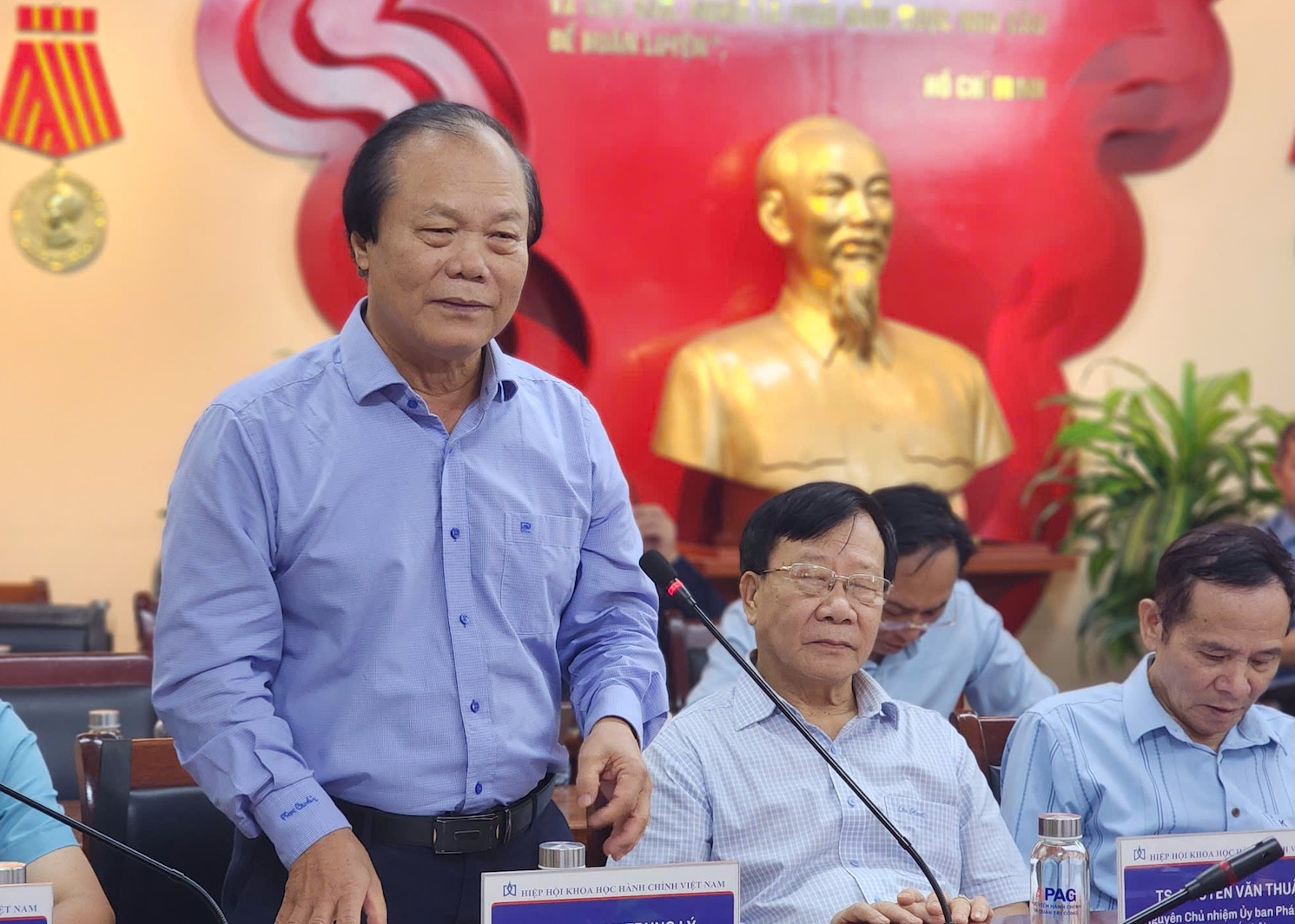
Le Minh Thong, a former assistant to the chairman of the National Assembly, identified eight shortcomings in Vietnam’s current approach to talent.
First, talented people are still viewed primarily as exceptional individuals rather than as part of the country’s broader human resources.
Second, talent is still too closely associated with qualifications, titles and past achievements.
Third, policy focuses more heavily on attracting existing talent than identifying, developing and effectively using people with potential.
Fourth, talented people remain subject to a traditional administrative management model rather than modern talent management, requiring them to follow the same bureaucratic processes.
Fifth, the concept of talent remains heavily focused on the public sector rather than encompassing talent across the country.
Sixth, incentives tend to emphasize material benefits such as housing and salaries without sufficiently addressing the conditions people need to develop and use their abilities.
Seventh, Vietnam lacks mechanisms for continuous competition, screening and evaluation. Once someone is recognized as talented, Thong said, there is often insufficient assessment of whether that person continues to develop and perform.
Finally, talent policies remain fragmented, without an integrated ecosystem for managing high-level human resources.
Eight shifts proposed for a new talent strategy
Thong proposed a corresponding set of changes.
Vietnam should move from treating talented people as a “special group” to considering them part of a strategic national human resource.
Talent should be identified by capabilities and results - what someone can actually produce - rather than primarily through degrees and academic credentials.
Evaluation should also become continuous, following people throughout their professional development rather than relying on a static assessment at one point in their careers.
Instead of concentrating mainly on attracting people who are already successful, Vietnam should build an ecosystem capable of identifying and nurturing potential talent.
The country should also shift from trying to recruit talented individuals into specific government agencies toward attracting their knowledge and contributions, without necessarily requiring them to become permanent state employees.
Incentives should go beyond salaries and other material benefits to create environments in which talented people can develop and perform.
Talent policy should expand beyond the public sector to encompass every field and section of society.
Finally, Thong proposed moving away from a model that grants special privileges without sufficient measurement toward one that gives talented people substantial autonomy while tying that authority to accountability and high expectations for innovation.
The underlying argument from the seminar was that Vietnam’s challenge is not simply finding people with impressive credentials.
It is creating institutions capable of recognizing what people can actually do, giving them room to do it and measuring the value they ultimately create.
Thu Hang
.svg)
