 Vietnamnet.vn

 Podcast



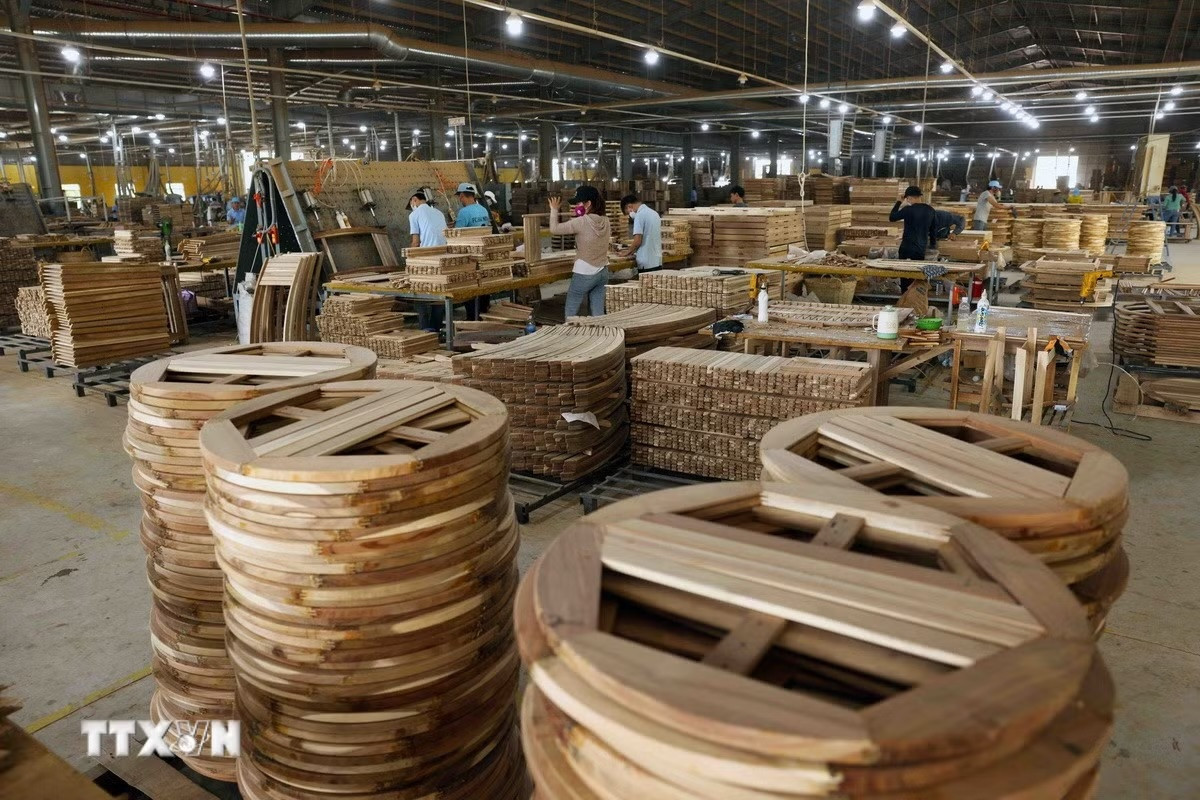
Dominating the US market was once an advantage that helped Vietnam wood sector take off, but is now becoming a strategic risk. The growth model based on processing with low margins is revealing clear limits, Ngo Sy Hoai, Secretary General of Vietnam Timber and Forest Products Association, said.
Here is an interview with Hoai:
Can Vietnam wood enterprises find other markets to reduce relilance on the US, such as the EU, Middle East, South America?
“Escaping the US”, in the sense of reducing dependence on the US market and not “putting too many eggs in the US basket” by quickly diversifying outlets is not a problem that can be solved overnight.
Vietnam wood enterprises have made great efforts to achieve their current prominent position in the US market, and no one wants to “escape the US” by leaving it to find replacement markets. In reality, maintaining existing markets is often less costly than opening new ones.
The US is not only a large market but also the world’s “consumption axis”. Not only Vietnam but the whole world depends on the US market. Even the EU, Japan or China, the major economies, all have certain degrees of dependence. Many countries even “envy” Vietnam for its deep access to this market.
For the wood sector, with a population of about 340 million, the US market accounts for a dominant share of Vietnam wood exports. In 2025, exports to the US reached 55.6 percent, equivalent to $9.46 billion; and nearly $10 billion if including non-timber forest products, almost 13 times larger than EU27, although EU27 has about 450 million people but consumes only about $0.75 billion of Vietnam wood products.
Therefore, while maintaining growth in the US market, Vietnam wood enterprises are quietly seeking additional markets, even the smallest ones, to reduce risks.
However, for plywood, the story is not simple. South Korea imposes anti-dumping duties from 10 percent to 30 percent on plywood imported from Vietnam. Products exported to South Korea are mainly low-end, used for packaging, priced around $230–$250 per cubic meter, while plywood exported to the US is in a higher segment, priced around $400–$500 per cubic meter.
For furniture – deeply-processed products – markets such as the Middle East, North America (excluding the US) or South America are much smaller. The US itself is pursuing a “China+” strategy, reducing dependence on China and diversifying supply. Vietnam was once seen as the “+1”, an important “friend-shoring” source of supply.
However, as the trade surplus with the US increases, the consequence is more frequent trade remedies, and “black swan” events are no longer rare. This forces Vietnam wood enterprises to diversify markets in a more systematic and decisive way, instead of only reacting.
Profit margins are only about 5–6 percent. Can enterprises withstand such a tax shock?
In fact, not only the wood sector but most Vietnam export-oriented industries have long grown in breadth, based on OEM – processing, “labor-for-profit”.
Processing is not a bad thing, but it should be recognized as only a temporary solution. Vietnam has risen to the top group globally in wood processing and export (second, only after China), but it cannot remain in this position forever.
If Vietnam continues to make a profit by the sale of one's own work without upgrading position in the global supply chain, enterprises will fall into a trap: the more they produce, the higher the risks, while margins increasingly erode and resilience weakens.
Vietnam wood enterprises mainly produce based on designs and orders from US importers. When high tariffs are imposed, importers often pressure price cuts, or delay or cancel contracts, which means shifting part of the burden to manufacturers.
to be continued...
Tu Giang
.svg)
