 Vietnamnet.vn

 Podcast



In recent years, Vietnamese doctors have steadily mastered advanced technologies, improving treatment quality and giving new hope to patients.
The year 2025 marked a powerful stride for Vietnamese medicine, as a series of highly complex procedures were successfully carried out domestically.
First simultaneous heart-lung transplant
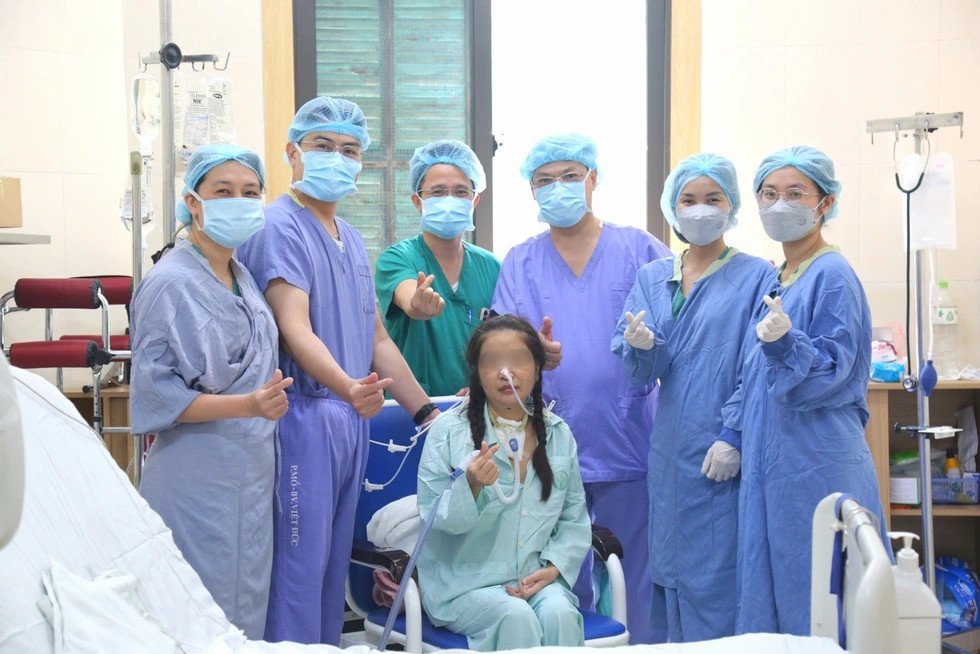
On August 23, 2025, Viet Duc University Hospital announced the country’s first successful simultaneous heart and lung transplant. This is among the most challenging procedures in thoracic and cardiovascular surgery, requiring the replacement of both the heart and two lungs from a donor.
The patient, T.N.Q., a 38-year-old woman diagnosed with Eisenmenger syndrome leading to irreversible right heart failure and severe tricuspid regurgitation, had seen her health deteriorate day by day. Her chances of survival were increasingly fragile.
The surgery lasted more than seven intense hours, followed by nearly 50 days of intensive postoperative care. The achievement not only restored life to a critically ill patient but also placed Vietnam among the limited number of countries capable of performing simultaneous heart-lung transplants, affirming its multi-organ transplant capacity at a regional level and approaching international standards.
Earlier, in October 2023, the National Lung Hospital made its mark by performing two lung transplants within 24 hours. Notably, both cases met the highest technical standards set by the UCSF Lung Transplant Center of the University of California, one of the world’s leading institutions in the field.
This success positioned Vietnam among reputable lung transplant centers capable of handling highly complex cases under internationally standardized procedures.
Hand temporarily transplanted to the leg
In September 2025, Binh Duong General Hospital carried out a rare microsurgical procedure: temporarily grafting a severed hand onto a patient’s leg for nearly two months before reattaching it to its original position.
The patient, a woman in her early twenties who was 34 weeks pregnant with twins, suffered a workplace accident that crushed the lower third of her right forearm, completely severing her hand.
Immediate reattachment would have required a seven to eight-hour operation under heavy anesthesia, posing a high risk of miscarriage. Amputating and closing the stump would have left the mother permanently disabled. Faced with this life-or-death dilemma, a multidisciplinary team decided to temporarily attach the hand to her lower leg to maintain blood circulation and tissue viability while waiting for the fetuses to mature further.
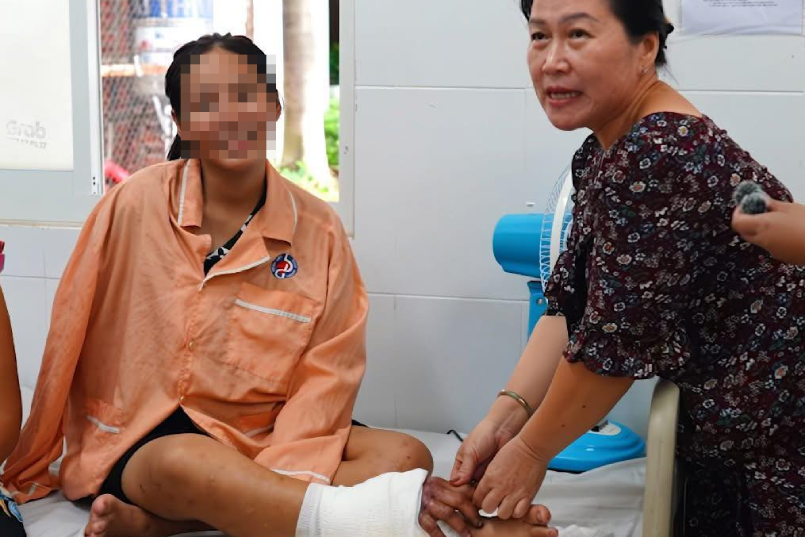
On November 28, 2025, when the twins were stable, doctors separated the hand from the leg and reattached it to the forearm in a 13-hour microsurgical operation. Blood vessels, tendons and nerves were meticulously reconstructed, while fetal heartbeats were closely monitored throughout.
Postoperatively, the hand appeared warm and pink, gradually regaining slight movement. The mother later delivered two healthy baby boys by cesarean section.
The case was regarded as a major milestone for reconstructive microsurgery at the provincial level, demonstrating multidisciplinary coordination and the creative, patient-centered thinking of Vietnamese doctors, with the lives of both mother and children placed at the forefront.
Kidney removed, repaired and reimplanted
In October 2025, 108 Military Central Hospital performed a rare autologous kidney transplant, opening a new path in organ preservation.
A 37-year-old woman was diagnosed with a large aneurysm of the left renal artery, carrying a high risk of rupture and life-threatening complications. Several medical facilities had advised removing the kidney.
Determined to spare her from lifelong dialysis, doctors opted for a bold approach: laparoscopically removing the kidney, reconstructing the damaged blood vessels outside the body, and then reimplanting the same organ.
The operation lasted nearly four hours, with a critical 20 to 30-minute window to repair the vessels outside the body and prevent irreversible ischemic injury. The aneurysmal segment of the artery was excised and reconstructed using the patient’s own vascular tissue before the kidney was transplanted into the left iliac fossa.
After surgery, the kidney functioned well. Because this was an autologous transplant, the patient required no anti-rejection medication. This marked the first time in Vietnam that such a “kidney repair and reimplantation” technique had been successfully applied. Globally, only a handful of similar cases have been reported.
Step by step, Vietnamese doctors are narrowing the distance with the world, turning what once seemed impossible into reality and elevating the country’s medical standing among international peers.
Phuong Thuy
.svg)
