 Vietnamnet.vn

 Podcast


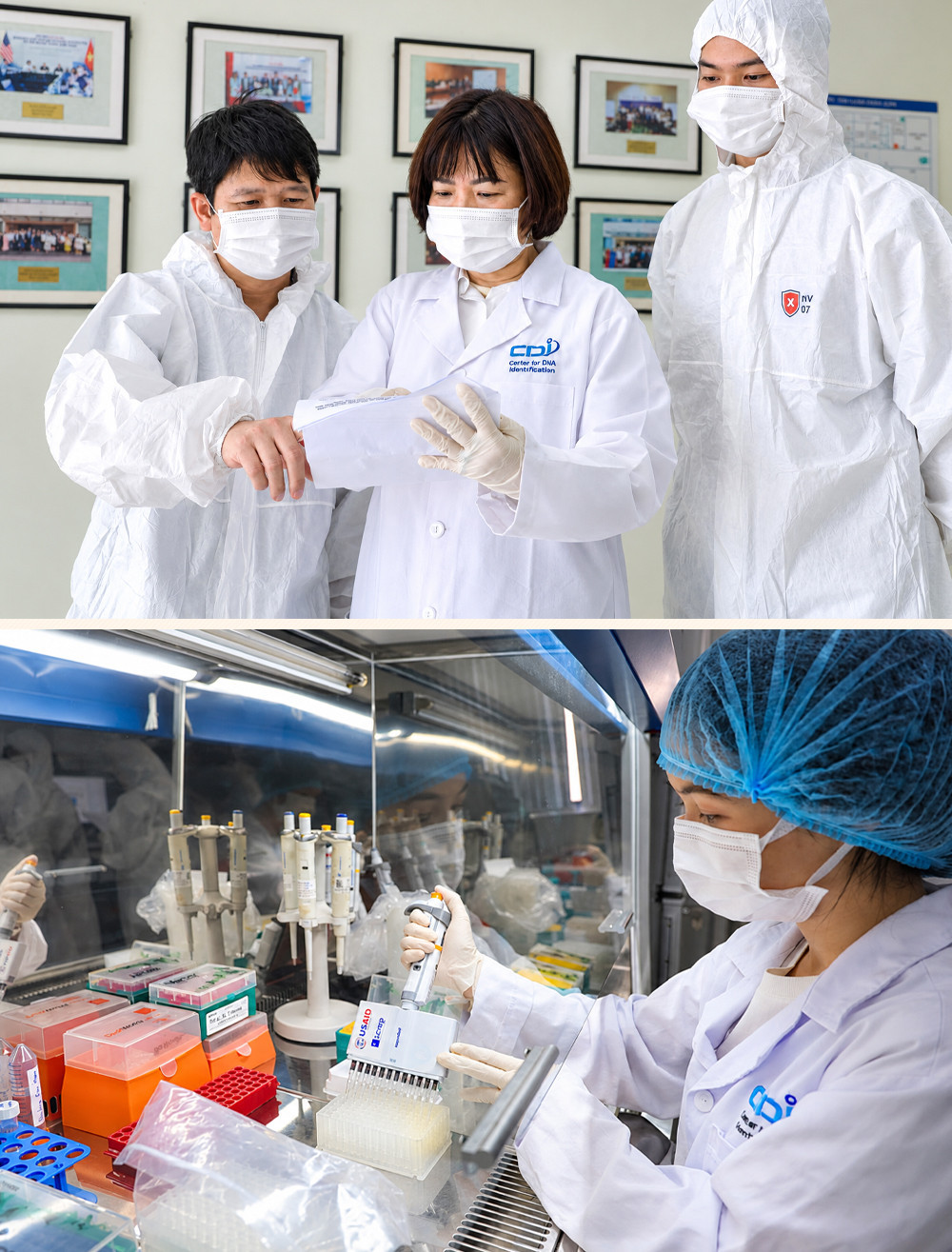
At the DNA Identification Centre of the Institute of Biology under the Vietnam Academy of Science and Technology (VAST), every set of human remains arriving for examination is assigned a code and processed under strict procedures.
The codes help prevent errors during testing. But for Vu Anh Tuan, a master's degree holder and forensic DNA examiner who has spent years working directly with these samples, they are anything but impersonal.
"Behind those seemingly meaningless letters and numbers is someone who sacrificed their life, and a family that has waited many years for an answer," he said.
Tuan's work begins in the field. He and his colleagues visit military cemeteries to collect bone and tooth samples before bringing them back to the laboratory for DNA extraction, sequencing, data analysis and comparison with genetic information from relatives.
Some remains have been buried for 40 to 70 years, with their DNA severely degraded by Vietnam's hot, humid climate.
Tuan recalls that in the early years, many samples had to be set aside despite repeated extraction attempts and the use of different techniques.
"Those were truly stressful and frustrating days," he said.
Yet behind every sample that failed to produce a result was a family that might still be waiting for news.
Associate Professor Dr. Phi Quyet Tien, director of the Institute of Biology, has witnessed how advances in technology have changed the meaning of the work.
In the laboratory, scientists initially approach samples as research materials. But when the technology is applied to real cases, the human significance of each specimen becomes impossible to overlook.
"Behind every sample we examine is the identity of a fallen soldier," Tien said.
Some families have waited for decades. When other forms of evidence are no longer available, DNA testing may offer the last opportunity to identify their loved ones.
For that reason, forensic DNA results are far more than scientific data. They are part of the effort to establish the identities of those who gave their lives for Vietnam's independence and freedom.
New DNA technology brings hope to long-unidentified remains
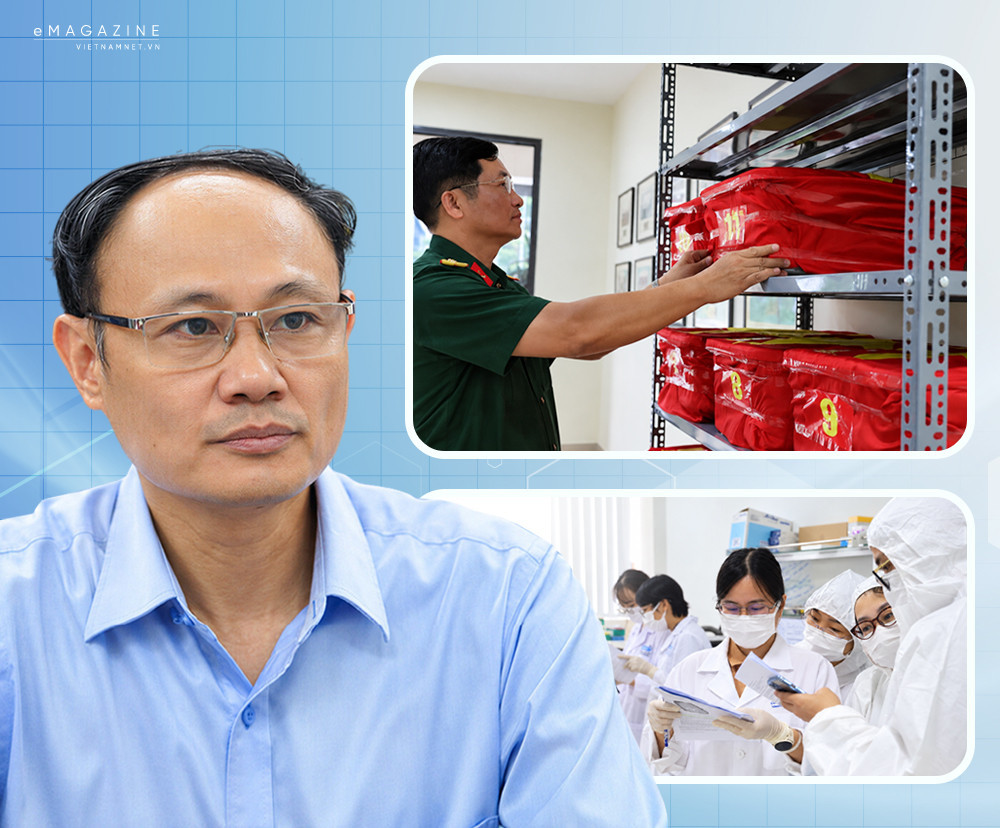
According to Tien, conventional identification methods based on mitochondrial DNA have played an important role but face significant limitations when dealing with severely degraded remains.
Figures he cited show that only about 22% of samples yielded genetic data suitable for comparison with relatives using conventional technology.
In many specimens, the surviving DNA fragments are only 30 to 70 base pairs long, making it difficult for methods that require longer genetic sequences to retrieve useful information.
Since 2021, VAST scientists have been preparing, testing and gradually mastering next-generation sequencing combined with single nucleotide polymorphism analysis, known as NGS-SNP.
Rather than relying on long stretches of DNA, this approach can extract genetic information from variations found in the short fragments that remain.
At Tra Linh Martyrs' Cemetery in Cao Bang Province, northern Vietnam, Tien said the proportion of samples yielding DNA data suitable for comparison rose to approximately 90% during a trial.
Published results showed that 54 of 58 samples eligible for testing produced SNP data that met the required standards.
Importantly, this figure represents the success rate in obtaining usable genetic data, not the proportion of soldiers whose identities were established.
Confirming an individual's identity still requires genetic information from relatives and sufficiently reliable evidence for comparison.
Tuan remembers samples that had repeatedly failed under older methods.
When NGS-SNP technology became available for research, his team revisited these cases and conducted further testing.
In a research project conducted with the International Commission on Missing Persons (ICMP), 42 of 100 samples had previously undergone multiple analyses without producing results. With the new method, DNA was successfully recovered from most of those previously unsuccessful samples.
Not every specimen produces a usable result. Nevertheless, the technology offers another important advantage: it allows scientists to investigate genetic relationships through both paternal and maternal lines, including across multiple generations.
When close relatives are no longer alive, genetic information from more distant family members may provide another opportunity for identification.
Tuan, however, is careful not to confuse promising preliminary findings with definitive conclusions.
Analysing low-coverage sequencing data, calculating the likelihood of biological relationships, excluding contamination and examining family pedigrees all demand considerable caution.
"Technology is only a tool," he stressed.
Any final identification must rest on sufficiently strong evidence because a family's trust depends on the conclusion.
A 500-day campaign puts DNA identification under pressure
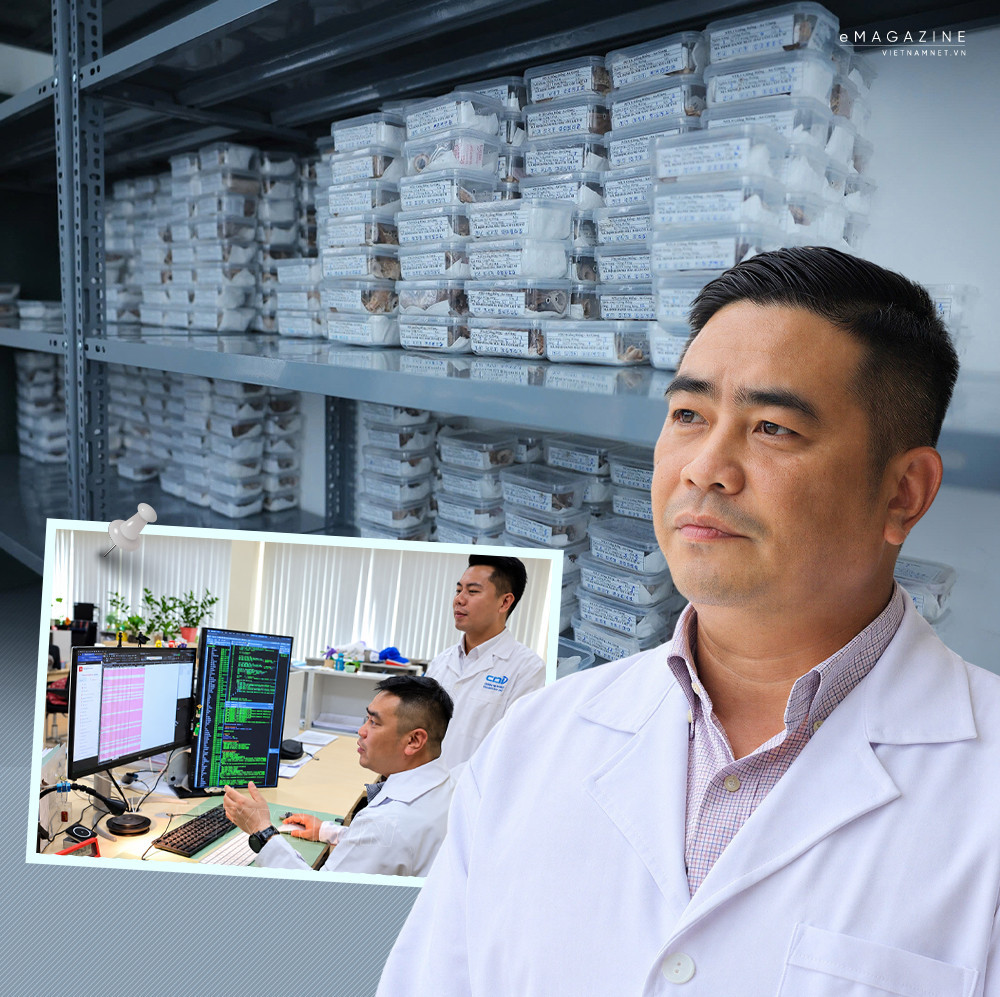
Vietnam's 500-day campaign to search for, recover and identify the remains of fallen soldiers, running from March 15, 2026, to July 27, 2027, has set ambitious targets.
The campaign aims to locate and recover approximately 7,000 sets of remains, collect samples from around 230,000 graves whose occupants have not been identified, and conduct DNA testing on approximately 18,000 samples.
These are separate objectives and do not mean that every collected sample must undergo DNA analysis during the same period.
To meet the campaign's schedule, Tien said the Institute of Biology is continuing to use conventional techniques for suitable specimens while developing NGS-SNP for more challenging cases.
Scientists are working on weekends and outside normal hours. They are also improving sample classification, automating appropriate stages and optimising software used to compare genetic profiles.
Each improvement is intended to reduce processing time without compromising quality control, particularly for specimens vulnerable to contamination.
Artificial intelligence is also being studied for supporting tasks such as screening and classification, but it will not replace the professional judgement of forensic examiners.
Accelerating the process, however, cannot come at the expense of reliability.
For Tuan, the greatest pressure is not simply the number of samples arriving within a short period. It is the possibility of overlooking a case.
"DNA identification cannot be driven by emotion. Every sample must undergo a rigorous process, and no stage can be skipped," he said.
International cooperation helps Vietnam master DNA technology
Dr. Nguyen Hoang Chau, ICMP's programme director in Vietnam, said that under a US government-funded initiative, the organisation has worked with VAST to transfer techniques for analysing DNA from severely degraded human remains.
The cooperation includes testing actual samples and training Vietnamese specialists.
Dr. Tran Trung Thanh, director of the DNA Identification Centre, said his team has acquired, mastered and optimised the procedures to suit the characteristics of samples found in Vietnam.
Although initial results are encouraging, the technology must undergo further validation using larger sample sets before widespread deployment.
Kevin Lin, a senior microarray technical specialist at US-based Thermo Fisher Scientific, a major global supplier of laboratory chemicals and equipment, highlighted the importance of developing independent technical capabilities.
He explained that international experts initially guide local personnel through each step. Over time, the local team takes responsibility for operating the technology and checking data quality, requesting assistance only when problems arise.
His experience relates to training on microarray technology, which is distinct from NGS-SNP sequencing.
These experiences illustrate a broader lesson: international cooperation delivers lasting benefits only when transferred knowledge becomes a capability that Vietnamese specialists can independently operate and develop.
That is how the achievements of a collaborative project can endure long after external support ends.
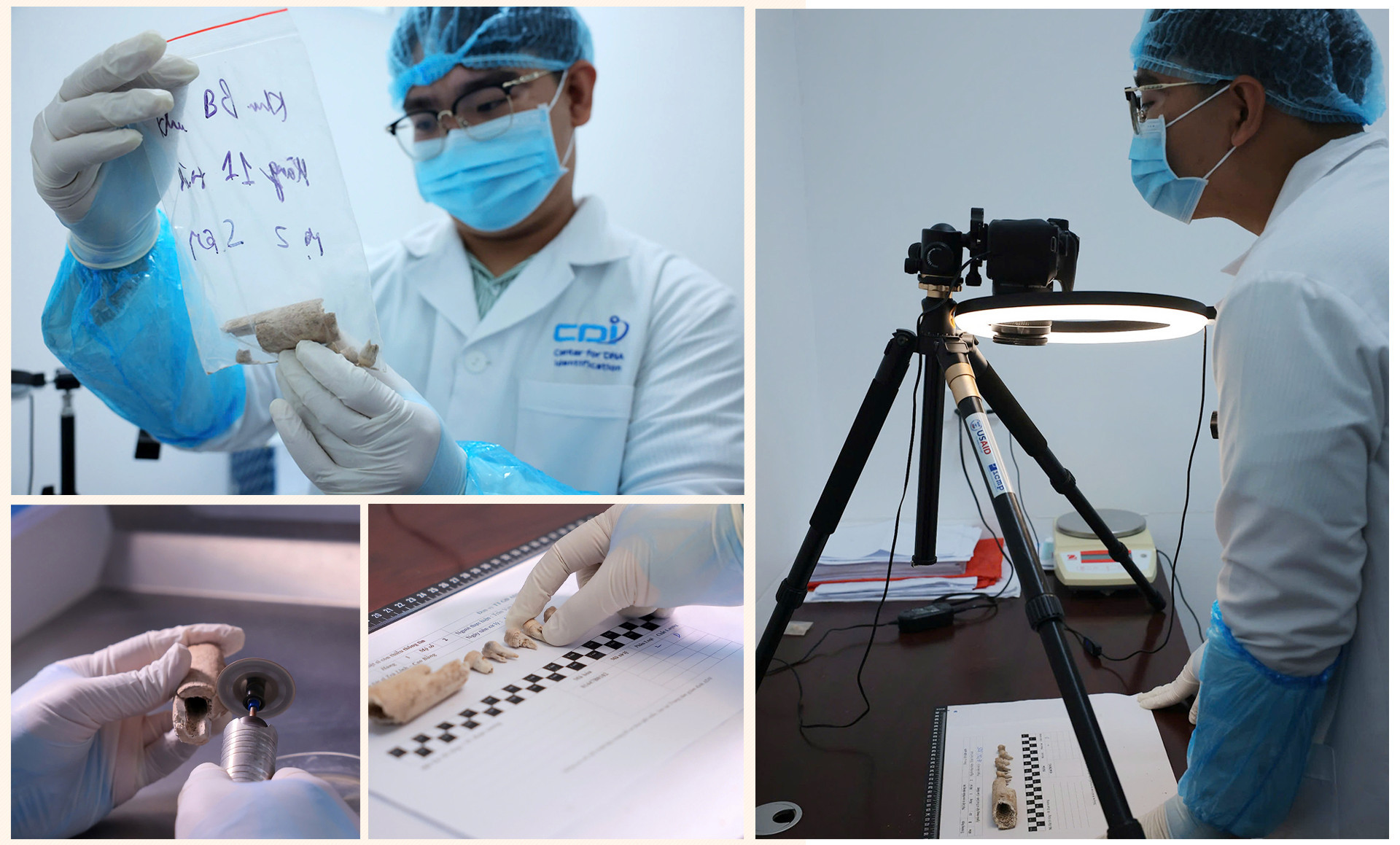
Tien said VAST is providing training and transferring techniques to forensic identification units in the military, police and healthcare sectors.
Another priority is developing mechanisms to connect databases containing genetic information from human remains and relatives, allowing identification results to be compared more effectively nationwide.
The demands for trained personnel, technical standards, laboratory supplies and integrated databases demonstrate that scientific discoveries cannot fulfil their potential if they remain confined to research institutions.
This approach also reflects the objectives of Vietnam's Politburo Resolution 57-NQ/TW, which calls for breakthroughs in science, technology, innovation and national digital transformation.
The challenge is to create conditions in which technology can address practical national needs, scientists are entrusted with major responsibilities, and research achievements become lasting national capabilities.
Giving fallen soldiers their names back
Throughout Vietnam's history, generations of intellectuals have contributed their knowledge to the struggle for independence and the country's development.
Today, scientists working on DNA identification continue that tradition through a quieter mission: restoring the identities of those who died serving their country.
For Tuan, each stage of the identification process carries a different meaning.
Preliminary data that suggest a possible genetic match offer hope. Confirmed results provide professional reassurance.
But the most memorable moment comes when a family finally receives the news.
Only then do the figures and laboratory reports become an answer to a wait that may have lasted generations.
Tuan hopes the 500-day campaign will enable many more families to discover where their loved ones are buried.
To those still awaiting results, he has a simple message.
"Please, don't lose hope."
Tien also understands that every successful DNA examination can bring another family closer to restoring a fallen soldier's name and identifying their final resting place.
The task ahead remains enormous, and not every case can be resolved immediately.
Nevertheless, technological advances, the persistence of forensic examiners and cooperation among institutions are steadily expanding the possibilities.
Some homecomings can never be complete reunions.
Sometimes, they mean a name finally being confirmed on a gravestone, or a family at last knowing where to light incense in remembrance of a loved one.
Through these tiny fragments of DNA, science is continuing its service to Vietnam, not only helping build the country's future but also restoring the identities of those who sacrificed their lives to make that future possible.
Thai An - Van Nga

