 Vietnamnet.vn

 Podcast



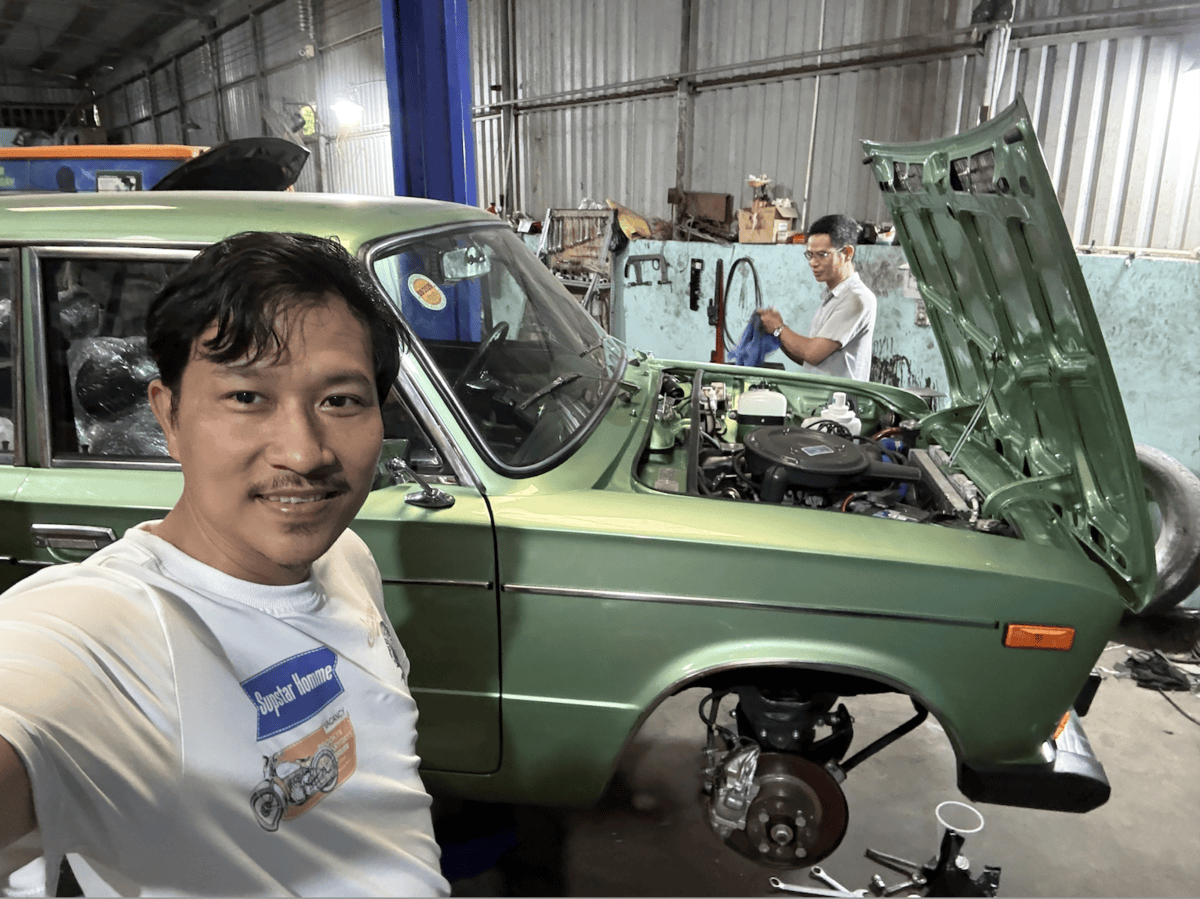
In the memories of many Vietnamese generations, cars originating from the former Soviet Union (now the Russian Federation) were not just a means of transport, but symbols of a special historical period. Many still remember that, from the 1970s to the 1990s, car lines such as Lada, Volga, UAZ and Moskvich appeared on the streets of Hanoi and HCMC, closely associated with state agencies, the military and cooperation projects between Vietnam and the Soviet Union.
At that time, owning a Lada or Volga was considered "high class." The Volga GAZ-21 or GAZ-24 was typically reserved for high-ranking leaders, featuring a grand design and spacious interior. Lada, especially the VAZ-2101 or 2107 series, became more popular and was likened to the "national car" of the subsidy period.
These cars were famous for their durability, ability to operate well in difficult road conditions, and ease of repair. This made them a suitable choice in the context of Vietnam when transport infrastructure was still poor.
As Vietnam entered the Doi Moi (Renovation) period, the Vietnamese auto market opened up to brands from Japan, South Korea, and Europe, and Soviet cars gradually lost their standing. Outdated designs, high fuel consumption, and a lack of amenities made them no longer suitable for modern needs.
Many Volgas or Moskviches were cast aside, lying dusty in old warehouses or dismantled for parts. Others are still used in rural areas or within the military, but with decreasing frequency. However, this unintentionally opened up the value of nostalgia.
"Silent warriors" on the battlefield
During the years of resistance, motorized vehicles aided by the Soviet Union played an extremely important role. They were the "veins" of transport, helping maintain logistics and connecting battlefields.
Among them, GAZ-69 was a light, compact but extremely durable off-road line, while GAZ-63 was a single-wheel two-axle truck that was a very popular transport vehicle serving the battlefield.
ZIL-157 was a 6-wheeled military truck famous for its ability to cross harsh terrain, and Ural-375 a heavy truck for transporting artillery and equipment. UAZ-452 was famous by the nickname "battlefield ambulance", and the UAZ-469 appeared later but also became a symbol of the military forces.
Among the Soviet car lines in Vietnam, the GAZ-69 holds a special significance as it is associated with the image of President Ho Chi Minh. The GAZ-69 was used to serve him during business trips and visits to localities and units. With a simple, unpretentious design, the car reflected the simple lifestyle of the great president.
GAZ-69 was not a luxury model. It had a boxy appearance, a canvas top, and a minimalist interior. But that practicality made it suitable for the road conditions of the time and a reliable vehicle.
Currently, some GAZ-69s that served leaders are kept in museums as historical artifacts. Additionally, many collectors seek out GAZ-69s to restore for display and nostalgic purposes.
As the market opened to new brands, Soviet cars gradually lost their position. Many old military vehicles were liquidated or converted for other uses. GAZ-69s and UAZ-469s were bought by citizens for use in agriculture or modified for civilian life. However, over time, most of them deteriorated or nearly disappeared.
In recent decades, the movement to collect and restore vintage Soviet cars in Vietnam has begun to flourish. Car enthusiasts are not just looking for a vehicle, but pursuing a piece of historical memory.
In Hanoi and HCMC, many vintage car clubs have been established, gathering elaborately restored Lada, Volga, or UAZ models. Some 40-year-old cars have been "revived" to near-original condition, from the engine and interior to small details like logos or dashboard clocks.
The UAZ line, famous for its off-road capability, is being upgraded by young people in a modern style for exploration tourism. Meanwhile, Volga is favored for events, weddings, or filming, thanks to its classic and elegant appearance.
Today, vintage Russian cars have become valuable spiritual assets due to the stories they carry. They appear in festivals, exhibitions, and even nostalgic wedding photo sets.
Buyers spend hundreds of millions of dong to buy and restore a Lada or Volga, not for daily travel, but to keep a part of the past's memory. From the GAZ-69 of President Ho Chi Minh to the convoys of ZIL trucks rolling on the Truong Son road, all are pieces of history.
Hoang Hiep
.svg)
