 Vietnamnet.vn

 Podcast



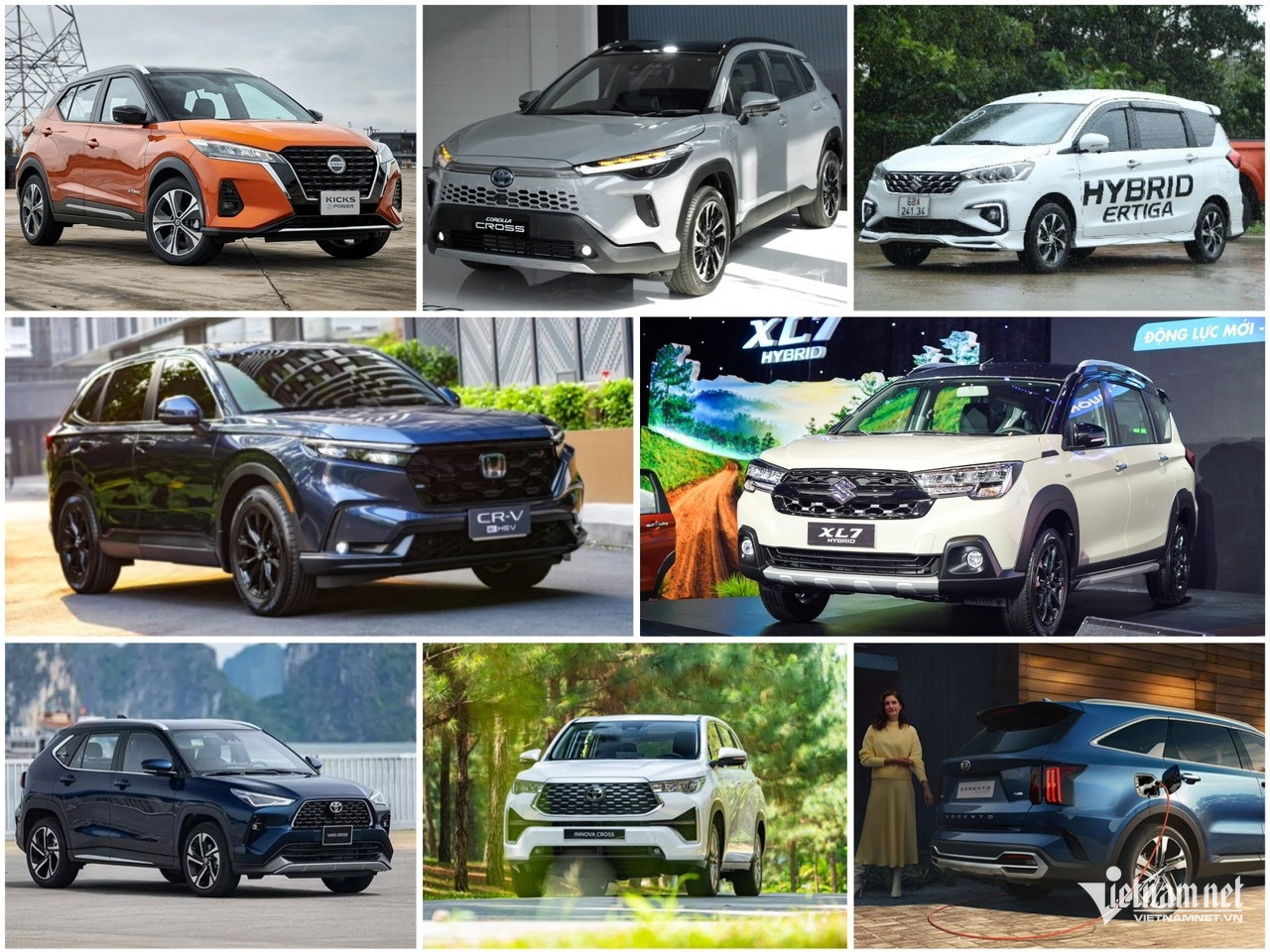
According to a report from the Vietnam Automobile Manufacturers’ Association, hybrid vehicles recorded robust growth in the first quarter of 2026, with total sales reaching 5,125 units - double the figure of the same period in 2025, when 2,562 units were sold. Hybrids accounted for nearly 7 percent of total passenger car sales.
Once limited to high-end, expensive models, hybrid technology has now quickly become more mainstream, even appearing in vehicles priced below VND700 million (US$27,500).
Popular models such as Toyota Corolla Cross HEV, Toyota Innova Cross HEV, Yaris Cross HEV, Honda CR-V e:HEV, Honda HR-V e:HEV, and Suzuki XL7 Hybrid have maintained stable sales while gradually becoming more affordable.
Over the past year alone, the Vietnamese market has seen a dense wave of hybrid launches across segments, from billion-VND European luxury models to budget-friendly offerings from Japan, South Korea, and China.
Early 2026 has also welcomed new and upgraded hybrid entries such as the locally assembled Honda CR-V e:HEV, Omoda & Jaecoo C5 SHS-H, and hybrid variants of Hyundai Tucson and Kia Sorento.
Most hybrid vehicles today are developed from existing gasoline models with established market positions, upgraded with advanced powertrains that deliver superior fuel efficiency, smoother driving, and reduced environmental impact.
Many models consume less than 5 liters per 100 kilometers - a figure difficult to achieve for conventional gasoline cars in the same segment. This efficiency advantage is a key factor making hybrids a cost-effective choice while aligning with green mobility trends.
Boost from new tax policy
Experts note that hybrid vehicles are benefiting from several converging factors: volatile fuel prices, increasing pressure to reduce emissions, and the still-developing infrastructure for electric vehicles. Compared to fully electric cars, hybrids require no major changes in user habits and do not depend on charging stations, yet still deliver meaningful fuel savings.
A major driver of consumer trends in 2026 is the new special consumption tax policy applied to hybrid vehicles.
Under regulations effective from January 1, 2026, both self-charging and plug-in hybrid vehicles that meet fuel consumption standards are subject to a special consumption tax equal to 70 percent of that applied to comparable gasoline vehicles.
This policy has quickly influenced the market.
Many hybrid models have seen immediate price adjustments by manufacturers, with reductions typically ranging from tens of millions of dong to over VND100 million (US$3,900), depending on the segment. As a result, the price gap between hybrid and traditional gasoline cars has narrowed significantly, making hybrids more accessible to mainstream buyers.
Hybrid models from Chinese brands are also entering the Vietnamese market in large numbers.
Experts believe the current growth momentum indicates substantial room for expansion. Over the next one to two years, hybrid vehicles are expected to further strengthen their presence and may even become a dominant choice in mainstream segments.
As energy transition continues to face challenges related to infrastructure and costs, hybrids are emerging as the most practical stepping stone before a full shift to electric vehicles, while also catering to distinct customer segments.
The rise of hybrid vehicles reflects a broader restructuring of Vietnam’s automobile market, as consumers gradually move away from purely gasoline-powered cars toward more efficient and environmentally friendly solutions.
In this transitional phase, hybrids represent an optimal balance between ownership costs, operational efficiency, and user experience - a combination strong enough to reshape the market landscape in the near term.
Hoang Hiep
.svg)
