 Vietnamnet.vn

 Podcast



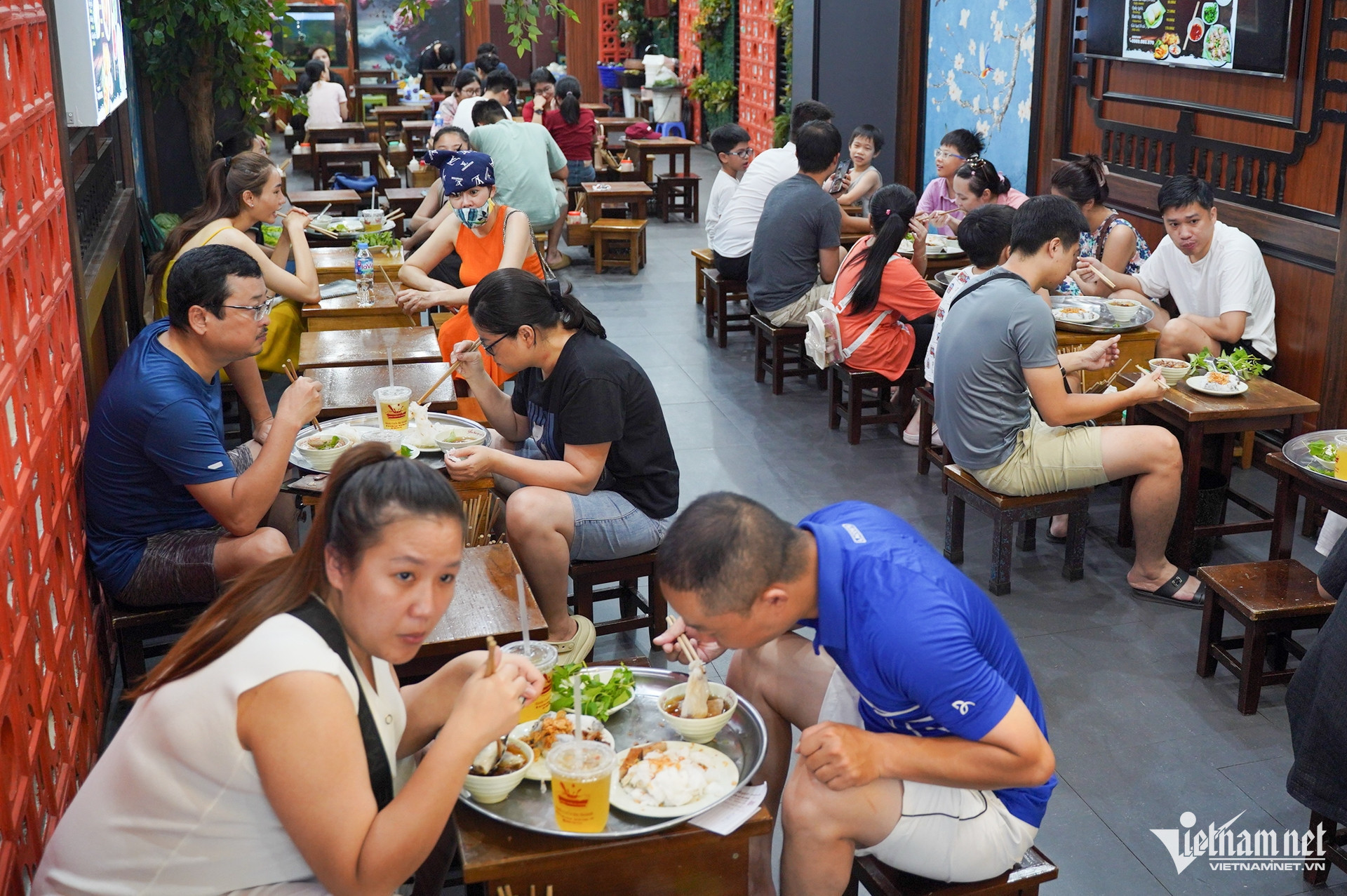
Thanh Van Heritage Banh Cuon
The four-generation banh cuon shop run by the family of Tran Thị Van, 69, on Hang Ga Street, Hoan Kiem, has been honored by Michelin in the Bib Gourmand 2026 category.
Initially, the shop only offered traditional banh cuon filled with pork, wood ear mushrooms, and shiitake mushrooms. The pork is brought daily, processed and minced in-house, then sautéed with fried shallots, wood ear mushrooms and shiitake mushrooms, and seasoned to taste.
Later, the shop expanded its menu to include egg, shrimp, and chicken fillings. Fresh shrimp is lightly steamed, peeled, minced, and stir-fried until fragrant. The shop uses chicken breast mixed with chicken fat to prevent the filling from drying out, catering specifically to the preferences of Western tourists. The fried shallots and pork floss (ruoc) are also homemade to guarantee strict quality standards.
Its dipping sauce is made from fish sauce combined with pork-bone broth, along with sugar and monosodium glutamate. Diners can adjust the sourness and spiciness to suit their taste.
A serving of pork-filled banh cuon costs VND45,000, while chicken-filled banh cuon is priced at VND50,000. Shrimp-filled banh cuon is the most expensive option at VND65,000 per plate. Side dishes such as cinnamon pork sausage, Vietnamese pork loaf and green rice sausage cost VND10,000 per piece.
The eatery operates in two shifts, from 6:30 a.m. to 2 p.m. and from 5 p.m. to 10 p.m. It receives positive reviews from international diners on TripAdvisor and Google for both its food and service.
Ba Hoanh Banh Cuon
This more than 70-year-old eatery on To Hien Thanh Street has been listed in the Michelin Selected category in 2024, 2025 and 2026.
The restaurant's signature dish is Thanh Tri-style banh cuon. Thanh Tri is the hometown of Hoanh, the founder. Today, despite the availability of modern equipment, her descendants continue to steam the rice sheets by hand. In 2019, Ba Hoanh's banh cuon was one of nine dishes selected to be served during the US–DPRK Summit in Hanoi.
The rice is soaked for two hours before being finely ground. The batter is then carefully filtered twice over the course of half a day. During steaming, the cook must work evenly and skillfully to produce rice sheets that are thin, smooth, soft and elastic. Once cooked, each sheet is lifted with a flat bamboo stick, spread out and filled or brushed with scallion oil according to the diner's preference.
Originally, Ba Hoanh's banh cuon consisted only of thin rice sheets brushed with scallion oil, cooled and served with dipping sauce and cha moc (Vietnamese pork ball). However, many customers did not enjoy cold banh cuon, prompting the restaurant to introduce hot versions filled with minced pork and wood-ear mushrooms. The banh cuon can also be served with sausage, grilled pork or meatballs.
Prices range from VND30,000 to VND60,000 per serving. A fully loaded portion with all side dishes, including a whole ca cuong (giant water bug), can cost up to VND120,000.
The restaurant is open from 6 a.m. to 9 p.m. Located directly on the main road, it is easy to find. The dining area is spacious, clean and can accommodate between 40 and 50 tables.
Ba Xuan Banh Cuon
This family-run banh cuon restaurant, located on Hoe Nhai Street and operating for around 40 years, has been included in Michelin Selected for four consecutive years, from 2023 to 2026.
The original owners were Bui Huu Xuan and his wife Nguyen Thi Bac. The restaurant is now run by their children, who continue the family's traditional craft.
Unlike many traditional banh cuon restaurants in Hanoi that use modern machinery, Xuan continues to grind its batter manually using a stone mill passed down through previous generations. Although stone grinding is more labor-intensive and time-consuming, it produces a batter that is smooth enough to create rice sheets that are thin, delicate and soft.
Xuan serves two types of banh cuon: pork-and-mushroom-filled rice rolls and egg-filled rice rolls. Both are served with fatty pork sausage, cinnamon sausage and fresh herbs, topped with house-made fried shallots.
The egg is steamed until about 70 percent cooked. Diners need only break it slightly to allow the soft yolk to flow out, creating a rich, creamy texture without any unpleasant odor.
According to the restaurant owner, the rice used for the batter must be freshly harvested, high-quality rice sourced from Cao Bang Province. The pork sausage served alongside the dish comes from the famous Uoc Le village.
Linh Trang
.svg)
