 Vietnamnet.vn

 Podcast


On October 16, the Ho Chi Minh City Department of Construction, in collaboration with Tien Phong newspaper, organized a conference titled "Investment in Integrated Infrastructure Development: A Driver of Economic Growth and Expanded Development Space for Ho Chi Minh City."
Speaking at the event, Deputy Minister of Construction Nguyen Tuong Van emphasized Ho Chi Minh City's role as a leading economic engine for Vietnam's southeastern region and the country as a whole.
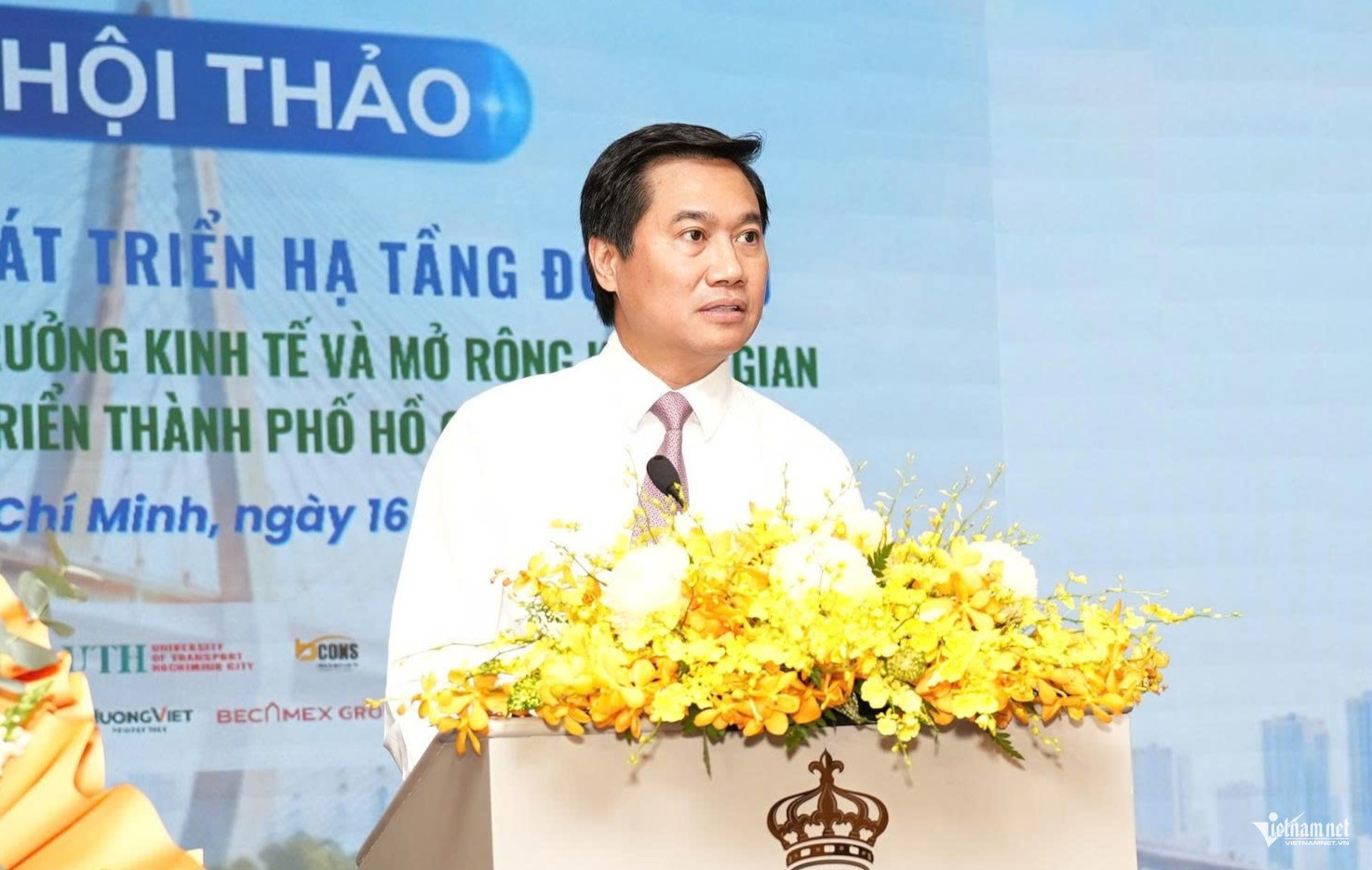
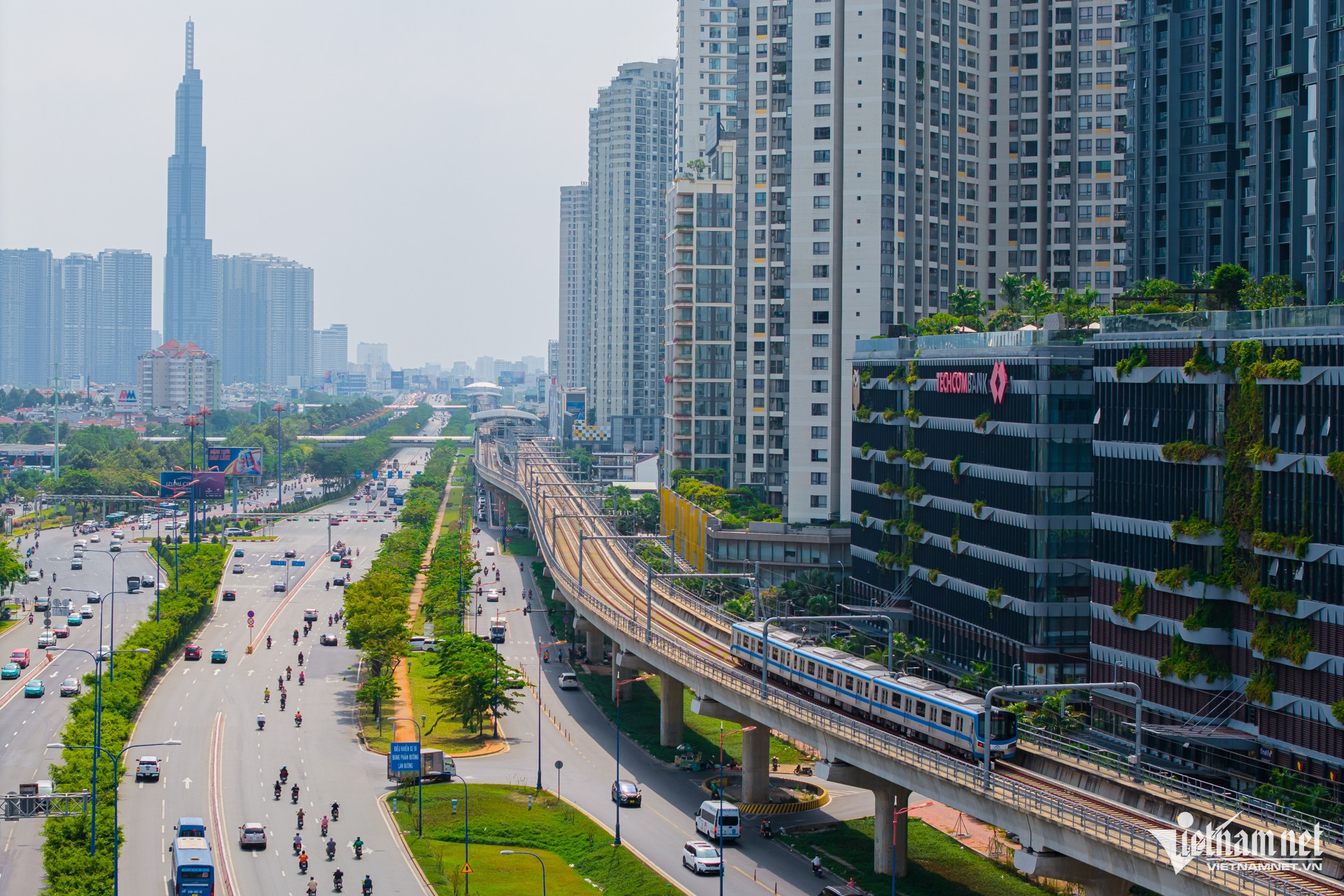
Following the city's administrative expansion, investment in an integrated transport infrastructure network has become one of its most important strategic priorities.
The merger, he explained, should not simply involve combining existing master plans. Instead, it offers an opportunity to restructure the economy around a polycentric urban system, connecting multiple satellite centers.
According to Van, transport infrastructure must evolve from passively accommodating development to actively shaping it.
This approach would help expand urban space, ease pressure on the former city center, reduce logistics costs and improve residents' quality of life.
Recognizing persistent bottlenecks in regulatory mechanisms and investment mobilization, the deputy minister urged participants to propose solutions involving urban planning, financing, infrastructure and housing.
He said the Ministry of Construction would consider these recommendations when advising on improvements to the legal framework, creating more favorable conditions for Ho Chi Minh City's development.
Tran Quang Lam, Director of the Ho Chi Minh City Department of Construction, said the city is translating Politburo Resolution No. 09 into concrete action, aiming to become a leading Southeast Asian metropolis by 2030 and maintain double-digit economic growth through 2045.
The period between now and 2030 will be particularly important for resolving longstanding challenges involving traffic congestion, flooding, environmental pollution and housing shortages.
The city is prioritizing the completion of its backbone infrastructure network, airport upgrades and stronger connections to seaports.
Ho Chi Minh City aims to complete 255 kilometers of urban rail lines by 2030, with construction on five routes scheduled to begin by the end of 2026. The network is expected to expand to more than 500 kilometers by 2045.
Alongside transport development, the city plans to strengthen tidal flood control, address 50 major flooding hotspots, rehabilitate 398 canals and waterways, relocate households from 41,000 riverside homes and build nearly 200,000 social housing units.
Rethinking urban planning to unlock investment and development
At the conference, architect and urban planning expert Dr. Ngo Viet Nam Son outlined the strategic opportunities facing the expanded metropolis, which now has a population of nearly 14 million.
He identified three major economic growth poles: the established financial center, the industrial hub of Binh Duong and the maritime economy encompassing Ba Ria - Vung Tau and Can Gio.
Connecting these areas could create an integrated logistics system linked to Long Thanh International Airport, alongside a network of coastal tourism destinations stretching from Can Gio to Khanh Hoa.
For effective governance, Son proposed organizing the city into 10 specialized development zones, each with clearly defined functions.
These would range from the urban core and industrial areas to seaport clusters, the ecological zone of Can Gio and the Con Dao special administrative zone.
Son emphasized the principle that "capital is already embedded in the planning map."
By establishing transport infrastructure corridors, authorities can increase the value of surrounding land, creating potential revenue streams to recover infrastructure investment costs.
He also stressed that transit-oriented development (TOD) must be accompanied by affordable housing, rental accommodation and employment opportunities close to residential areas.
Long-term planning, he argued, should adopt a 100-year perspective that protects cultural heritage, natural environments and strategic land reserves for future generations.
From the perspective of the maritime economy, Associate Professor Nguyen Xuan Phuong, Rector of the University of Transport Ho Chi Minh City, highlighted the region's substantial port activity.
He said cargo throughput across the region was estimated at 1.17 billion tonnes in 2025, equivalent to 34.36 million twenty-foot equivalent units (TEUs). During the first eight months of 2026 alone, throughput exceeded 256 million tonnes.
The Cai Mep - Thi Vai port cluster handles approximately 30% of Vietnam's container traffic and ranks 11th among 400 ports worldwide, according to figures presented at the conference.
Although consolidating port clusters creates opportunities for more coordinated planning, Phuong warned against allowing port construction to advance ahead of essential road infrastructure.
At the broader economic level, Associate Professor Tran Dinh Thien argued that Ho Chi Minh City must move beyond a development mindset centered on land and conventional real estate.
Instead, the metropolis should explore five strategic areas of opportunity: the maritime domain, airspace, underground space, the digital economy and cultural development.
He suggested that positioning the Cai Mep - Can Gio port cluster in connection with a northern shipping route could shorten journeys to Europe by two to three weeks, potentially strengthening the region's global competitiveness.
Economist Dr. Vu Dinh Anh noted that Ho Chi Minh City's gross regional domestic product (GRDP) grew 9.06% during the first nine months of 2026, placing considerable pressure on the final quarter to achieve the full-year double-digit growth target.
Nevertheless, he considered the city's decision to concentrate investment on infrastructure a step in the right direction.
Public investment disbursements, he explained, can contribute directly to GRDP growth in the short term.
However, sustaining double-digit growth through 2045 requires infrastructure to act as a catalyst for broader economic activity rather than relying solely on increased spending.
With investment requirements estimated at VND 38.5 quadrillion (approximately US$1.46 trillion) over the next five years, the municipal budget can serve only as initial seed capital.
The city must therefore coordinate spatial planning, implementation schedules and financing mechanisms to unlock the greatest possible volume of private investment.
Such an approach, Anh argued, would help Ho Chi Minh City build on its tradition of dynamism and pioneering reform, which characterized its development during the early years of Vietnam's Doi Moi economic reforms.
Tuan Kiet

