 Vietnamnet.vn

 Podcast



The achievements of 40 years of Doi Moi (Renewal) are not confined to hunger eradication and poverty reduction. The most profound “sweet fruit” is the emergence of a national entrepreneurial class and a qualitative transformation of the economy itself.
In 1986, when the first embers of Doi Moi were just beginning to glow, poet Xuan Quynh wrote playful yet contemplative lines in her poem Joyful Verse about Women:
“My dear, my great one.
You are the sun, I am but a grain of salt…
But if this morning I cannot measure out the rice,
Surely this afternoon you will have no meal.”
Those verses were not merely the private reflection of a wife and mother. They were the portrait of an era. At that time, rice and hunger were not simply matters of sustenance, but a heavy obsession weighing on countless families.
From 774.7 percent inflation to a remarkable reversal
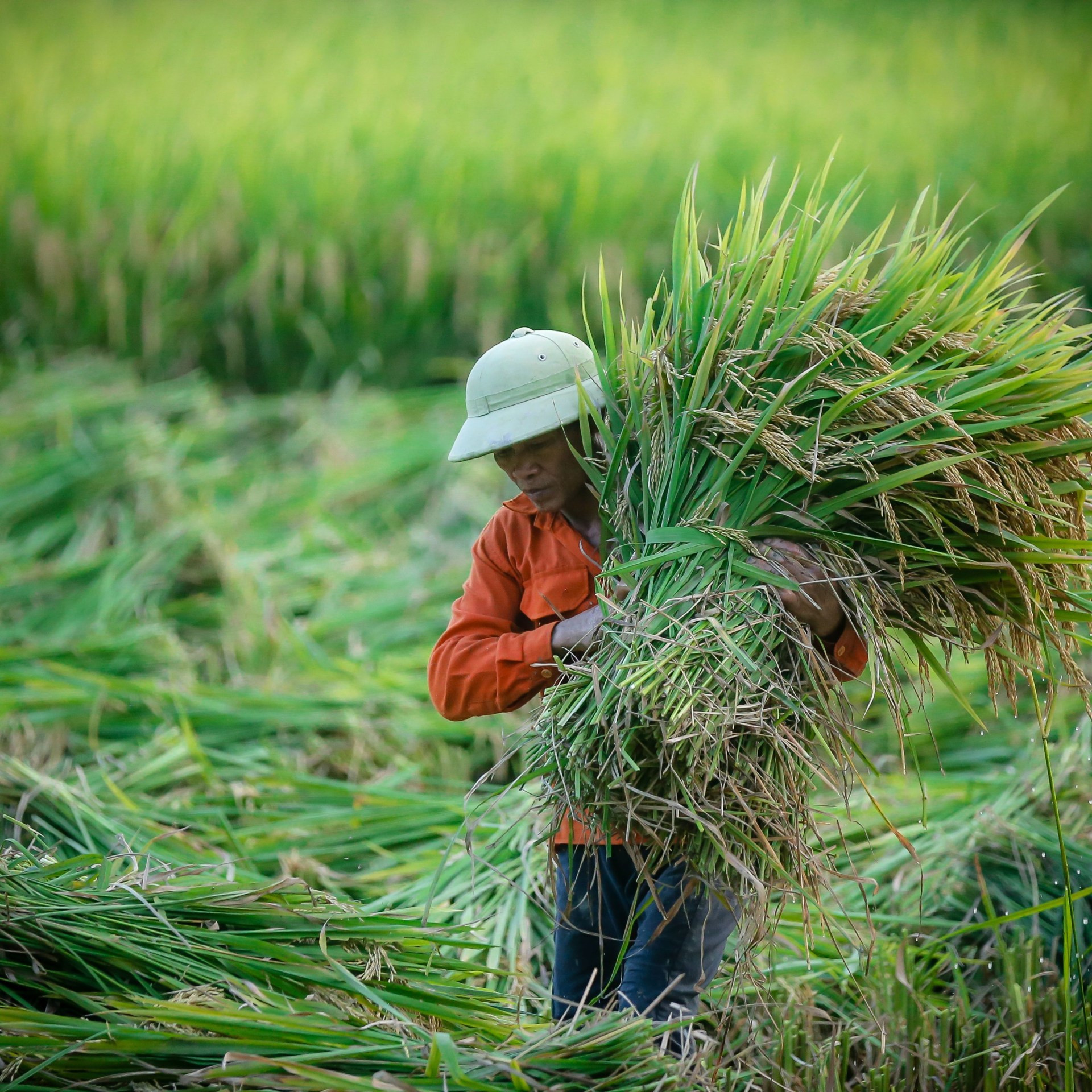
In the early 1980s, Vietnam was engulfed in severe socio-economic crisis. Nearly a decade after reunification, by 1985, per capita income fluctuated between US$125 and US$200 per year, placing Vietnam among the 20 poorest nations in the world. The peak came in December 1986, when hyperinflation soared to 774.7 percent.
The centrally planned, subsidy-based mechanism, coupled with a closed-door mindset, stifled production and left the country in chronic shortage. The grain of rice in Xuan Quynh’s poem was a crushing burden, for behind it lay the fragility of national food security.
The Doi Moi reforms initiated by the Party in 1986 were truly a revolution of liberation. From Contract 10, which untied the knots of agricultural production, to the recognition of a multi-sector commodity economy, Vietnam executed a dramatic turnaround.
Nearly four decades later, the numbers tell a different story. In 2024, the economy was estimated at US$476.3 billion, with per capita GDP reaching approximately US$4,700.
The most recent figures reported before the National Assembly in October 2025 by Permanent Deputy Prime Minister Nguyen Hoa Binh showed the economy expanding from US$346 billion, ranking 37th globally, to US$510 billion, ranking 32nd. Per capita income rose from US$3,552 to around US$5,000. This has been widely recognized internationally as a bright spot.
From a country once forced to import food, Vietnam has become a pillar of global food security. Living standards have improved comprehensively, with average life expectancy reaching 74.5 years and the Human Development Index climbing steadily to 0.766.
Yet the achievements of four decades of reform are not measured only by skyscrapers or growth rates. The greatest reward has been the liberation of people from the constant anxiety over daily bread, granting them the right to dream, to enjoy and to contribute at higher levels.
From Contract 10 to opening the skies and opening the mind
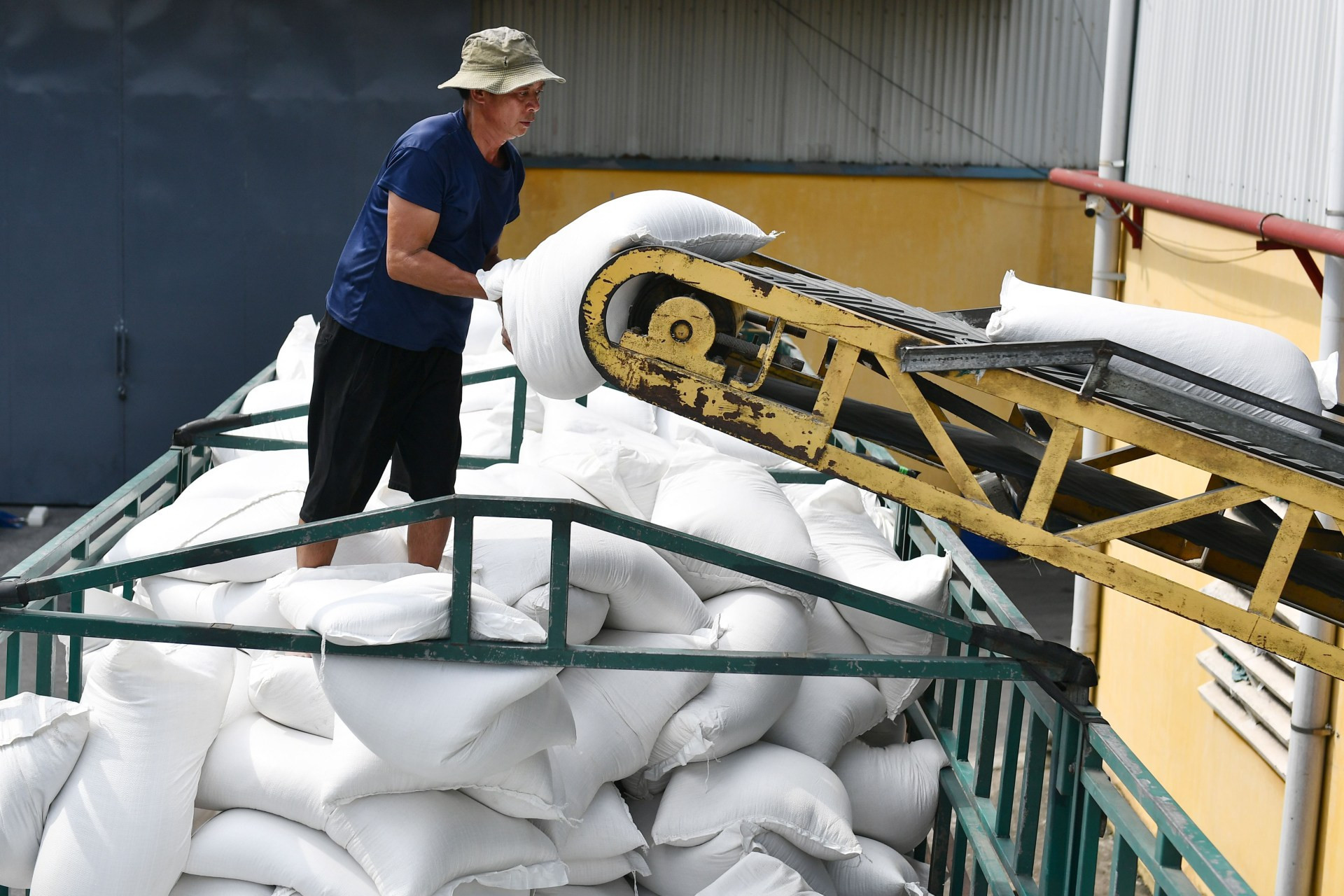
Within the symphony of 40 years of reform, some high notes rise from the courage of bold policies and pioneering individuals and enterprises.
Beyond Contract 10, which turned Vietnam from a nation “measuring rice” into a leading rice exporter, institutional reform extended into industry and commerce, triggering powerful shifts.
When the Law on Foreign Investment in Vietnam was enacted in 1987, allowing foreign enterprises to hold up to 100 percent ownership was considered taboo under old thinking. Yet Vietnam made that choice. It not only attracted capital but sent a strong message to the world: the country was ready to open its doors.
It was not until the Enterprise Law of 1999, however, that a genuine revolution in domestic business freedom took place. Before 1999, establishing a company could take three to six months, requiring roughly 35 signatures and 30 separate seals, under the mindset that citizens could only do what the State permitted.
The 1999 law reversed that principle: citizens could do anything the law did not prohibit. Hundreds of unreasonable sub-licenses were abolished. The result was immediate. In just three years, from 2000 to 2002, nearly 60,000 new enterprises were established, exceeding the total of the previous decade combined.
This unlocking of human potential transformed small traders of the subsidy era into legitimate entrepreneurs, laying the foundation for the rise of the private sector, which now contributes around 50 percent of national GDP.
One cannot forget the historic 1985 flight arranged by businessman Johnathan Hanh Nguyen. At a time when Vietnam faced strict embargo and isolation, he lobbied diplomatically to open the Ho Chi Minh City - Manila route. The flight on September 9, 1985 carried not only goods and medicine, but served as the country’s only “window” to the world. It stood as proof of the deep patriotism of overseas Vietnamese, even when domestic mechanisms were not yet complete.
During the Covid-19 pandemic, he once again demonstrated faith in the homeland by bringing his daughter back from the UK for treatment in Vietnam.
From that pioneering step, Vietnam’s aviation industry underwent dramatic transformation. The notion that aviation was a luxury and a state monopoly was dismantled with the emergence of private airlines. The dream that “anyone can fly” became reality, turning airplanes into common means of transport.
Parallel to opening the skies was the revolution of “opening the mind.” With the vision that missing the Internet meant isolating the nation from global civilization, Vietnam officially connected to the Internet in 1997.
The courageous decision to “open in order to manage,” rather than “manage before opening,” created the digital infrastructure of today. From slow dial-up connections, Vietnam now has Viettel, FPT and VNPT extending fiber optics and 5G coverage to remote villages, nurturing a generation of digital citizens capable of working and competing globally.
The achievements of 40 years of Doi Moi extend far beyond hunger eradication. The most meaningful transformation is the emergence of a national entrepreneurial class and a qualitative shift in the economy. Entrepreneurs are now regarded as the main force in peacetime development.
This transformation has also been driven by the financial system, the lifeblood of the economy. From a single-tier, subsidy-based banking system, Vietnam has built a modern financial market with dynamic private banks and a vibrant stock market. Capital once stored in gold or US dollars now flows into production and business, generating powerful endogenous growth.
When “counting rice” becomes a fond memory
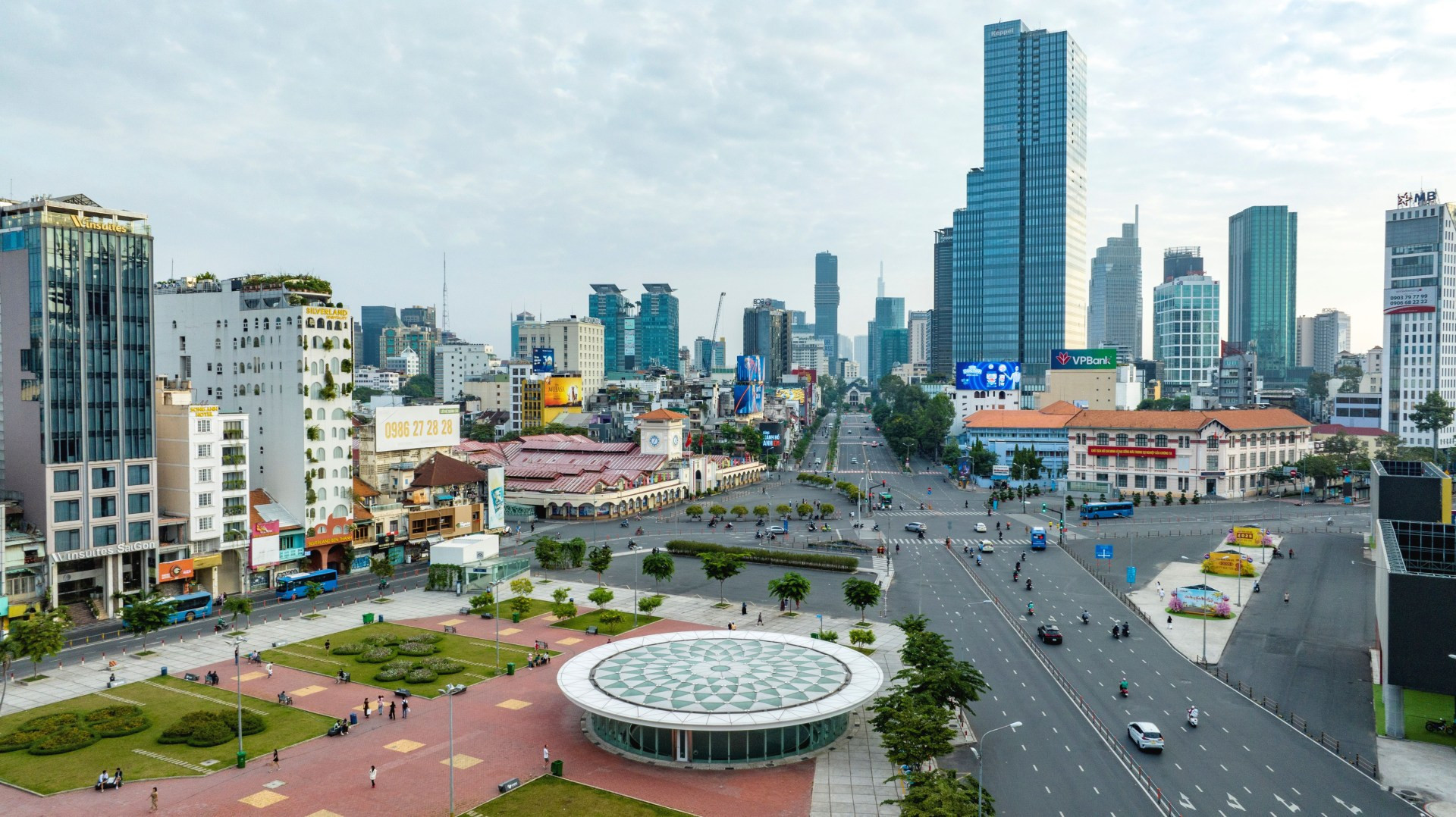
Amid this sweeping transformation, I once found an answer in the words of a first-year female student when asked about sacrifice: “My parents have sacrificed so much for me… And one day, when I have children, I will surely sacrifice for them.” Sacrifice has not disappeared. It has simply transformed.
Today’s younger generation is stepping into new battles, battles on the intellectual front. Engineers labor over microchip designs, developing Made in Vietnam semiconductors. A 5G chip mastered entirely by Vietnamese engineers sends a clear message: in the 21st century, national independence means technological autonomy and economic self-reliance.
We must also acknowledge the overseas students and scientists returning home, bringing global knowledge to solve Vietnam’s new challenges.
Forty years is long enough for a child born in the first year of Doi Moi to become a pillar of family and society. The anxiety of “counting rice” has retreated into the past, replaced by a new mindset - the mindset of citizens striving to turn Vietnam into a developed, high-income nation by the centenary of independence.
Nguyen Phuoc Thang (Hoa Binh University)
.svg)
