 Vietnamnet.vn

 Podcast



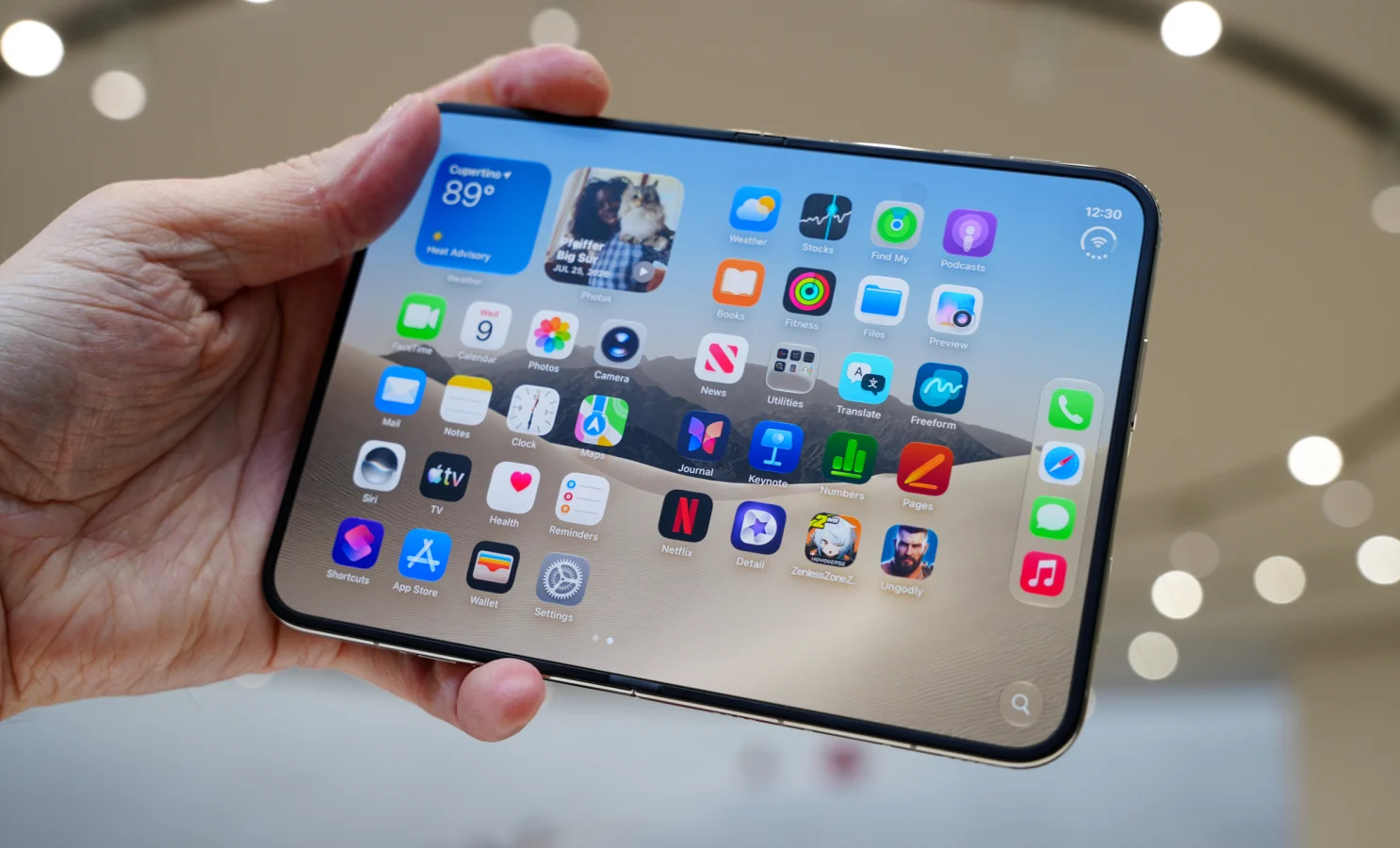
From the original iPhone to iPhone Duo: Apple doesn't need to be first
Many people may assume that Apple invented the smartphone. In reality, smartphones existed long before the first iPhone was introduced.
However, under the leadership of its late CEO and co-founder Steve Jobs, Apple recognized the limitations of existing devices and developed a product that went far beyond what consumers had come to expect.
On January 9, 2007, when Jobs unveiled the original iPhone, he displayed images of the best-selling smartphones of the time, describing them as familiar faces.
Most of these devices relied on physical QWERTY keyboards that occupied a fixed portion of the handset, limiting screen space and restricting how application interfaces could be designed.
Apple took a different approach by placing the touchscreen at the center of the user experience.
Instead of being constrained by a physical keyboard, the interface could adapt dynamically to different applications and user needs.
This was more than a design decision. It reflected Apple's distinctive product development philosophy: the company does not necessarily need to introduce a technology first, but it must find a better way to implement it than its competitors.
That strategy helped the iPhone transform the smartphone industry.
Nearly two decades later, Apple is attempting to repeat that success with the iPhone Duo, its foldable smartphone expected to open a new chapter in the iPhone's history.
Why did Apple wait so long to launch a foldable iPhone?
The foldable smartphone market is far from new.
The Royole FlexPai, introduced in November 2018, is considered one of the first commercially available foldable smartphones.
Samsung followed with the Galaxy Fold in September 2019, paving the way for other major manufacturers to enter the segment.
In subsequent years, Samsung, Huawei, Motorola and several Chinese brands, including Honor, Oppo, Vivo and OnePlus, continued developing foldable devices.
Apple, meanwhile, remained on the sidelines even as foldable smartphones gradually established themselves as a distinct market segment.
By delaying its entry, Apple allowed competitors to capture early opportunities in this niche market.
However, many analysts believe foldable smartphones may struggle to achieve true mainstream adoption without Apple's participation.
The reason lies in the influence of the iPhone brand.
When Apple introduces a new product, it does more than sell hardware. It brings that product into an established ecosystem of users already familiar with iOS and the company's services.
Nevertheless, brand recognition alone cannot guarantee success.
One reason Apple is believed to have delayed its foldable iPhone is concern over durability.
Devices with flexible displays must withstand repeated mechanical stress around the hinge and folding area, making long-term reliability a major engineering challenge.
Apple also wanted to address one of the most noticeable shortcomings of existing foldable smartphones: the crease running across the internal display.
This crease affects not only the device's appearance but also the overall user experience.
When the phone is unfolded, users may notice a visible line across the screen and can sometimes feel it when sliding their fingers over the affected area.
The crease can prevent foldable displays from delivering the seamless experience of conventional smartphone screens, particularly when watching videos, reading content or using applications across a larger display.
Apple has not completely eliminated the crease on the iPhone Duo.
Instead, the company has combined display technology with hardware improvements to make it less noticeable.
This approach is consistent with Apple's broader product philosophy.
Rather than rushing to launch a device, the company waits until it believes it can address significant weaknesses in designs already available on the market.
However, the effectiveness of these improvements will still need to be assessed through long-term use.
Display durability, hinge reliability and repair costs will be crucial in determining whether the iPhone Duo can persuade consumers to switch to foldable smartphones.
Strong iPhone Duo demand could give Apple 40% of foldable market
Initial demand for the iPhone Duo suggests that Apple's decision to wait may deliver a significant competitive advantage.
According to PhoneArena, preorders surged as soon as the ordering window opened, pushing estimated delivery dates into January 2027.
If this momentum continues, Apple could quickly become one of the most influential companies in the foldable smartphone market despite entering the segment years after its rivals.
Counterpoint Research forecasts that the global foldable smartphone market will grow by 24% this year, with growth accelerating to 37% in 2027.
Notably, the research firm predicts that the iPhone Duo could account for 25% of global foldable smartphone sales this year, rising to as much as 40% next year.
These projections reflect high expectations for Apple's first entry into the foldable smartphone category.
However, its actual market share will depend on several factors, including product availability, pricing, manufacturing capacity and consumer reactions after devices reach customers.
If the iPhone Duo achieves the projected market share, it could do more than expand Apple's product portfolio.
It could also accelerate growth across the entire foldable smartphone industry.
Apple's entry into the segment is likely to increase competitive pressure on Samsung and Chinese smartphone manufacturers, pushing them to improve device design, durability and software experiences.
Hai Phong
.svg)
